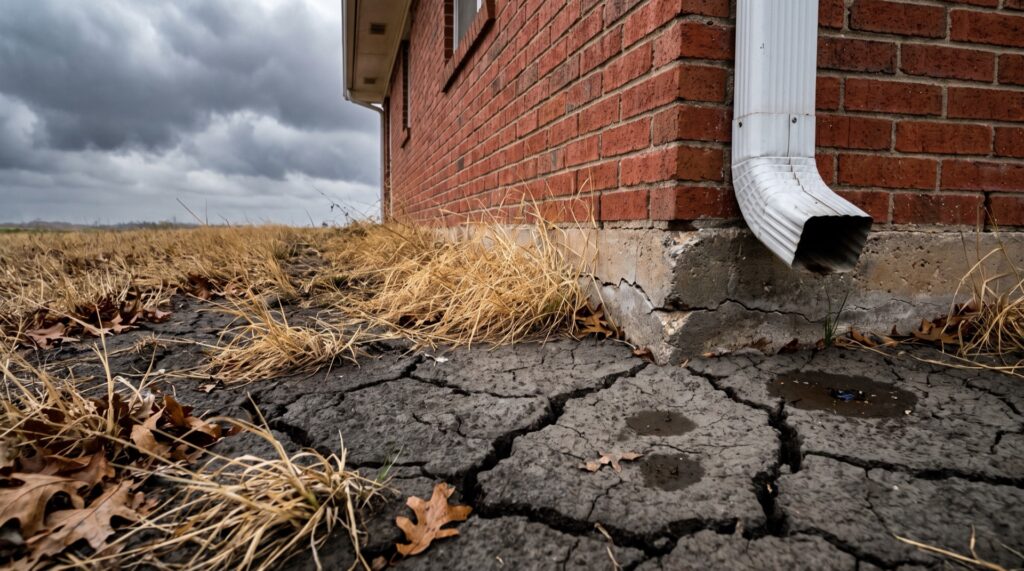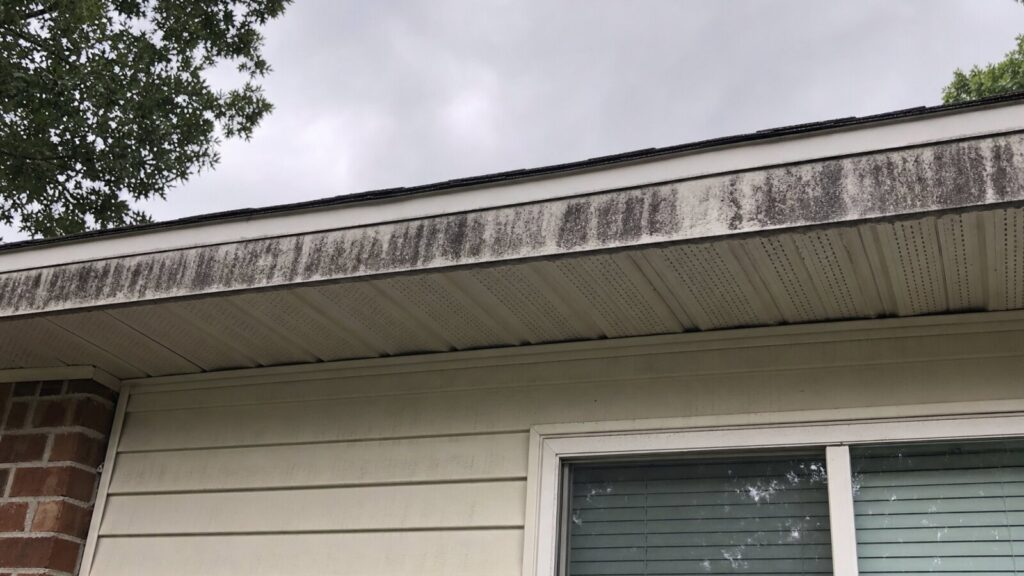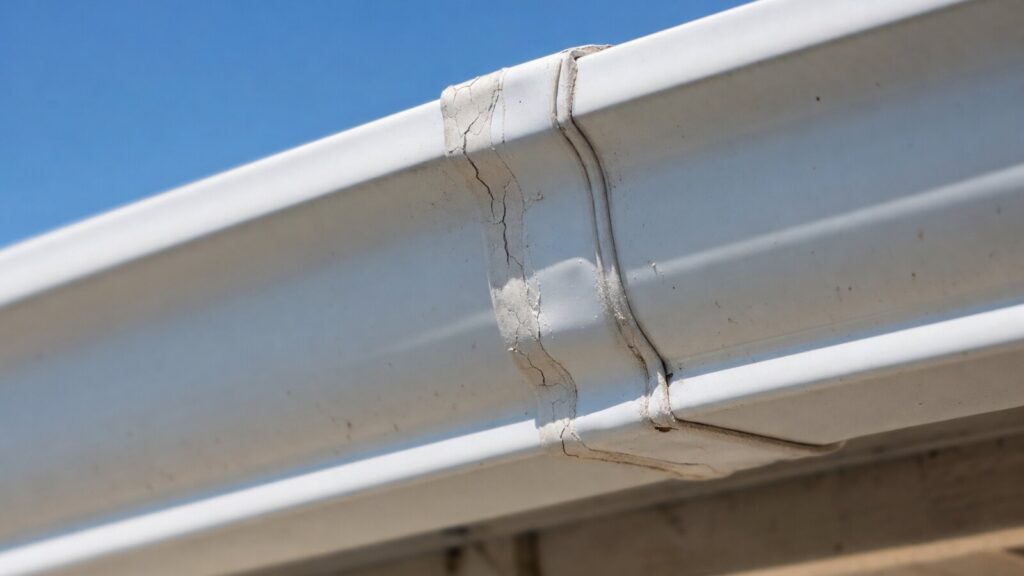
Gutters overflow for one of two reasons: water can’t get out fast enough, or more water arrives than the system was built to carry. A clog, a blocked downspout, a sagging run and a gutter that’s simply too small for the roof all look the same from the yard, with water pouring over the front edge. The fix depends on which one you have, and you can usually tell by watching where the water spills. Left alone, overflowing gutters do real damage: soaked soil against the foundation, rotted fascia and stained siding.
Here in Central Texas the question comes up most after a hard spring or fall storm. A gutter that handles a light shower just fine can still fail in the kind of downpour we get, so it pays to know whether you’re looking at a maintenance problem or a design problem before you spend money fixing the wrong thing.
Where the water spills tells you the cause
The fastest way to diagnose an overflowing gutter is to watch it during a steady rain, or to run a garden hose into the high end of a run on a dry afternoon. Note where the water comes over the edge and how quickly it shows up. That spot points to the cause far more reliably than guessing from the driveway, and it tells you whether a cleaning will solve it or whether something needs to be rebuilt.
| Where it overflows | Most likely cause | Usual fix |
|---|---|---|
| Right at the downspout outlet | Clogged outlet, elbow or downspout | Clear and flush the downspout, check any buried line |
| In the middle of a long run | A sag or low spot holding water | Re-hang and re-pitch the run |
| At an inside corner under a roof valley | Valley water shooting past the gutter | Add a valley diverter or splash guard |
| Along the whole run, only in hard rain | Gutter or downspouts too small for the roof | Larger gutter, more or bigger downspouts |
| Behind the gutter, down the fascia | Gap between the roof edge and the gutter | Drip edge, or re-hang the gutter higher |
| Over the top of a gutter guard | Leaves or pollen matted on the guard | Clean the guard surface |
Most homes have more than one of these going on at once. A run can be a little undersized and also half full of leaves, which is why it overflows in May but not in a light January drizzle.
Clogs from Central Texas trees
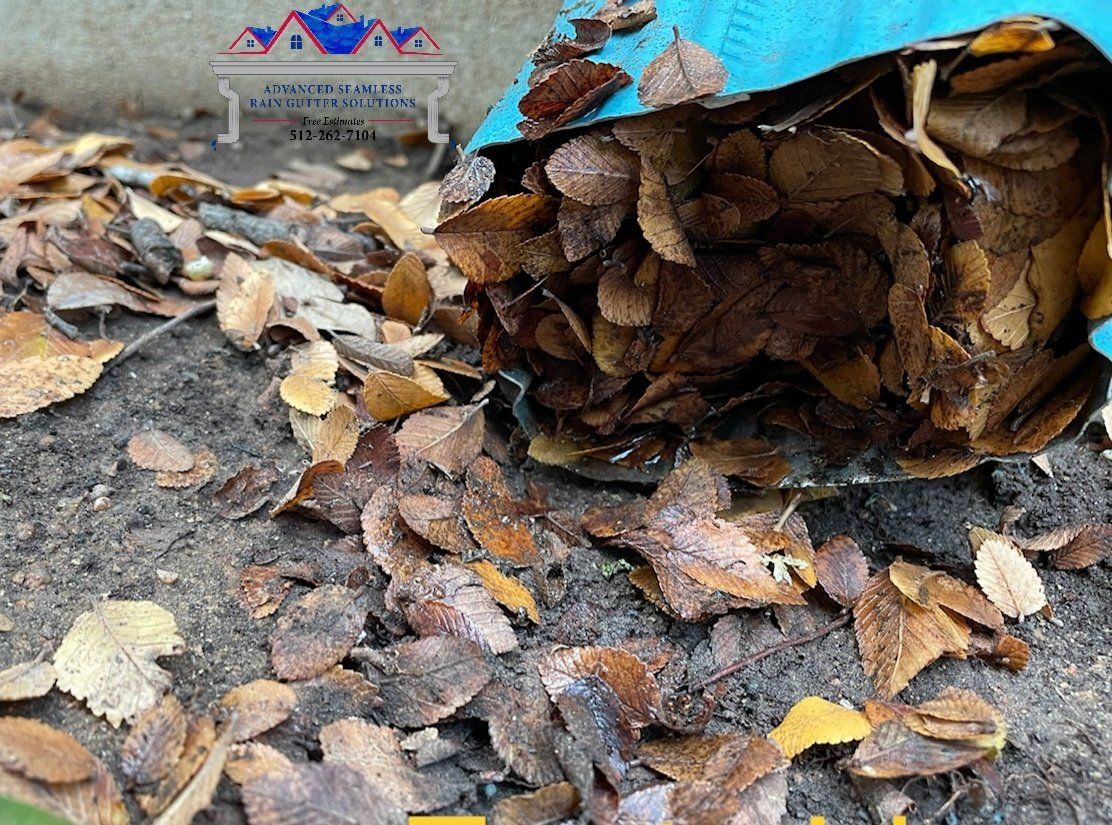
Debris is still the most common reason a gutter overflows, and our trees shed on their own schedule. Live oaks, a fixture in neighborhoods across Hays, Travis and Comal counties, don’t drop their leaves in the fall. According to the Texas Plant Disease Diagnostic Lab at Texas A&M, live oaks drop their old leaves as new leaves emerge in the spring, which is normal and not a disease. That puts a heavy load of small, leathery leaves in your gutters right before May, one of the wettest months of the year.
Fall brings a second round from cedar elms, pecans and other deciduous trees, plus whatever blows off neighboring lots. Oak leaves are small enough to slide down a gutter and pack tight in the outlet, so a run can look mostly clear from the ground and still be blocked where it counts. If your overflow started after the spring leaf drop or after the first fall cold front, clogged gutters are the first thing to rule out.
Clearing loose leaves by hand is a reasonable weekend job on a single-story home. The part people skip is flushing the system afterward. A professional clean-out that also flushes every downspout confirms water actually runs from the far end of each gutter to the ground, which is the only real test that the clog is gone.
Blocked downspouts and buried drain lines
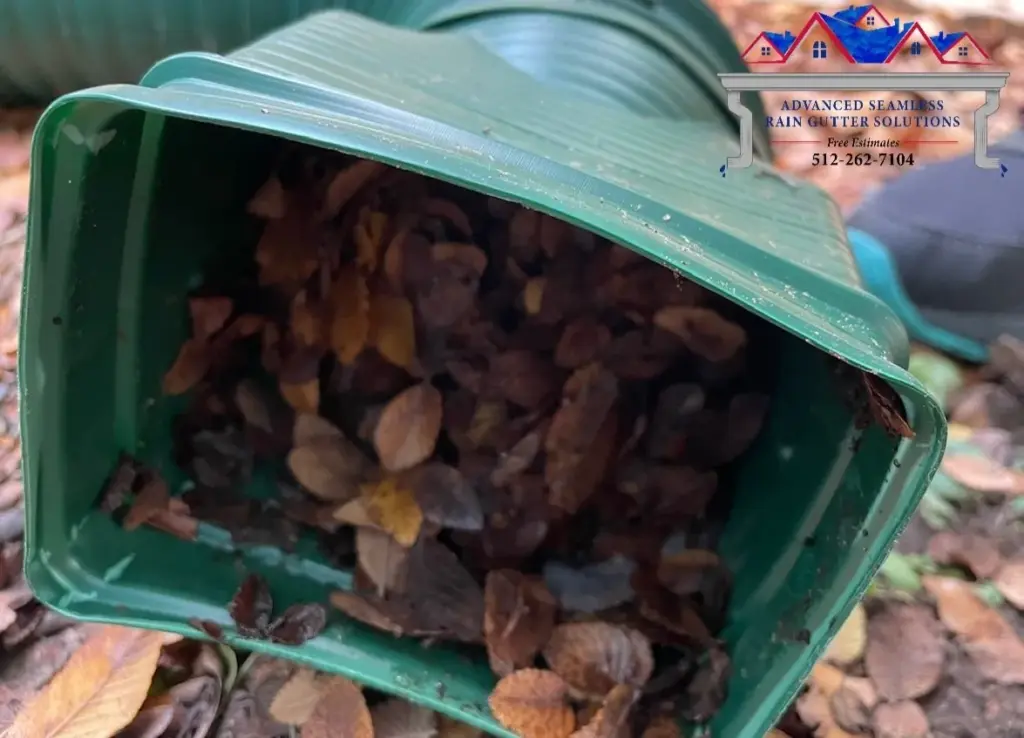
If the water spills right next to the downspout, the gutter is probably fine and the downspout isn’t. The two elbows at the bottom, where the pipe bends toward the yard, are common choke points. Leaves and twigs slide down the straight section, hit the bend and stop. Within a few storms the downspout is packed solid and the gutter above it fills like a bathtub.
Downspouts that empty into a buried pipe add another place for trouble. Silt, roots and leaf mulch build up underground where you can’t see them, and the backup shows up as overflow at the roofline. A quick test is to disconnect the downspout at the ground and run a hose into the gutter. If water now flows freely out the bottom of the downspout, the blockage is in the buried line, not the gutter.
Gutters that are too small for our rain
When a clean, straight gutter still overflows along its whole length in a hard storm, the system is undersized. Central Texas rain isn’t gentle. The National Weather Service Austin climate summary notes that local thunderstorms are very efficient rainmakers and that rainfall has exceeded 5 inches in several hours. Austin sits in what the agency calls Flash Flood Alley.
Put that in roof terms. The Texas Water Development Board figures about 0.62 gallons of water per square foot of roof for every inch of rain. A 5-inch storm on a 2,000-square-foot roof is roughly 6,200 gallons of water trying to leave through your gutters in an afternoon. A standard 5-inch gutter system with one downspout per long run can’t keep that much water flowing that fast, so the extra pours over the front.
The trend isn’t helping. When the National Weather Service compared the 1991 to 2020 climate normals with the previous 30 years, total rain at Austin rose even though the number of rainy days held steady or fell, because there were more days with over an inch of rain. Fewer, heavier storms are exactly what exposes an undersized system. We cover the fall side of this in more detail in why September downpours expose undersized gutters. The usual fix is a 6-inch gutter, larger downspouts, or simply adding a downspout to split a long run.
Sagging runs and the wrong slope
Gutters need a slight, steady fall toward each downspout. If a run is dead level, or worse, sags in the middle, water collects at the low spot and spills there first. You’ll often see a line of overflow in one section while the rest of the gutter looks fine.
Sags usually come from loose or widely spaced hangers, rotted fascia that can no longer hold a screw, or years of carrying wet leaves and standing water. Standing water causes its own problems too. It speeds up corrosion at the low spot and, in our summers, gives mosquitoes a place to breed. Fixing a sag means re-hanging the run at the right pitch, and if the fascia behind it is soft, repairing or wrapping that board first so the new hangers have something solid to grab.
Valley overshoot, drip edge gaps and clogged guards
Where two roof slopes meet, the valley channels a concentrated stream of water toward one spot on the gutter. In a heavy rain that stream can shoot right over an inside corner. A small diverter or splash guard at the corner usually solves it without touching the rest of the system.
Water running down the fascia behind the gutter is a different problem. It usually means there’s a gap between the roof edge and the back of the gutter, often from a missing drip edge or a gutter hung too low. That water rots fascia and stains siding even when the front of the gutter never overflows.
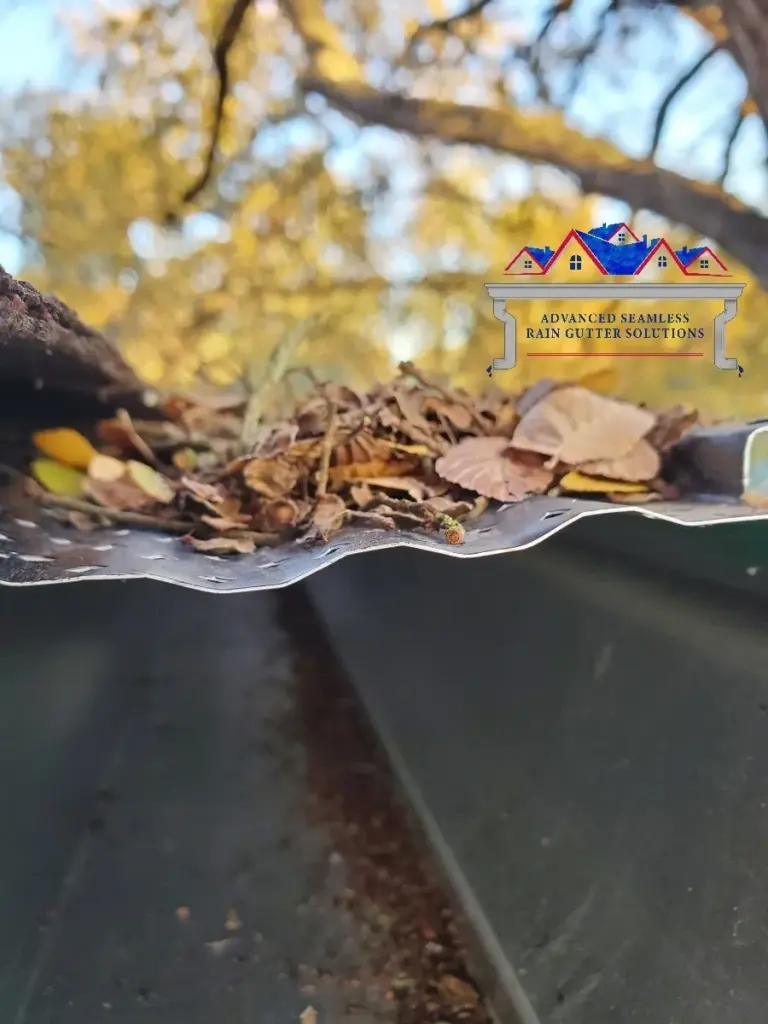
Gutter guards cut down on clogs, but they aren’t maintenance-free. Small oak leaves, catkins and pollen can mat on top of a guard and turn it into a roof for the gutter, so water sheets right over it. A guarded gutter that suddenly overflows usually needs its surface brushed off, not a new system.
What you can check yourself, and when to call
On a single-story home with a stable ladder and firm ground, you can safely clear loose debris, flush a downspout with a hose and look for obvious sags. If you want a clear line between what’s a reasonable DIY job and what isn’t, our breakdown of DIY gutter repair versus hiring a pro walks through it.
Call a pro when the gutters are on a second story or a steep roof, when the overflow keeps coming back after cleaning, or when the fascia behind the gutter is soft. To prevent the problem from coming back, find the real cause. Repeat overflow after a cleaning almost always points to a sizing, slope or drainage issue, and those take measuring and re-hanging, not another clean-out.
Gutters Made Easy is a family-owned company in Kyle, and owner Tyler Smith has more than 20 years of hands-on experience with rain gutters and sheet metal. We can find the cause, fix what’s there and tell you honestly whether a cleaning is enough. If your gutters are spilling over, book a cleaning and inspection or call (512) 881-9204 for a free estimate.
Common questions about overflowing gutters
Why do my gutters overflow even though they’re clean? If a clean gutter overflows along its whole length in heavy rain, it’s undersized for the roof or has too few downspouts. If it overflows in one spot, look for a sag, a valley corner or a blocked downspout.
Can a clogged downspout make the whole gutter overflow? Yes. When the outlet or bottom elbow is packed with leaves, the gutter can’t drain, so it fills and spills over even if the trough itself is clear.
How often should gutters be cleaned in Central Texas? At least once a year, and twice under live oaks. A late spring cleaning after the oak leaf drop and a fall cleaning after the deciduous trees finish usually keeps the system ahead of the wettest months.
Will gutter guards stop overflowing? Guards reduce clogs inside the gutter, but they won’t fix an undersized gutter, and debris matted on top of a guard can cause its own overflow. Brush the surface off when it builds up.
Can overflowing gutters damage my foundation? They can. Overflow drops water right at the base of the house, and on the expansive clay soils common around here, repeated soaking next to the slab is a real source of water damage worth preventing.