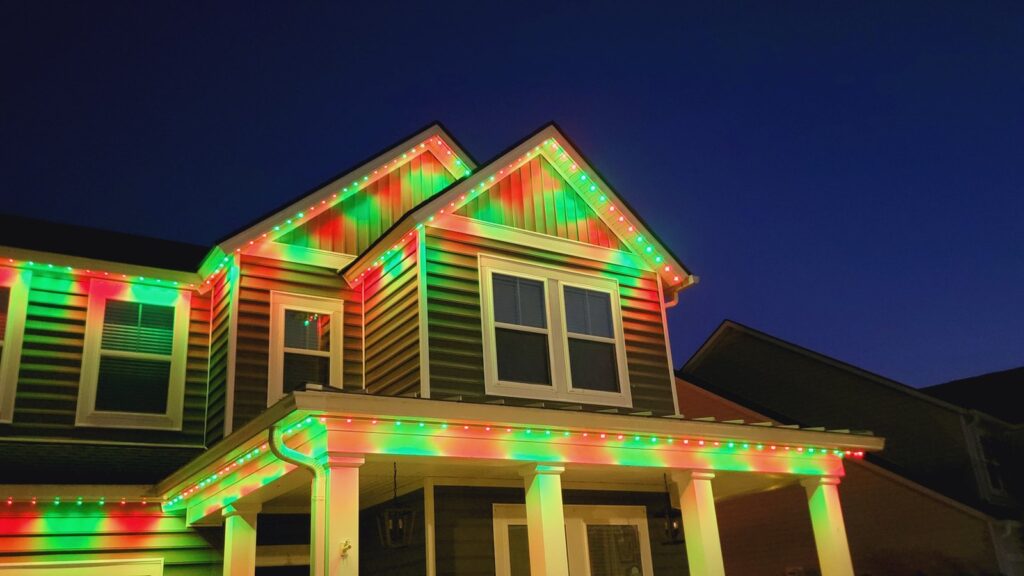
For a lot of Central Texas homeowners, yes, permanent Christmas lights are worth it. If you decorate the roofline every year, plan to stay in the house a while, and would use the lights for more than December, a permanent track pays you back in ladder trips you never make again and a clean look you don’t have to rebuild every November. If you only put up a strand or two, or you’re likely to sell soon, traditional Christmas lights are still the sensible choice.
That’s the short answer. The longer one depends on your house, your roofline and how you actually use your lights, so here’s how the two options compare on a home in the Austin and San Antonio area, from a crew that spends every working day on the eaves where these lights mount.
Traditional strands vs permanent Christmas lights
The difference is simple. Traditional Christmas lights go up and come down each year, usually as string lights held by plastic clips on the gutter lip or shingles. A permanent system is installed once: a low profile channel goes under the drip edge or along the fascia (the board your gutters hang from), individually addressable LEDs sit inside it, and an app on your phone controls color, brightness and schedule. Think of it as permanent outdoor lighting that happens to do Christmas very well.
Here’s how they stack up on the things homeowners ask us about most.
| Question | Traditional string lights | Permanent track |
|---|---|---|
| Ladder trips per year | At least two, up and down | None after install |
| Upfront cost | Low | Higher, quoted by the house |
| Colors | Whatever strand you bought | Any color, changed from an app |
| Uses beyond December | Rarely | Holidays, game days, everyday accent light |
| Daytime look | Clips and wire for six weeks | Low profile channel that reads as trim |
| Storage | Bins in the garage | Nothing to store |
| Fits a home you’ll sell soon | Yes | Less likely to pay off |
Notice that cost cuts both ways. Holiday lights from the store are cheap to buy, but you pay for them again each year in time, replacement bulbs and the risk of the climb. The permanent option costs more on day one and almost nothing in effort after that. That’s where the value shows up.
The ladder trips you stop making
The single biggest argument for permanent lights is safety. The U.S. Consumer Product Safety Commission counts about 160 Christmas decorating injuries a day during the holiday season, and over 40 percent of them involve falls (CPSC, 2024). In one recent season, about 14,800 people ended up in emergency rooms from holiday decorating injuries.
Central Texas adds its own twist. We don’t fight icy roofs in December the way northern states do, which makes it easy to underestimate the job. But a lot of the newer homes around Kyle, Buda and San Marcos are two stories, with a long front eave and a garage roof stepping down below it. Hanging a clean line along that means leaning a ladder against a gutter, reaching sideways and clipping lights two stories up. Then you do it again in January.
A permanent system turns two risky climbs a year into zero. For older homeowners, or anyone who has watched a spouse wobble on the top rung, that alone settles the question.
Can a year-round light handle Texas sun and heat?
Here’s the question that matters more here than in most of the country: can a light that stays outside all year survive a Central Texas summer? The systems we install are sealed and rated to stay outdoors year round. That is the real difference between them and the outdoor Christmas lights that show up in big box stores each October. Those are built to spend most of the year in a box.
Homes here take 100 degree afternoons, hard UV on south and west facing eaves, the occasional January freeze and the spring storms that roll through Hays and Comal counties. A product rated for that is only half of it, though. The other half is the installation. A channel screwed into sound fascia, with the runs kept clear of the spots where gutters overflow and downspouts splash, stays straight and working season after season. A channel tacked onto soft wood or sitting under a sheet of runoff won’t. That’s also why we won’t promise you a lifespan in years: how long a system lasts comes down to the product rating and the mounting under it, and the mounting is the part we control.
How much do permanent lights cost to run and install?
Running cost is the easy part. The U.S. Department of Energy says LEDs use up to 90 percent less energy and last up to 25 times longer than incandescent bulbs (DOE Consumer Guide to Energy-Efficient Lighting, 2021). A roofline of LEDs on a nightly schedule is a small line on your electric bill. Compare that to a house wrapped in old incandescent holiday lights, and the gap is wide.
The installed price is where homes differ. We don’t quote by the foot over the phone. Two houses on the same street can land in very different places. The price is set by a handful of things you can see from the curb:
- How many linear feet of roofline you want lit
- One story or two, and how many peaks and gables
- How many corners and transitions the run has to turn
- How many controllers and power points the layout needs
A single story ranch with one long eave is a very different job than a hill country home with three rooflines stepping down a slope. That’s why we walk the house and hand you a written quote built from your elevations, not a catalog number.
What are the real downsides?
Permanent lights aren’t the right call for every house, and you should hear the drawbacks from the people who install them.
The upfront cost is real. You’re paying for years of convenience at once. If you only light a porch rail and a front bush, string lights will always be cheaper.
Some people prefer the classic look. A permanent track produces a crisp, even line of light. If what you love is the warm, slightly uneven glow of big old-fashioned bulbs draped along the gutter, a track won’t feel the same.
It’s part of the house now. If you’re likely to move soon, you’ll leave the system behind for the next owner. You won’t get many seasons out of it yourself.
It depends on the roofline under it. Lights are only as straight as the board they’re fastened to. If the fascia is soft or the gutters are pulling away, that needs fixing first. That can add to the project.
More use than one season
The other way permanent lights earn their keep is that they don’t sit dark for eleven months. This is where the app control earns its place. Because every light on the run can hold its own color, one system covers a lot of occasions:
- Red and green for Christmas and the holiday season
- Orange and purple for Halloween
- Red, white and blue for the Fourth of July
- School colors on a Friday night or a game day
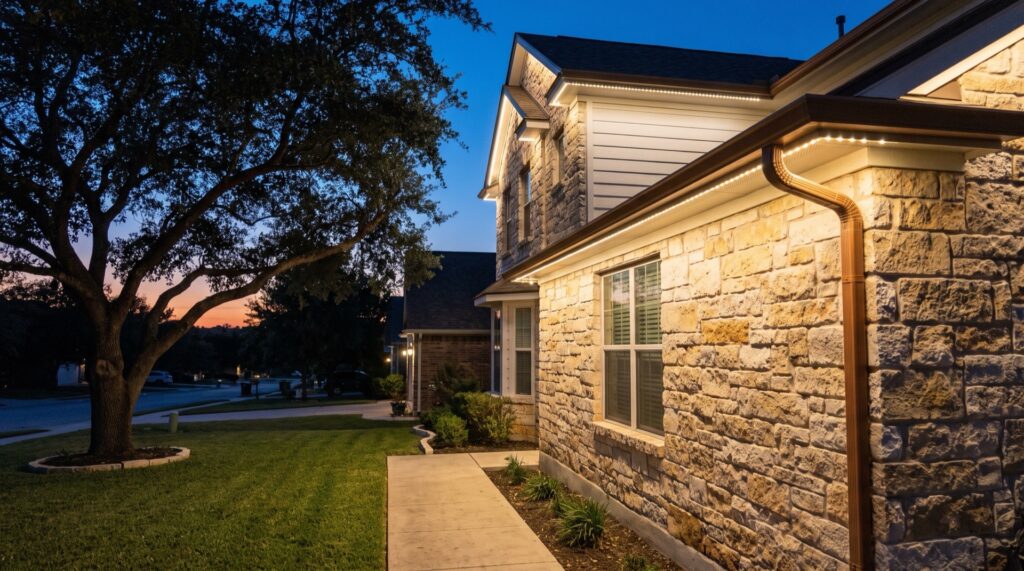
- Plain warm white on an ordinary evening
That last one is the setting most people end up using the most. A soft warm white along the eave reads as architectural lighting, not a holiday display. It adds curb appeal, and it lights the walkway and front door at six in the evening in December when it’s already dark. The app works like any smart home light schedule: set it once and it comes on at dusk without anyone thinking about it. Once you count those nights, the math on permanent lights looks a lot better than it does when you only think about Christmas.
Check the roofline before you decide
Here’s what a gutter company sees that a lighting catalog doesn’t. These lights mount to the same fascia, soffit and drip edge line that your gutters hang on. The health of that line decides whether the lights stay straight. Tyler Smith, who owns Gutters Made Easy, has spent more than 20 years on Central Texas rooflines, first as a lead installer and estimator and now running his own crews, and that line is what we work on every week.
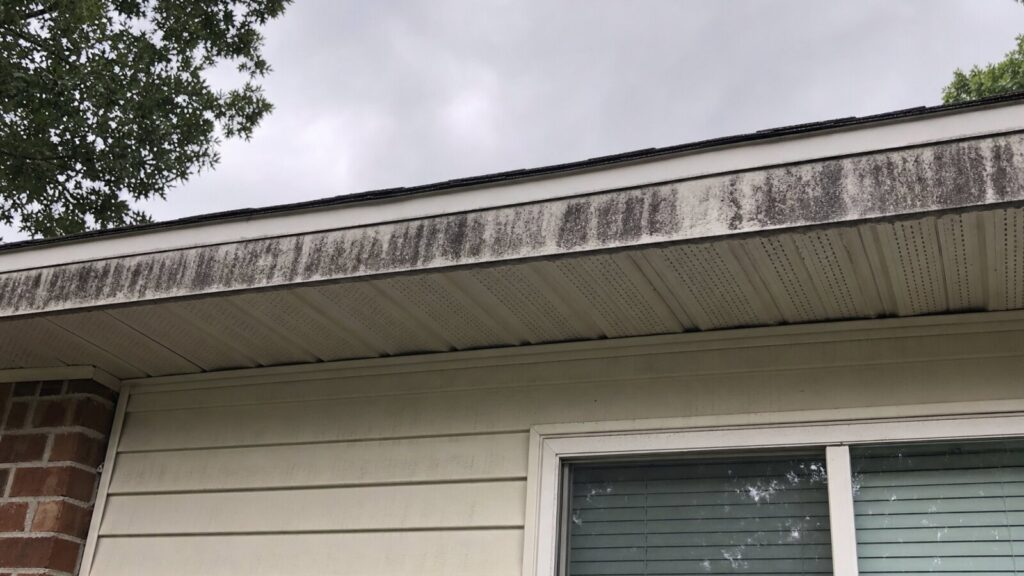
Before anyone quotes you a professional installation, two things on your house deserve a look. First, the fascia board itself. Wood that has soaked up years of overflow goes soft, and fasteners won’t hold in it. If that’s what we find, the fix is to repair the board or wrap the fascia in aluminum before any lights go up. Second, where the water goes when it rains hard. A run of lights sitting right where an overflowing gutter sheets water over the edge is a problem better found in October than in May.
If you’re curious how we plan layouts around peaks, corners and existing gutters, our page on a permanent roofline lighting system for Central Texas homes walks through it. And if the house also needs gutter repairs or leaf protection against the oak and pecan litter that fills gutters here every fall, it makes sense to handle both in one visit.
So, are permanent Christmas lights worth it for your house?
For a house in the Austin or San Antonio area, permanent Christmas lights are usually worth it when most of these are true:
You decorate the roofline each year, not just a porch. Your home is two stories, or the ladder work makes you nervous. You plan to stay at least several more years. You’d actually use the lights for Halloween, game days or everyday accent lighting. And your fascia and gutters are in good shape, or you’re ready to fix them first.
If only one or two of those fit, keep hanging traditional Christmas lights. They’re inexpensive, they come down in January, and there’s nothing wrong with that tradition. If most of them fit, permanent lighting will likely feel like one of the better upgrades you’ve made to the outside of your home.
Either way, it’s worth getting the roofline looked at by someone who works on it every day. Gutters Made Easy is based in Kyle and installs permanent lights across Kyle, Buda, San Marcos and the rest of Central Texas. Call us at (512) 881-9204 for a free estimate, and we’ll walk the house, check the fascia and gutters, and give you a written quote with no pressure either way.