
Rain Barrel and Water Collection Tanks

Rain barrels and gutter tanks for Central Texas homes
Rain barrels for gutters are the simplest way to put your roof to work. A rain barrel sits at the bottom of a downspout and fills every time it rains, and a spigot or hose connection lets you use that water on beds, gardens and potted plants instead of paying for it. A larger water collection tank, sometimes called a gutter tank, does the same job at a bigger scale and can be fed by several downspouts at once.
Gutters Made Easy installs rain barrels and water collection tanks and ties them into your gutters and downspouts, so the water actually reaches the barrel, the overflow goes somewhere safe, and the system keeps working through a Hill Country storm. Plants do well on rainwater because it is free of the chlorine and minerals in tap water, and every gallon you catch is a gallon of runoff that is not carrying yard chemicals into the storm drain.
Top-fed rain barrels
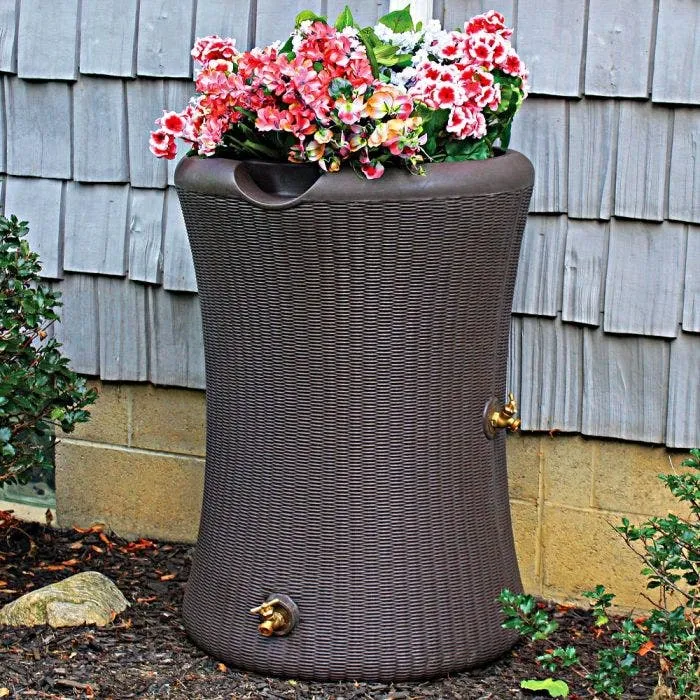
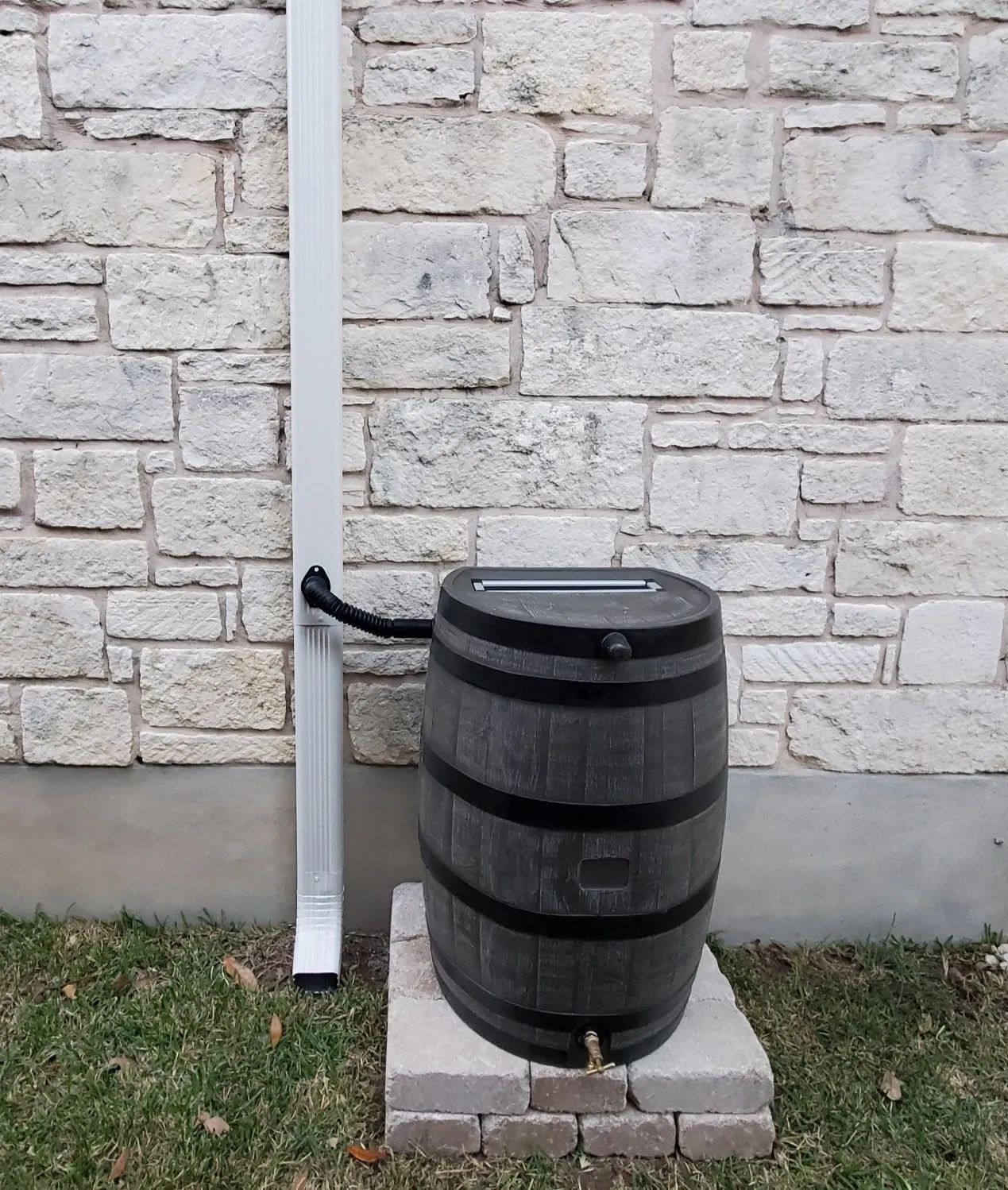
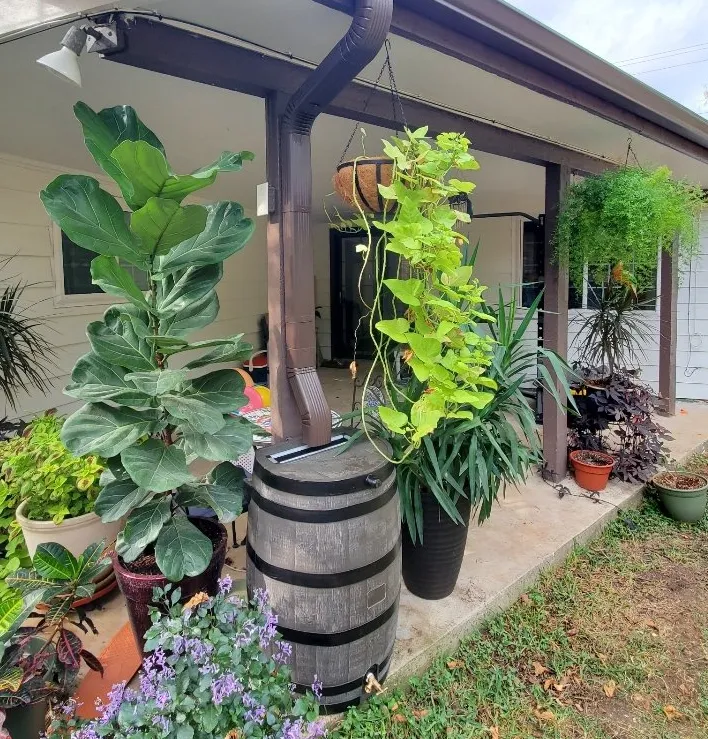
A top-fed barrel has an opening in the lid, and the downspout is cut short and set directly over it. It is the simplest setup and needs no special fittings. Choose one with a fine screen over the opening to keep out leaves and mosquitoes. Some come with a planter built into the top, which helps the barrel blend into a garden bed.

Side-fed rain barrels
A side-fed barrel is filled through a diverter installed in the downspout. The diverter sends water into the barrel until it is full, then lets the rest flow down the downspout as usual, so the barrel never overflows against the house. Diverter kits come in 2×3 and 3×4 sizes to fit the most common rectangular downspouts.
Designer rain barrels
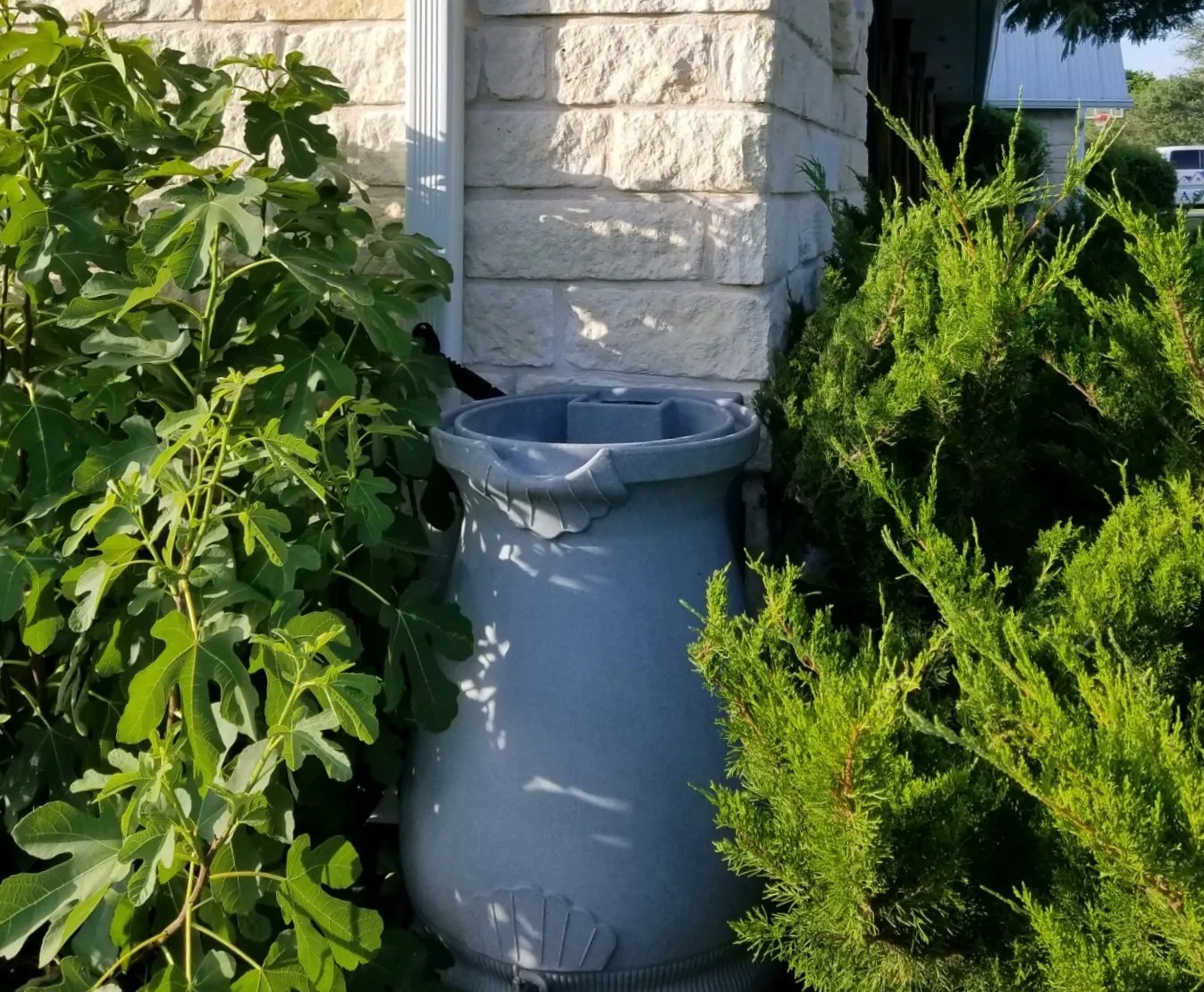
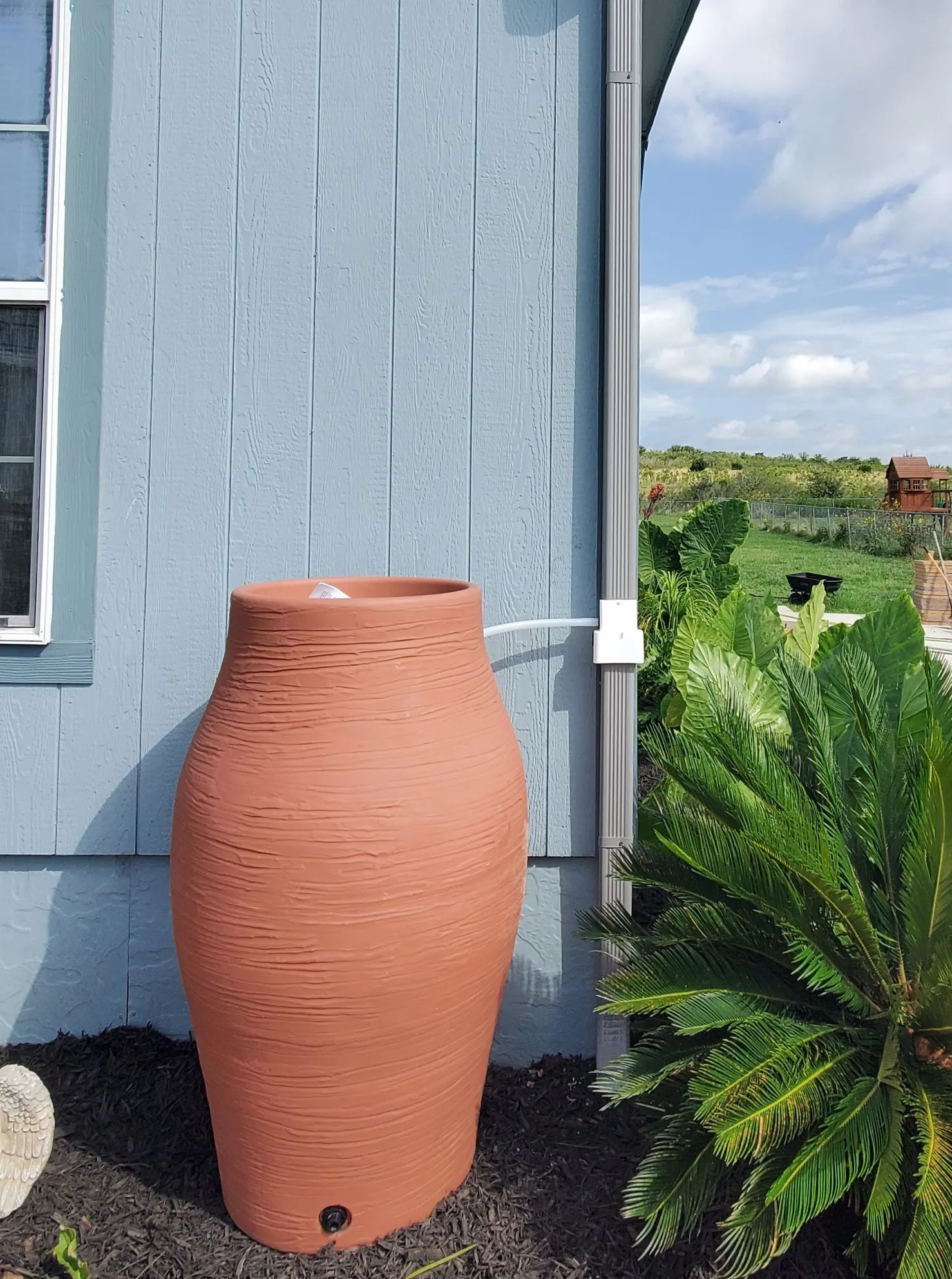
Not every barrel has to look like a drum. Designer rain barrels come in stone, wood grain and planter styles that sit nicely on a patio or by the front walk, and they work the same way as a standard barrel. If the barrel will be on display, pick the style first and we will set the downspout and diverter to suit it.
Rainwater collection tanks
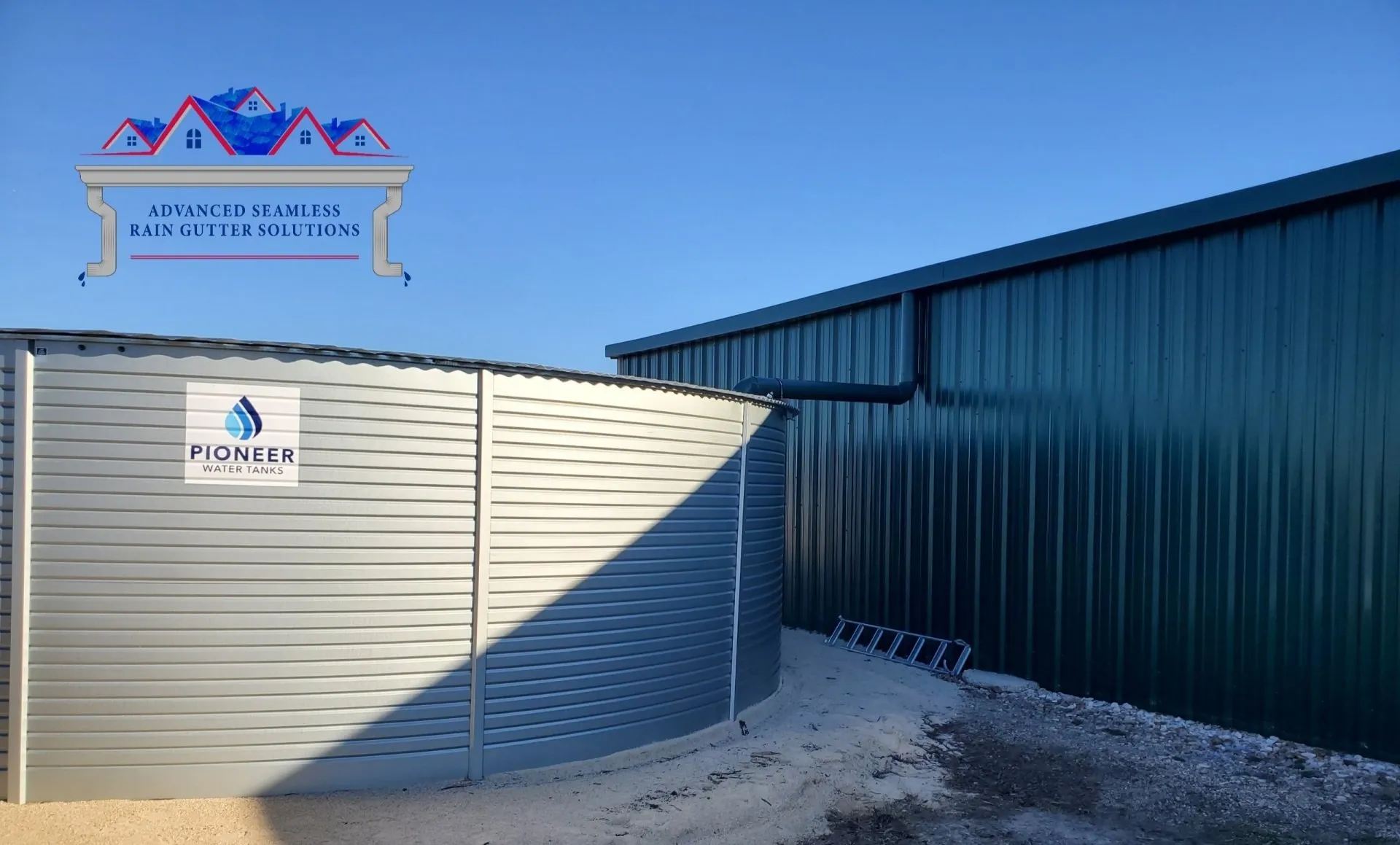
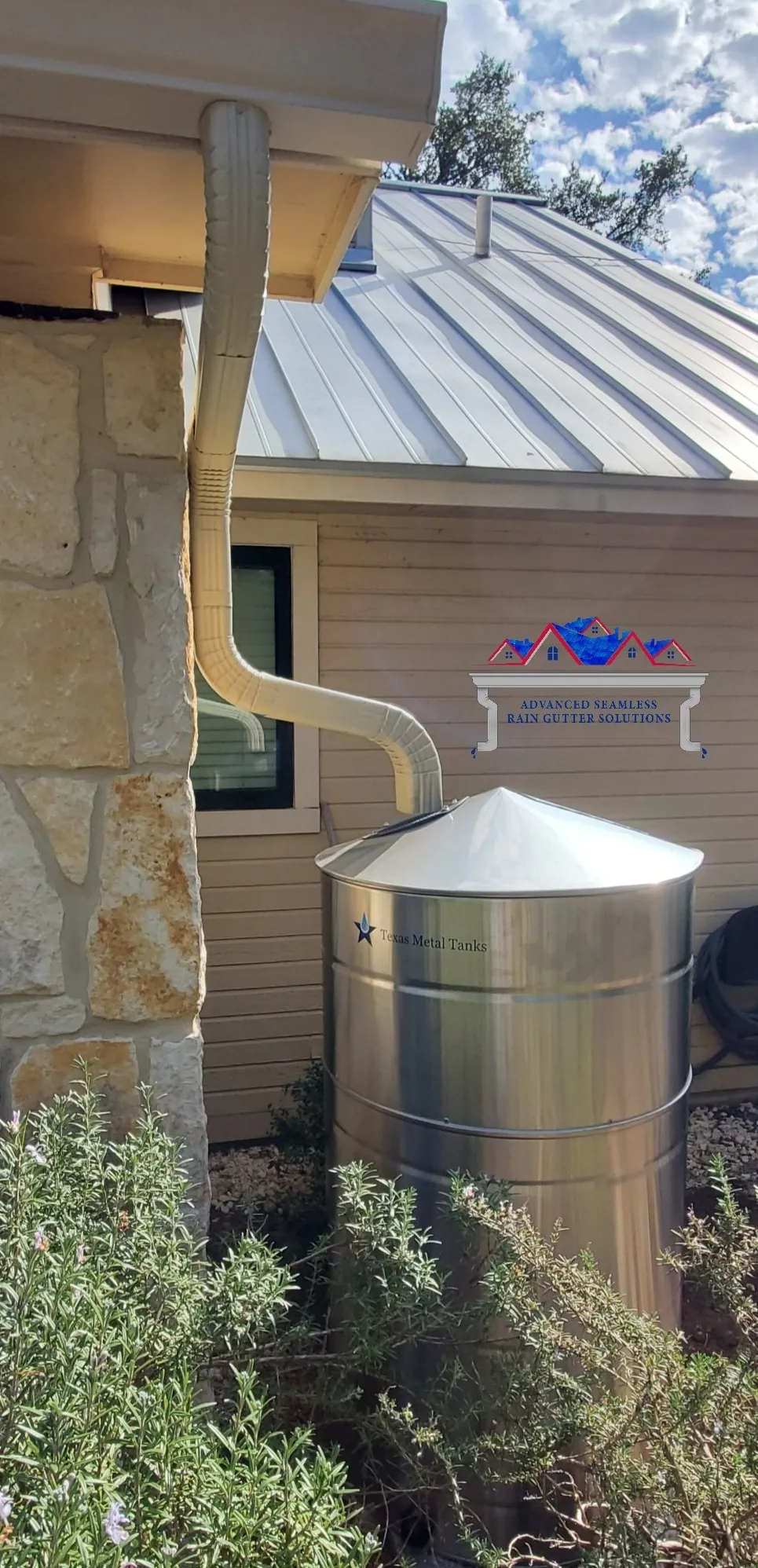
Collection tanks are large storage tanks that catch rainwater from the roofs of houses, barns, shops and businesses. They differ from rain barrels mostly in size, holding hundreds or thousands of gallons, and a single gutter tank can be fed by several downspouts. Texas rain tends to come in bursts with long dry spells between, so storage is what lets you water through a hot, dry summer with rain that fell in spring.
Shopping for a rain barrel or tank?
Why collect rainwater in Central Texas
Stored rainwater is made for outdoor watering, which is where summer water bills climb. A barrel or tank lets you water gardens, beds and potted plants with rain instead of treated tap water, keep ponds and water features topped up through the hotter months, and cut down the runoff that washes soil and fertilizer off your lot.
It also helps your gutters do their job. A barrel or tank at a busy downspout takes the first part of every storm off the ground next to the foundation, which matters on the clay soils that run through Hays, Caldwell and Travis counties.
We set the gutters, downspouts and diverters so your barrel or tank fills, overflows safely, and keeps working storm after storm.
How much rainwater your roof can collect
More than most people expect. The Texas Water Development Board’s Texas Manual on Rainwater Harvesting puts it at approximately 0.62 gallons per square foot of roof for every inch of rainfall. A 1,000 square foot section of roof draining to one downspout can collect about 620 gallons from a single inch of rain. That would fill a typical 55-gallon rain barrel eleven times over, which is why a lot of owners start with a barrel and end up adding a tank.
Size your storage to the roof feeding it and to how you plan to use the water. A barrel or two works for a patio garden. Beds, a vegetable garden or a small orchard usually call for a tank.
Connecting barrels and tanks to your gutters
- Diverters. Sized to the downspout, they fill the barrel and send the rest down the downspout once it is full.
- Screens and first flush. A leaf screen at the inlet and, on tanks, a first flush diverter that dumps the dirtiest first gallons off the roof before water reaches storage.
- Overflow. Every barrel and tank needs a place to send extra water away from the slab. Some owners tie the overflow into buried drain lines so it leaves the yard instead of pooling.
- Clean gutters. Rainwater collection works best with gutters that are sized for the roof and kept clear, so debris does not end up in the barrel.
If your gutters are undersized, leaking or missing on the side of the house where the barrel should go, we can install new seamless gutters at the same time so the whole system is built to feed the barrel or tank.
Texas rules, tax breaks and rebates
Collecting rainwater is legal in Texas, and the state encourages it. According to the Texas Water Development Board, Texas Tax Code 151.355 allows a state sales tax exemption on rainwater harvesting equipment, and Texas Property Code 202.007 prevents homeowners associations from banning rainwater harvesting installations. Your HOA can still have rules about how a system looks or where it sits, so check your guidelines before you buy.
If you are an Austin Water customer, the city offers a rainwater harvesting rebate of up to $5,000 based on storage capacity for a rain barrel or cistern system. Rebate terms change, so confirm the current requirements with Austin Water before you install. Our page on gutter work for Austin homes covers how we lay out the downspouts when a tank is part of the plan.
Rain barrel questions
Does a rain barrel need to be under a gutter? It needs a steady source of roof water, which almost always means a downspout. On a porch or entry without a downspout, a chain hung from the gutter outlet can guide water down into a barrel instead.
How long can water sit in a rain barrel? Use it within a couple of weeks when you can, keep the lid sealed and the inlet screened so mosquitoes cannot breed, and treat it as water for plants, not for drinking.
Can I leave my rain barrel out all winter? Drain it or disconnect it from the diverter before a hard freeze. A full barrel can crack when the water freezes, and Central Texas still gets a few of those nights most winters.
Our Service Areas
We proudly serve a wide range of towns and communities, making sure every home and business benefits from our professional rain gutter services.
If You Don’t See Your City Please Feel Free To Contact Us To See If We Service Your Area Too