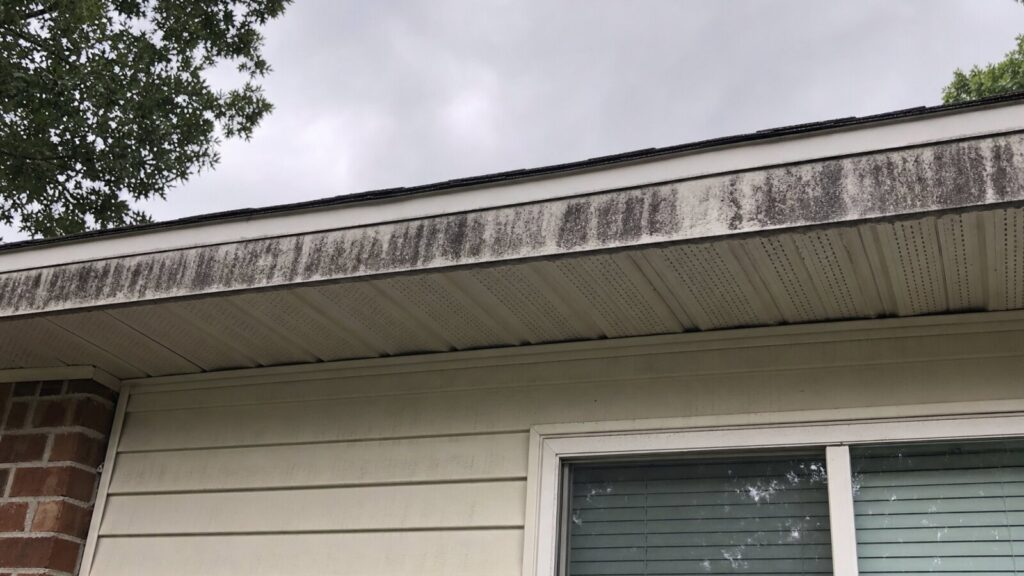
Those dark streaks creeping across your north-facing eaves and fascia are not dirt, and scrubbing usually will not touch them. They are algae, feeding on the humidity, shade, and mild surfaces that a Central Texas summer serves up in abundance. Because it is a living growth and not grime, the fix is not a harder scrub or a stronger blast of pressure. It is soft washing, which cleans the algae off without driving water behind the fascia or stripping the paint.
Key takeaways
- Black streaks on eaves and fascia are typically algae, not dirt, which is why scrubbing does not clear them for long.
- They grow worst on north-facing surfaces because those stay shaded and hold moisture in our humid summers.
- Pressure washing on fascia and soffits can force water behind the boards and damage paint. Soft washing is the safer method.
- Keeping gutters draining cleanly reduces the constant moisture that feeds the growth.
Why the streaks are algae, not dirt
The dark staining you see on eaves, soffits, and fascia is usually a type of algae that thrives on shaded, humid surfaces. It takes hold as a thin film and spreads into the streaks and blotches you notice from the driveway. Because it is alive and rooted into the surface, wiping or scrubbing knocks off the top layer but leaves enough behind to grow right back within a season.
Central Texas summers are ideal for it. The humidity climbs through the summer, and shaded surfaces stay damp long after a rain or an early morning. Add the mild temperatures under a shaded eave and you have exactly the conditions algae wants. This is also why the same house can have pristine sunny walls and heavily streaked shaded ones.
Why it always looks worse on the north side
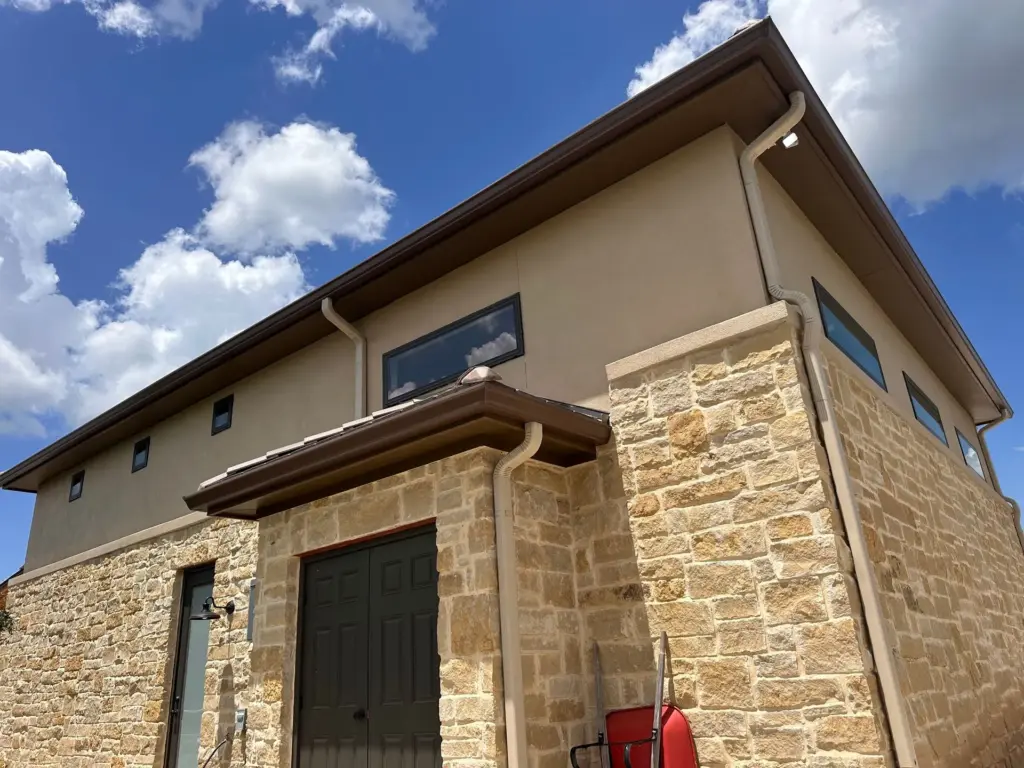
Pay attention and you will notice the streaks concentrate on the north-facing eaves and any wall that sits in shade most of the day. The reason is simple. The north side gets the least direct sun, so it stays cooler and holds moisture far longer than the south and west sides that bake dry every afternoon. Algae needs that lingering dampness to survive, so it colonizes the shaded surfaces and mostly skips the sunny ones.
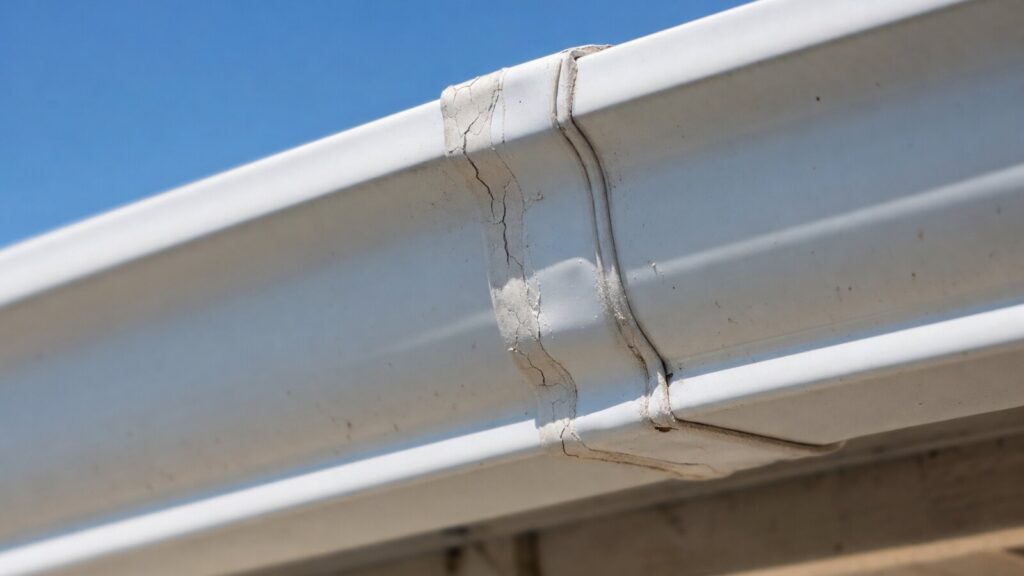
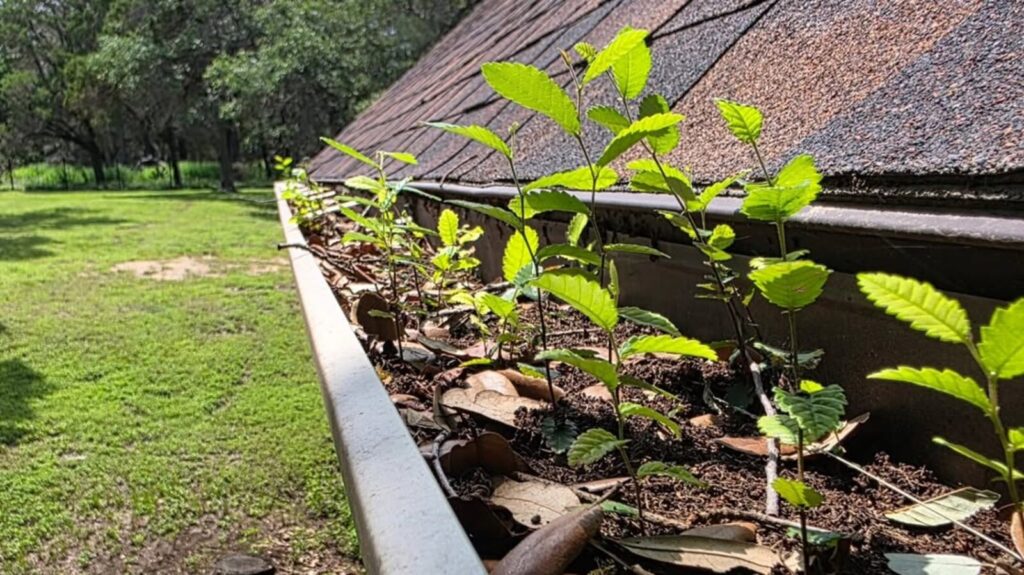
Overhanging trees make it worse by adding more shade and dropping organic debris that holds moisture. So do gutters that drip or overflow, because they keep the fascia below them damp far more often than it should be. If one stretch of fascia is streaked much worse than the rest, look up. There is often a leaking joint or a clogged section of gutter feeding it moisture.
Why pressure washing is the wrong tool here
The instinct is to blast it off, but high-pressure washing is risky on eaves, soffits, and fascia. Those are wood or wrapped surfaces with seams, and a pressure washer can drive water up behind the fascia and into the soffit, where it does not dry easily and can cause rot or feed more growth. It can also chip and strip paint, leaving the surface more porous and more prone to staining next time.
Soft washing solves it differently. Instead of relying on brute pressure, it uses a low-pressure application of a cleaning solution that kills the algae at the root, then a gentle rinse. The growth releases and washes away, the surface is not blasted, and because the algae is actually killed rather than just knocked back, the results last much longer. It is the standard approach for delicate exterior surfaces precisely because it cleans thoroughly without the collateral damage.
Clearing the streaks and keeping them gone
Getting the eaves clean is step one. Keeping them clean means cutting the moisture that feeds the algae:
- Soft wash the affected eaves, soffits, and fascia rather than pressure blasting them.
- Fix any gutter that drips or overflows onto the fascia below, since that constant wetting is often the real fuel.
- Trim back branches that shade and drip on the worst-affected surfaces where you can.
- Plan a periodic wash, since in our humid climate some regrowth over time is normal even on a well-maintained house.
Our pressure washing service uses the right method for each surface, soft washing the delicate eaves and fascia rather than hammering them, so the streaks come off without the risks. And because a leaking or overflowing gutter is so often the moisture source, our gutter repair and maintenance can fix the drip that keeps feeding the growth in the first place.
Where else the algae shows up
Once you know what to look for, you will spot the same growth in other shaded, damp spots around the house. North-facing walls, the lower courses of siding behind shrubs, shaded stretches of fence, and the north slope of a roof all collect it for the same reason: they stay wet longer than the sun ever lets them dry. Roof staining in particular is worth watching, because those dark streaks running down from the ridge are usually the same kind of algae, and it holds moisture against the shingles. The takeaway is that treating one streaked eave in isolation often misses the pattern. When we look at a home, we note every surface the growth has taken, match the cleaning method to each one, and point out the moisture sources, whether it is a dripping gutter, heavy shade, or splashback, that keep feeding it.
How Gutters Made Easy handles it
We clean exteriors the way the surface calls for, not with one setting for everything. Tyler Smith and our crew have spent years on Central Texas homes, and we know that fascia and soffits need a gentle touch while a concrete driveway can take real pressure. We match the method to the material so your eaves come clean and stay intact.
We also look at why the streaks are there. If a gutter is dripping onto the fascia, we can fix it, and all of our gutter work is backed by a lifetime materials warranty and a 10-year workmanship guarantee. If black streaks are creeping across your eaves this summer, ask us about soft washing them and getting to the moisture source behind them.
Common questions about black streaks on eaves
What are the black streaks on my eaves? They are almost always algae growing on shaded, humid surfaces, not simple dirt. That is why scrubbing does not keep them away. The growth is rooted into the surface and comes back until it is properly killed and rinsed.
Why only on the north side of my house? The north-facing surfaces get the least sun, stay cooler, and hold moisture much longer than the sun-baked south and west sides. Algae needs that lingering dampness, so it takes over the shaded eaves.
Can I pressure wash my fascia and soffits? It is risky. High pressure can force water behind the fascia and into the soffit and can strip paint. Soft washing cleans those surfaces thoroughly without driving water where it should not go.
Will the streaks come back? In our humid climate, some regrowth over time is normal, but killing the algae rather than just scrubbing it, and fixing any gutter that keeps the fascia wet, makes the results last far longer.
Could my gutters be causing the streaks? Often, yes. A dripping joint or an overflowing, clogged gutter keeps the fascia below it damp, which is exactly what the algae needs. Fixing the gutter frequently solves a recurring streak.