
There are three main types of gutters for homes, sorted by shape: K-style, half-round and box gutters. Each shape can be made from several materials, mainly aluminum, steel, copper and vinyl, and installed either as seamless runs cut to fit on site or as sectional pieces joined together. So when people ask about types of gutters, they’re really asking three questions at once: which style, which material and which kind of installation.
This guide walks through all three, then covers gutter sizes and the factors that decide which type fits your home. If you live in Central Texas, we’ll also point out where our heavy spring and fall storms, hot summers and big shade trees change the answer.
Gutter styles at a glance
A gutter’s style, also called its profile, is the shape you see when you look at the end of it. The profile affects how much water the gutter holds, how it attaches to the house and how it looks from the street. You can see photos and sizes for each gutter profile we fabricate, but here’s the short version.
K-style gutters
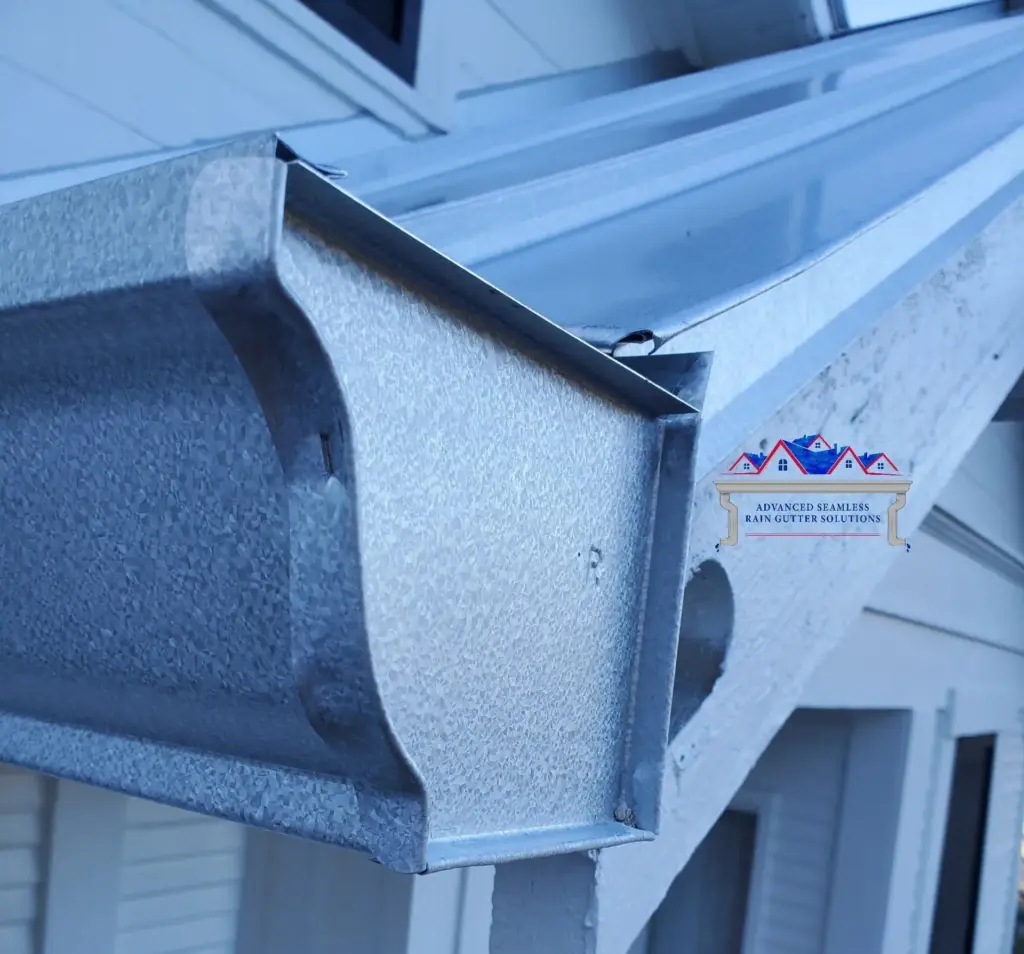
K-style gutters have a flat back and flat bottom with a decorative front face that looks like crown molding. They’re the most popular residential gutter because they carry a lot of water, fasten flat against the fascia board with hidden hangers and come in dozens of colors. Common sizes are 5, 6 and 7 inches, usually paired with rectangular downspouts. According to This Old House, a K-style gutter can handle more than twice the runoff of a half-round gutter of the same width.
Half-round gutters

Half-round gutters are a semicircle, the traditional gutter shape found on older and historic homes. They’re usually 6 or 8 inches wide with round downspouts, and they hang from brackets rather than sitting flat on the fascia. The rounded bottom drains more completely, so less water sits in the trough between storms. They usually cost more to install than K-style and carry less water for their width. For a side-by-side breakdown, see our comparison of K-style and half-round gutters.
Box gutters

Box gutters have a squared, rectangular profile with clean straight lines. They hold more water than other styles of the same width, which makes them common on commercial buildings, large roofs and modern homes. Residential box gutters often run 5 to 6 inches with 2×3-inch downspouts, while 6 to 8-inch box gutters with 3×4-inch downspouts handle larger roofs. Some older buildings have built-in box gutters set into the roof structure itself, which is a different kind of system with its own upkeep.
Fascia and custom gutters
Fascia gutters are built to serve as the fascia board and the gutter in one piece, giving a smooth face along the roof edge. Custom-fabricated gutters are bent to a specific shape for a specific building, often to match historic details or to handle an unusual roof. Both are less common on homes and are usually specified for a particular look or problem.
If you’d like to dig deeper into profiles alone, our guide to choosing a gutter profile covers how each shape suits different roofs.
Pros and cons of gutter materials
Once you’ve picked a style, the next choice is what it’s made of. Material decides how long the gutter lasts, how much upkeep it needs and what it costs. Here’s how the common options compare, with lifespan estimates from InterNACHI’s life expectancy chart.
| Material | Estimated lifespan | Strengths | Tradeoffs |
|---|---|---|---|
| Aluminum | 20 to 40+ years | Won’t rust, lightweight, many colors, easy to form into seamless runs | Thinner gauges dent under ladders and hail |
| Galvanized or Galvalume steel | About 20 years (galvanized) | Stronger than aluminum, natural metal look | Heavier; galvanized coating wears and can rust over time |
| Copper | 50+ years | Longest lasting, weathers to a brown and then green patina | Highest cost, needs soldered joints and compatible fasteners |
| Vinyl | 25+ years | Inexpensive, easy for do-it-yourself installs | Sectional only, can become brittle and sag in extreme heat and cold |
Aluminum gutters are the best fit for most Central Texas homes. It handles our heat and humidity without rusting, it’s affordable, and it can be fabricated as seamless gutters on site. This Old House recommends choosing aluminum that’s at least 0.032 inch thick for better stability and strength. Thinner aluminum dents more easily.
Steel gutters are the choice when strength matters most or when you want a raw metal look. Galvalume, a steel with an aluminum-zinc coating, pairs well with metal roofs on farmhouse and modern homes.
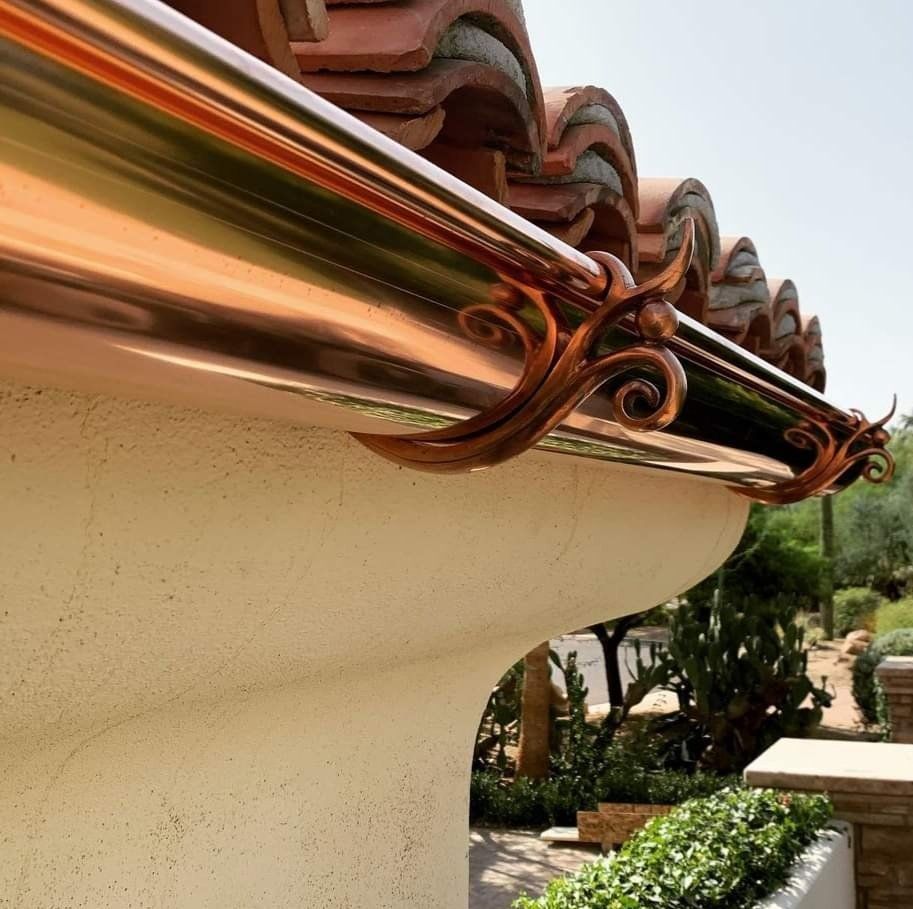
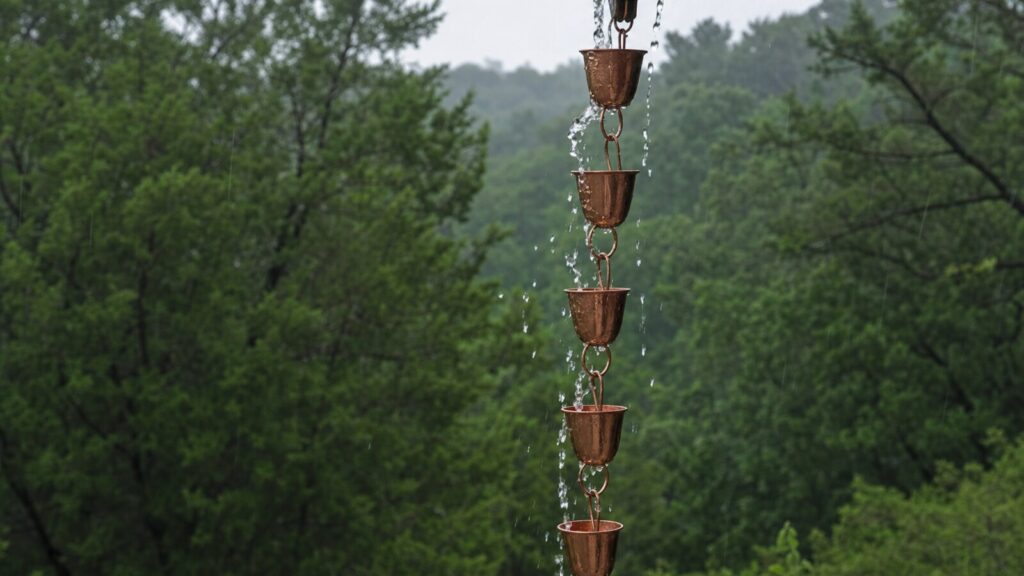
Copper gutters are the premium option for historic and high-end homes, and they last longer than anything else. Vinyl gutters are the budget option, best suited to small outbuildings and quick do-it-yourself jobs rather than a home you plan to keep for decades.
Seamless vs sectional gutters
Every style and most materials can be installed two ways. Sectional gutters come in pre-cut lengths, often 10 feet, that are joined with connectors and sealant. Seamless gutters are formed from a continuous coil on site and cut to the exact length of each roof edge, so the only joints are at the corners and downspout outlets.
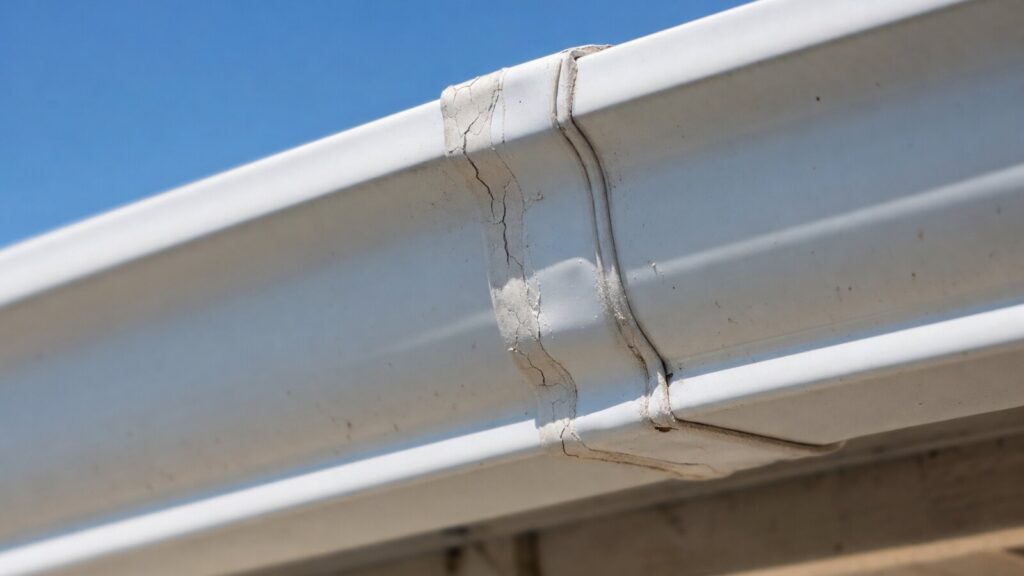
The difference shows up over time. Every seam is a spot where sealant can crack and water can drip, and Texas summers are hard on sealant. A long run of sectional gutter may have several joints that each need resealing over the years, while a seamless run has none in the middle. Sectional gutters are easier for homeowners to install themselves, and they cost less up front, but seamless gutters are the better long-term choice for most homes. Our post on seamless and sectional gutters in Texas goes into more detail.
Gutter sizes and how much water they handle
Size matters as much as style. A gutter that’s too small will overflow in a hard rain no matter how well it’s installed. The National Weather Service’s Austin climate summary puts average rainfall at around 35.5 inches a year, with May, October and June the wettest months, and much of it arrives in short, heavy storms.
For most homes in the Austin and San Antonio area, 5-inch K-style gutters are the minimum, and 6-inch gutters are the safer choice on larger roofs, steep roofs and long runs. Downspout size matters too. Moving from a 2×3-inch to a 3×4-inch downspout lets each outlet drain much more water, which is often the simplest way to stop overflow at the corners. The right size depends on the roof area draining into each run, the pitch of the roof and the number of downspouts, so it’s worth having someone measure rather than guess.
How to choose the right type of gutters for your home
With styles, materials and sizes in mind, these are the questions that usually settle it:
- What does the house look like? Traditional and historic homes suit half-round. Most other homes suit K-style. Strongly modern homes may suit box gutters.
- How much water comes off the roof? Large, steep or complex roofs need more capacity, which points to 6-inch K-style or box gutters and more or larger downspouts.
- How many trees are overhead? Heavy leaf fall from live oaks and cedar elms means more cleaning, so consider a profile that works with gutter guards.
- How long will you stay? If you plan to stay for decades, longer-lasting materials like heavier aluminum or copper pay off.
- What’s the budget? Seamless aluminum K-style gives the most value for most homes. Copper and half-round cost more but suit the right house.
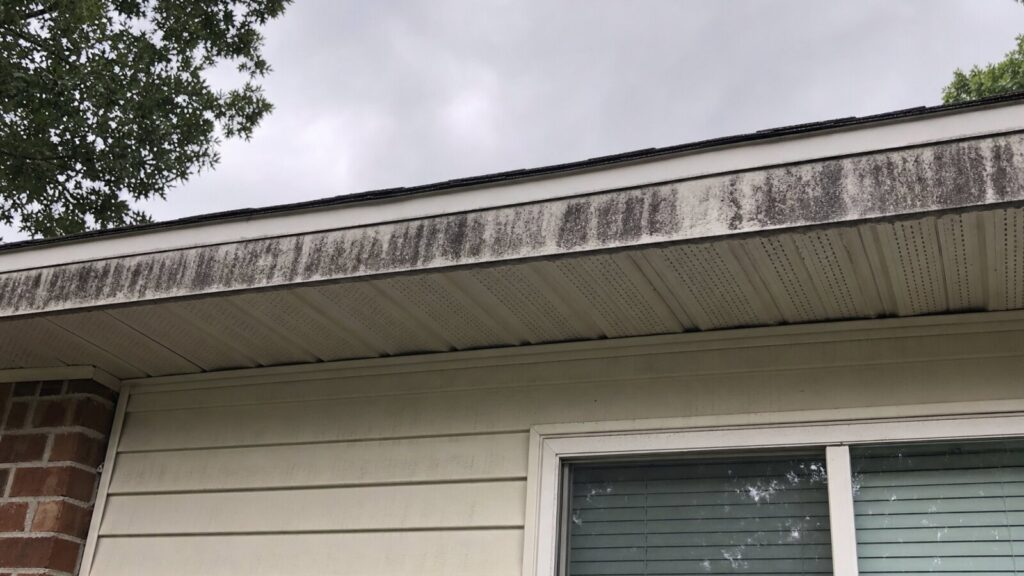
Don’t forget the board behind the gutter. Gutters hang on the fascia, so if the fascia is soft or rotted it should be repaired before new gutters go up.
Central Texas climate and your gutter choice
A few local conditions shape what works here. Our summers are long and hot, which is hard on vinyl and on the sealant in sectional gutters, and favors seamless metal. Storms tend to drop a lot of water fast, which favors larger gutters and downspouts. Hail is a real possibility in spring, and heavier-gauge aluminum resists denting better than thin stock.
Shade trees matter too. Live oaks shed their old leaves in early spring as new ones emerge, so many homes see their heaviest gutter debris right before the May rains. Choosing a gutter style and size that you can keep clean, or pairing it with guards, prevents the overflow that leads to fascia and foundation problems.
How Gutters Made Easy helps you choose
Gutters Made Easy is a family-owned company in Kyle that installs seamless K-style, half-round, box, copper and Galvalume gutters across Central Texas. Owner Tyler Smith has more than 20 years of experience with rain gutters and sheet metal, and our gutters are fabricated on site to fit each run of your home. We’ll look at your roof, your trees and your house’s style, and recommend the type that fits rather than the one that’s easiest to sell.
You can compare every style we install on our rain gutter profiles page, then call (512) 881-9204 or request a free estimate. Every installation is backed by a lifetime manufacturer warranty on materials and a 10-year workmanship guarantee.
Common questions about types of gutters
What type of gutter is best? For most homes, seamless aluminum K-style gutters in a 5 or 6-inch size offer the best mix of capacity, durability and cost. Historic homes often look best with half-round, and copper lasts the longest.
What are the two main types of gutters? By installation, seamless and sectional. By shape, K-style and half-round are the two most common on homes, with box gutters a close third.
What is the most expensive gutter? Copper, especially half-round copper with decorative brackets. It also has the longest expected lifespan, at 50+ years.
How often should gutters be replaced? It depends on the material. Aluminum gutters typically last 20 to 40+ years, galvanized steel about 20 and copper 50 or more. Leaks at many seams, sagging runs and rotted fascia are signs it’s time.