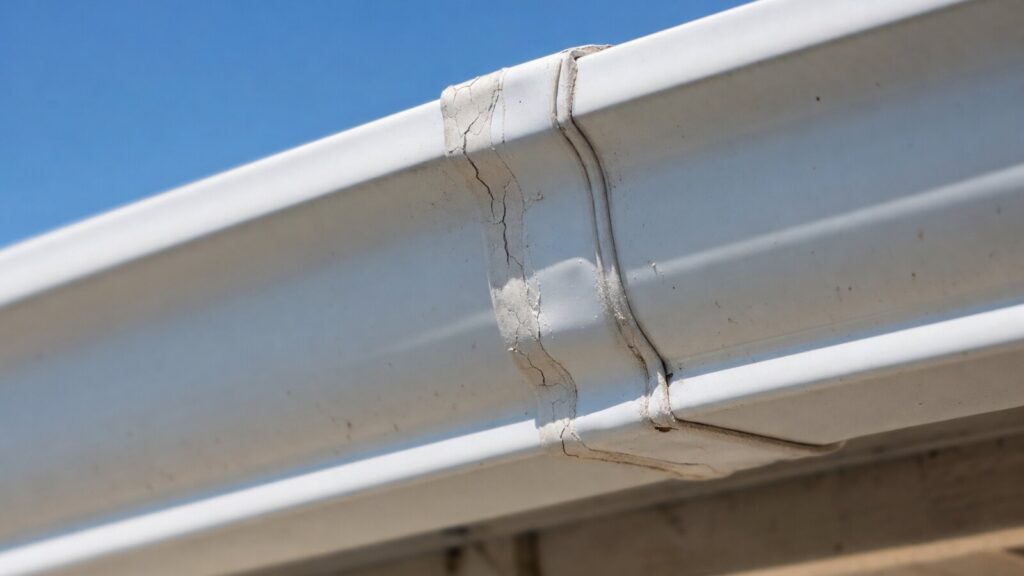
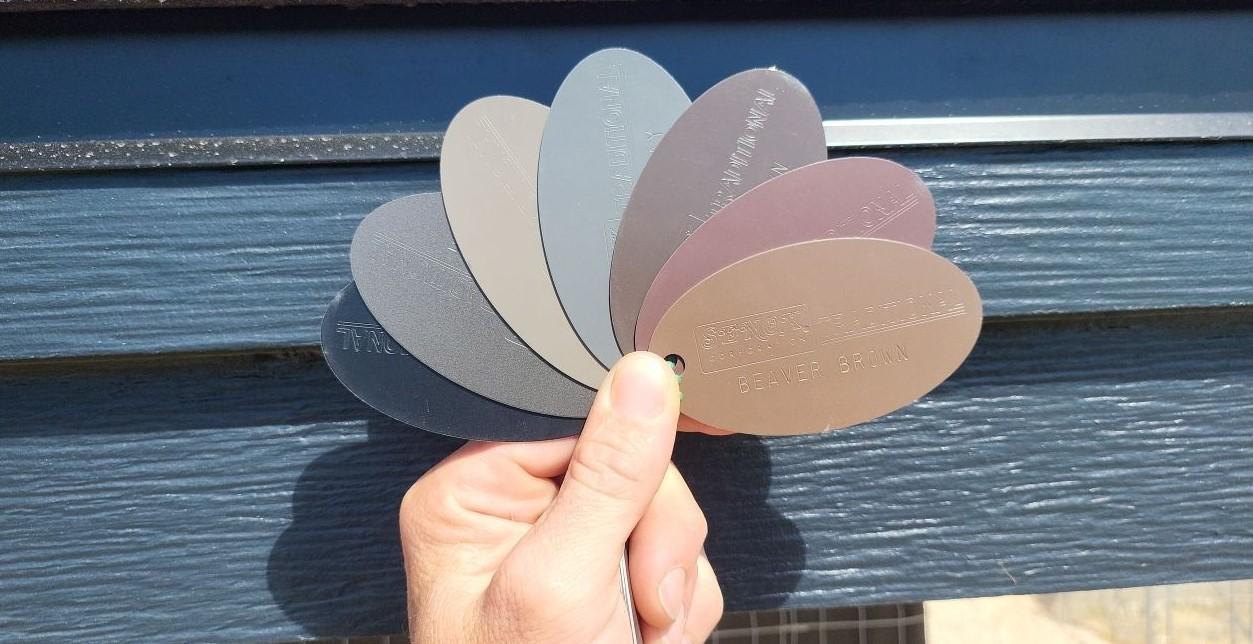
The simplest way to choose a gutter color is to match your trim. Gutters hang on the fascia, the board along the roof edge, so when they’re the same color as the fascia and the rest of the trim they read as part of the house instead of something bolted onto it. Downspouts follow a slightly different rule: they should usually match the wall they run down, so they disappear into the siding, brick or stone.
That rule covers most homes, but not all of them. A dark roof with no visible trim, a brick house with white windows, or a modern home with black accents can each call for something different. Below are the rules we use when helping Central Texas homeowners pick the right gutter color, a look at the most popular gutter colors and where they work, and a few things our sun and trees add to the decision.
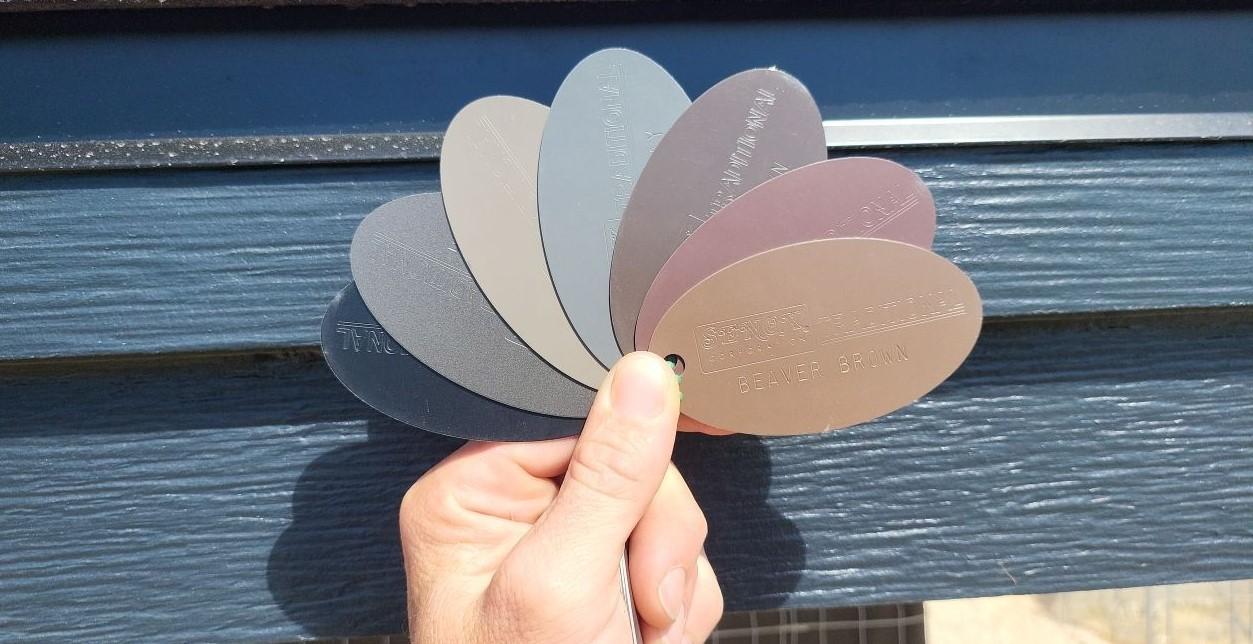
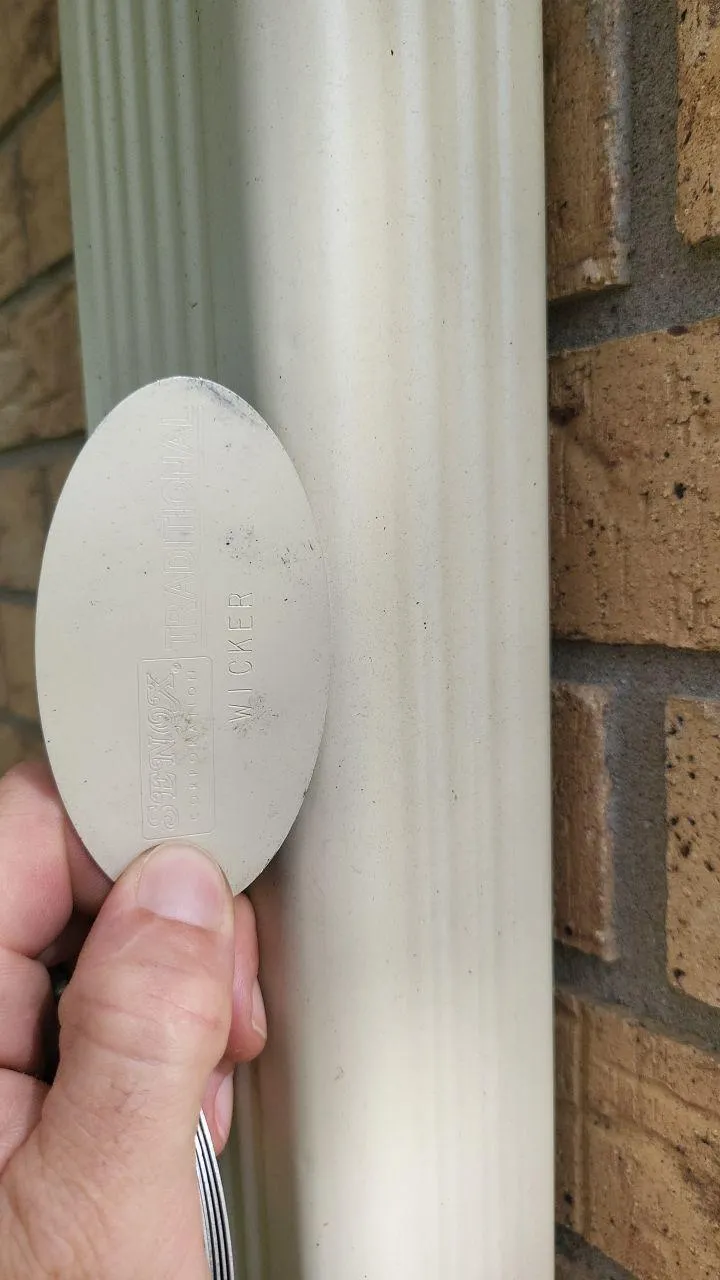
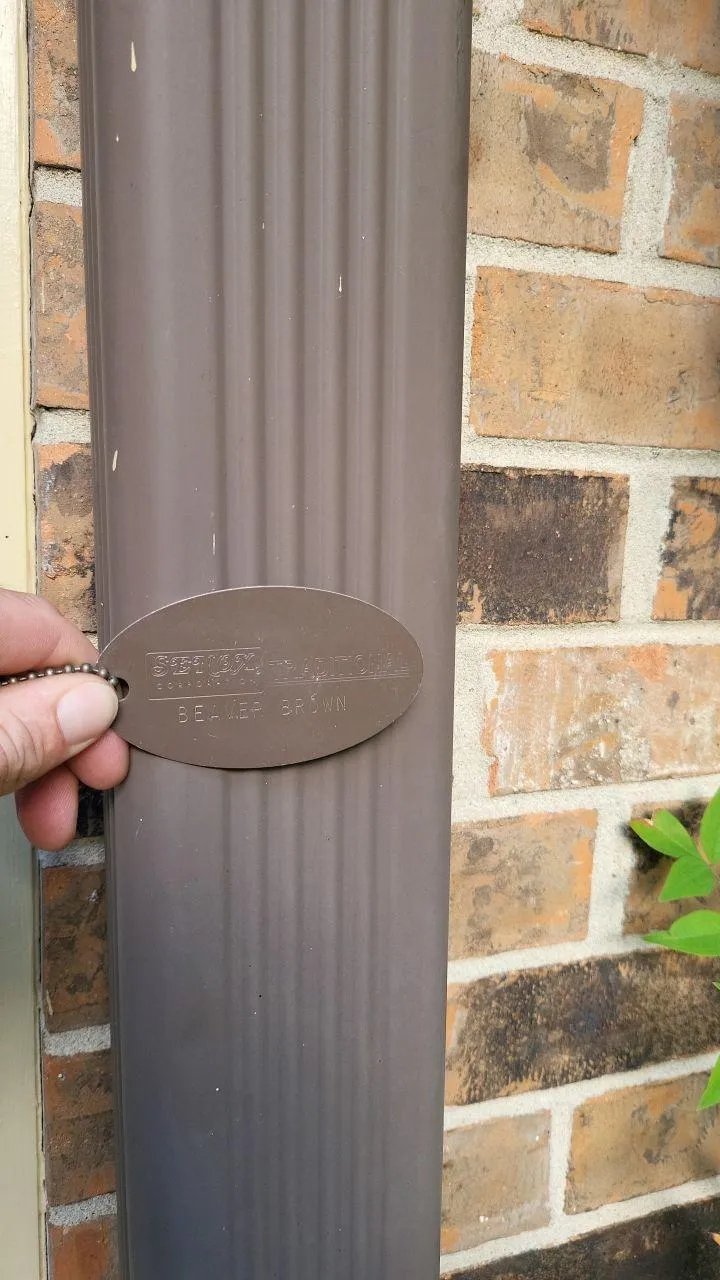
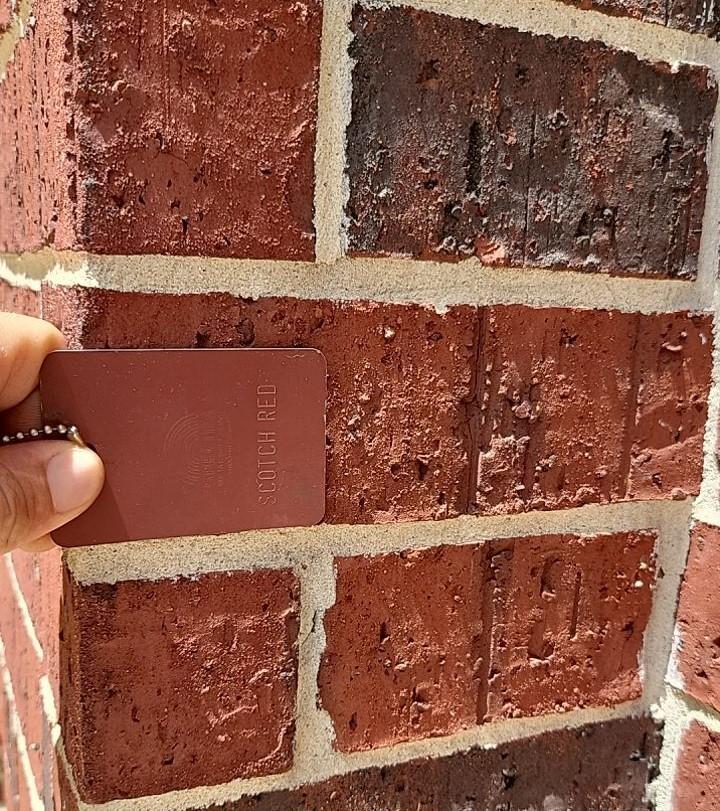
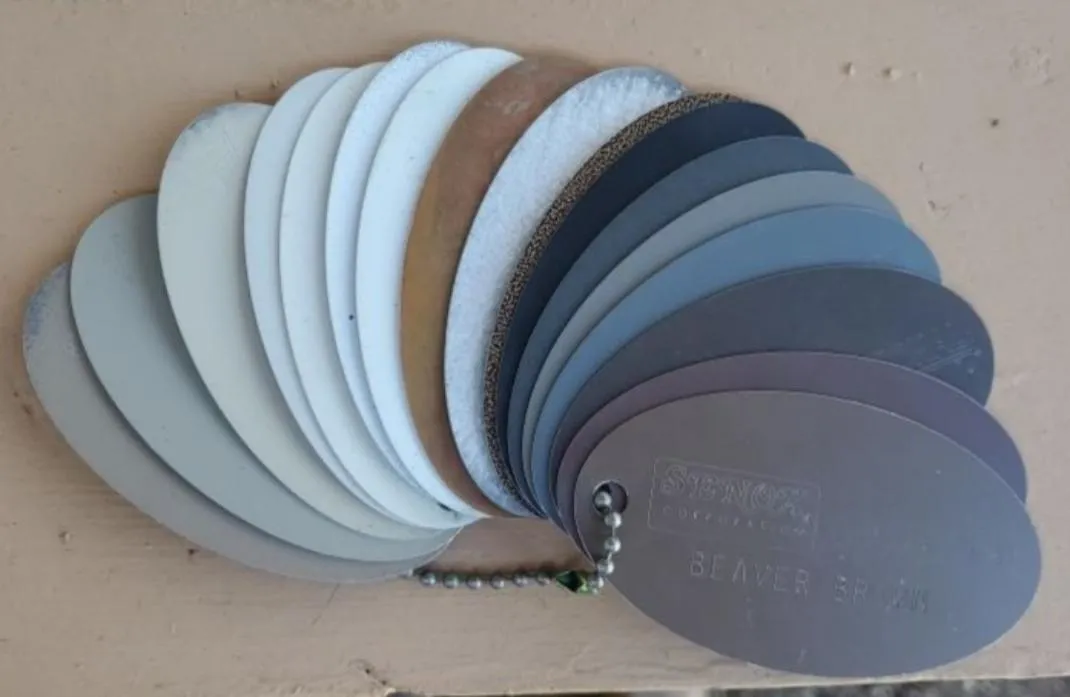
Start by matching the trim
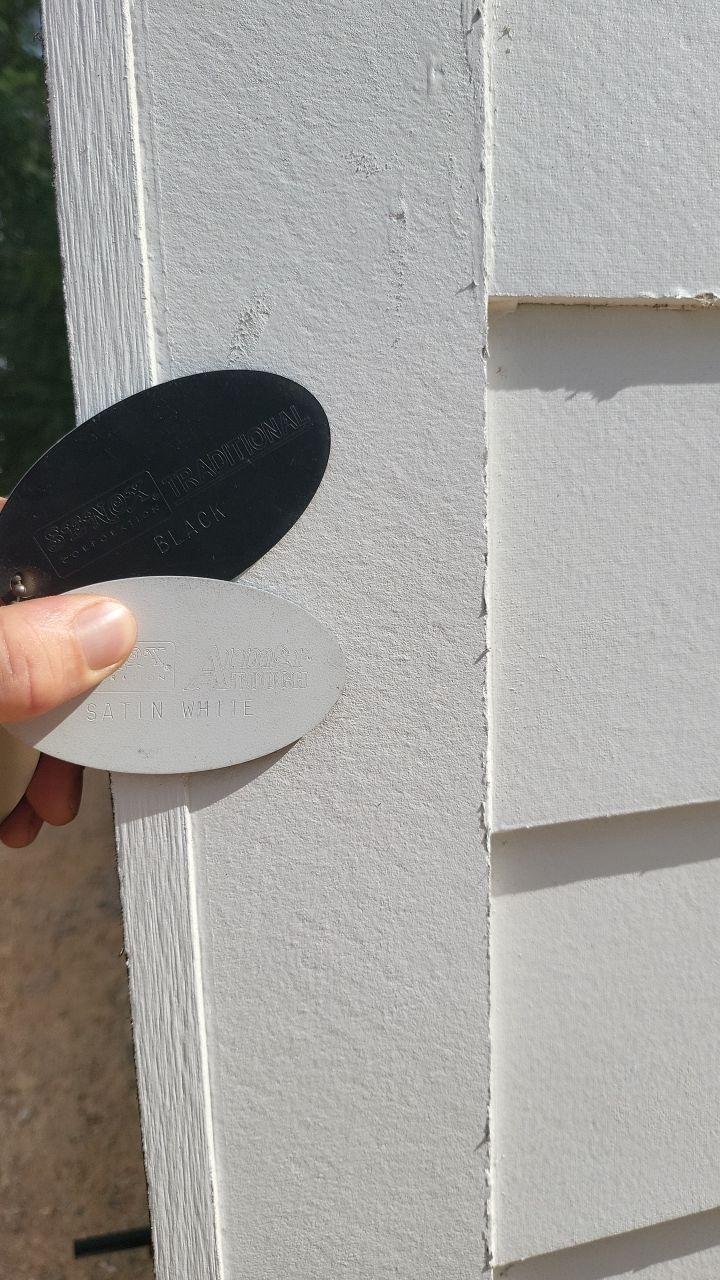
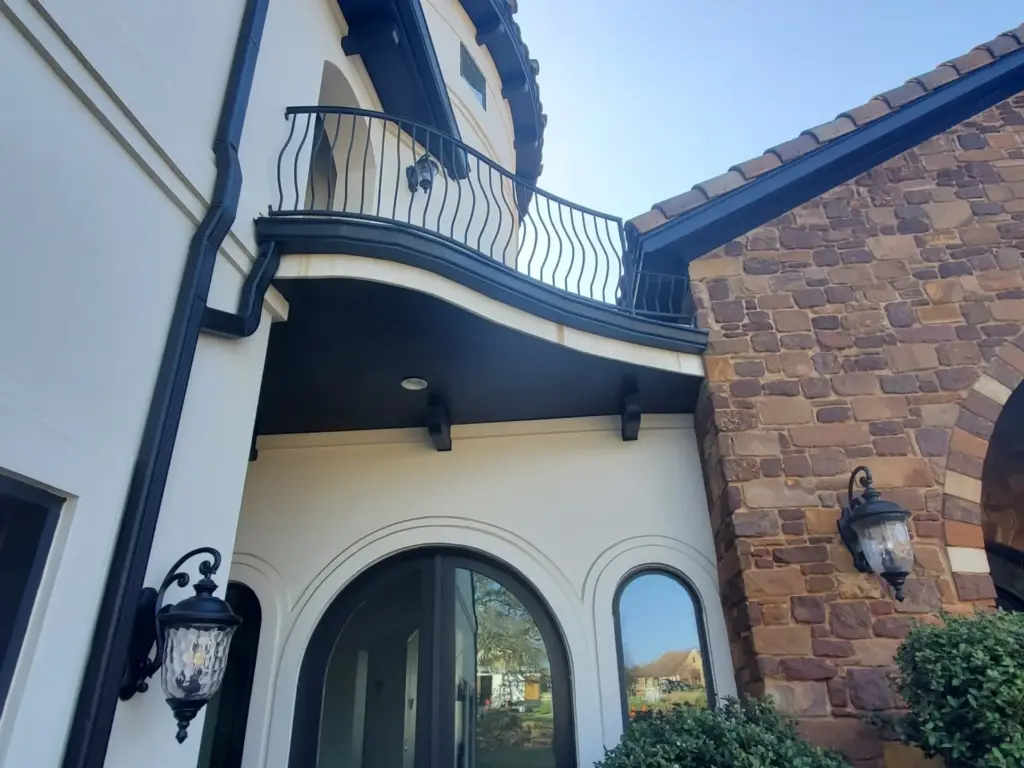
If you only remember one thing, make it this: match the gutters to the fascia and trim, not the walls. The gutter runs along the same line as the fascia board, so matching it extends the trim line around the house. White trim gets white gutters. Bronze or dark brown trim gets bronze or brown. Black trim gets black.
Matching the trim is also the safest choice for resale and for homeowners association approval. It’s the look most people expect, it ages well, and it never fights with a future paint color as long as you repaint the trim in the same family.
If your fascia is going to be wrapped in aluminum, or the trim is being repainted, choose the gutter color at the same time. It’s much easier to get a clean match when both are decided together.
When to match the roof instead
Some homes don’t have much visible trim. A house with a dark shingle roof and narrow fascia, or a home with a metal roof in bronze, charcoal or a Galvalume finish, often looks best with gutters that match the roof edge. On these homes the gutter reads as the bottom edge of the roof, so matching the roof keeps that line clean.
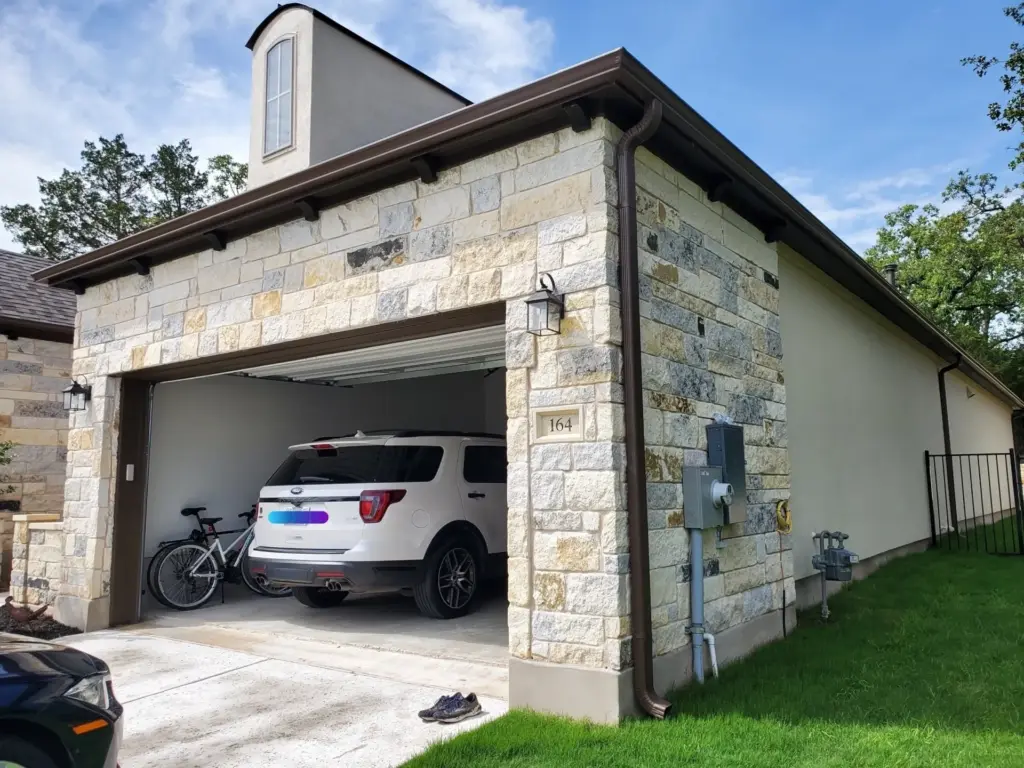
Metal roofs are common in the Hill Country, and matching them is straightforward because gutter coil comes in many of the same factory colors. A bronze standing-seam roof with bronze gutters and downspouts is a classic combination on stone and stucco homes from Wimberley to New Braunfels.
Downspouts should match the wall
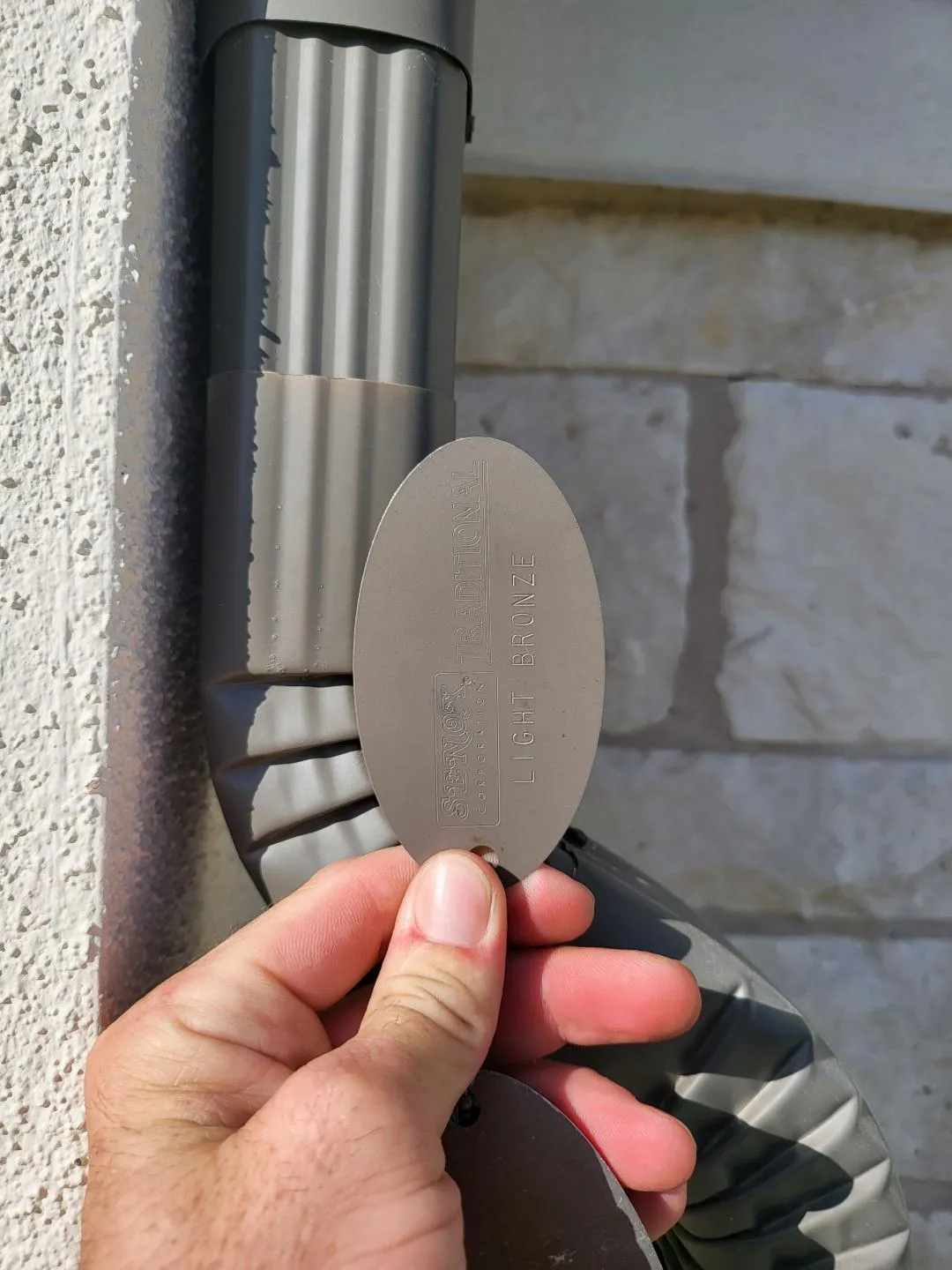
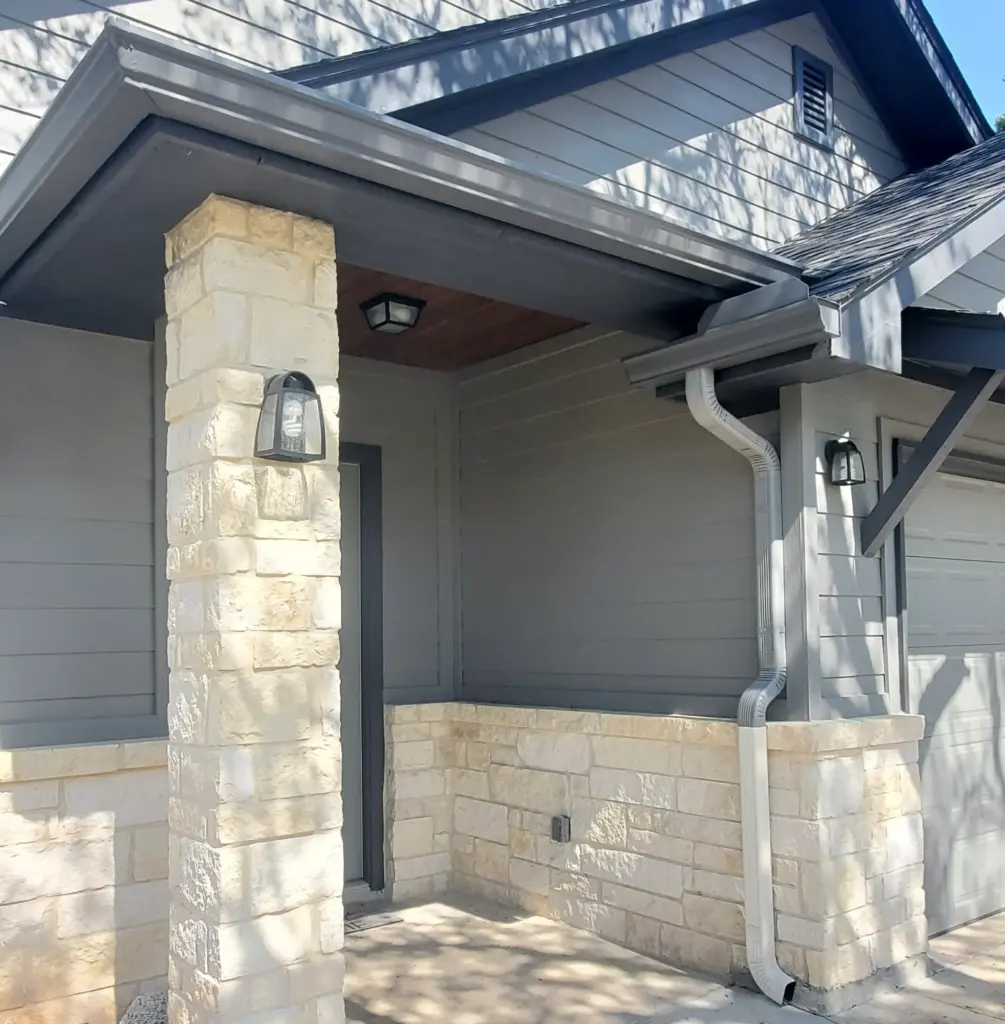
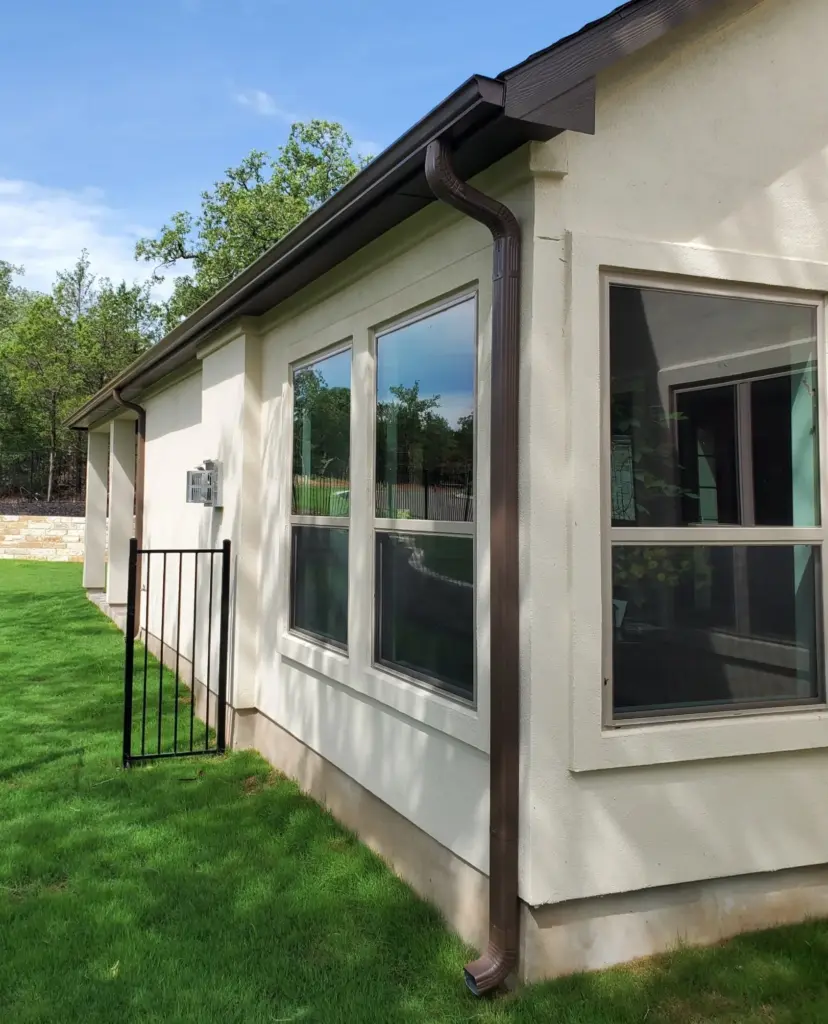
Downspouts are the part people forget. A downspout runs vertically down the face of the house, so it’s seen against the wall, not the trim. On many homes, a downspout painted to match the siding, brick or stucco nearly disappears, while the gutter above still matches the trim. On homes where the trim and walls are close in color, one color for both keeps things simple.
The exception is when you want the downspouts to show. On a modern farmhouse with black window frames, black gutters and black downspouts against white siding can be part of the design. Just make that a deliberate choice rather than a default.
Popular gutter colors and where they work
Most homeowners choose from a handful of colors. Here’s where each one tends to look its best.
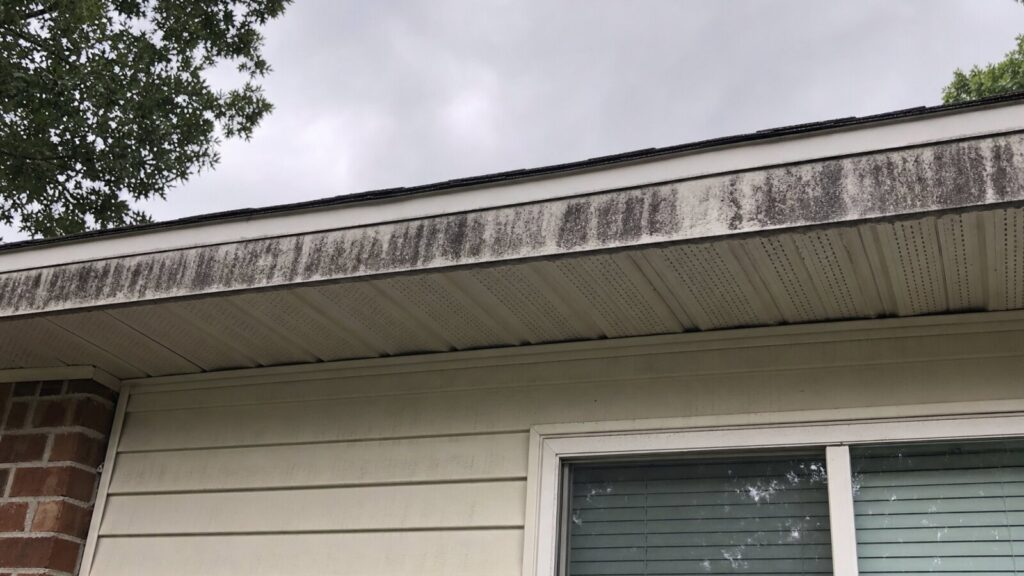
White. The classic choice for homes with white trim, and still the most common on traditional and subdivision homes. White gutters hide sun fading well but show dirt and mildew streaks sooner, especially on shaded north sides.
Bronze and dark brown. A natural fit for the limestone, stucco and earth-tone homes common across Central Texas. Bronze hides dirt well and pairs nicely with bronze metal roofs and dark window frames.
Black. Popular on modern farmhouse and contemporary homes with black windows or accents. Black makes a strong line, so it works best when the trim is black too.
Gray and charcoal. Good on homes with gray siding or gray shingle roofs, and a softer alternative to black.
Tan, almond and clay. Useful when the trim is a warm neutral and you want the gutters to blend in quietly.
Red and other accent colors. Less common, but they can work on a brick home where the gutters pick up the color of the brick.
Natural metals. Copper and Galvalume aren’t painted at all, so the material itself is the color. Copper starts bright and darkens with age, which suits historic and high-end homes. Our post on how copper gutters change color over the years explains what to expect.

Color and the Central Texas sun
Our climate adds a couple of practical wrinkles. The National Weather Service describes Austin’s climate as long, hot summers and short, mild winters in its Austin climate summary, and its review of new climate normals found that the annual number of 100-degree days at the Austin and San Antonio airports rose by 6 days over the last 10 years. That’s a lot of sun on the south and west sides of a house.
Dark colors absorb more of that heat, and every color fades a little over the years. Factory-baked finishes on aluminum gutters hold up far better than paint brushed on after installation, so choosing the right color at the start beats painting gutters later. If you do paint existing gutters, they need careful cleaning and the right primer, or the paint will peel in the first hot summer.
Trees matter too. Live oak leaves, cedar debris and pollen leave streaks on light colors faster than on dark ones. On a heavily shaded lot, a mid-tone like bronze or gray stays looking clean longer than bright white.
Gutter style, seams and curb appeal
Color is only half of how gutters affect the look of a home. The other half is the line. A gutter that runs straight and level, with no visible seams, looks like part of the architecture. A sectional gutter with joints every ten feet, drips staining the fascia or a run that sags in the middle looks like a repair waiting to happen, no matter what color it is.
That’s one of the reasons gutters formed on site from a continuous coil look better. Seamless gutters are cut to the exact length of each roof edge, so the only joints are at the corners and downspout outlets. The result is a clean, continuous line that follows the house.
Profile plays a part as well. K-style gutters have a front face shaped like crown molding, which suits most homes. Half-round gutters give a traditional look, and on historic homes they can be hung with decorative external brackets that become a design detail. Box gutters suit modern homes with straight, simple lines.
Good gutters protect curb appeal in a quieter way, too. When rainwater is carried away from the house by a well-planned gutter system, you don’t get splash marks on the siding, washed-out flower beds or stains running down the brick below a leaking corner.
How to test colors before you commit
Color chips look different on a sunny driveway than they do on a screen. A few habits help:
- Hold real samples against your fascia and trim, outside, in daylight.
- Check them on both a sunny side and a shaded side of the house.
- Look from the street, where most people will see the house, not just up close.
- Check your homeowners association guidelines before you order.
- Decide on downspout color separately from gutter color.
If you’re torn between two shades, go with the one that matches your trim most closely. Gutters that blend in almost never look wrong.
How Gutters Made Easy helps you pick a color
Gutters Made Easy is a family-owned company in Kyle, and owner Tyler Smith has more than 20 years of experience with rain gutters. We offer 30 gutter colors, and we’ll help you match them to your own trim, roof and walls. Your gutters are then fabricated on site from the color you choose, cut to fit each run of your house.
Every installation is backed by a lifetime manufacturer warranty on materials and a 10-year workmanship guarantee. To see colors on your own house, schedule a free estimate for new gutters or call (512) 881-9204.
Common questions about gutter colors
What is the most popular gutter color? White is still the most common, followed by bronze and brown on the stone and earth-tone homes common in Central Texas. Black has become popular on modern farmhouse designs.
Should gutters match the roof or the trim? Usually the trim. Match the roof when the home has little visible trim or a metal roof whose color you want to carry down to the gutter line.
Do downspouts have to match the gutters? No. Downspouts usually look best matching the wall they run down, so they blend in, while the gutters match the trim.
Can you paint gutters a different color later? Yes, but it takes careful cleaning and priming, and a brushed or sprayed finish won’t last as long as the factory finish. It’s usually better to choose the right color at gutter installation.