For most Central Texas homes, the best time to clean gutters is twice a year: once in late spring after the live oaks finish dropping, and once in late fall or early winter after the pecans, red oaks and cedar elms are bare. If big trees hang right over your roof, plan on a third cleaning. The exact timing depends less on the calendar than on which trees are in your yard and when they let go.
That’s the part most national advice gets wrong. Northern guides tell you to clean gutters in October, when the maples are done. Here, a lot of our leaves haven’t even turned by then. This guide lays out what Central Texas trees drop and when, so you can time your cleanings to the debris instead of guessing.
The best time to clean gutters in Texas depends on your trees
Clean your gutters too early and you’re up the ladder again three weeks later, because the trees weren’t finished. Wait too long and the gutters are packed and overflowing in the first hard rain. The sweet spot is right after the heaviest drop from the trees closest to your roof.
In Central Texas, that heavy drop comes twice. Live oaks, the evergreen workhorse of most neighborhoods from Austin to New Braunfels, shed their old leaves in spring as the new ones come in. The deciduous trees, meaning pecan, Texas red oak and cedar elm, drop in late fall, usually after the first real cold fronts. A yard with both types of trees has two leaf seasons, and that’s why twice a year is the starting point here.
A Central Texas tree calendar for your gutters
Here’s what the most common trees in our area put in your gutters, and when to clean around them.
| Tree | What ends up in the gutter | When it comes down | When to clean |
|---|---|---|---|
| Live oak | Small leathery leaves and stringy flower tassels | Spring, as new leaves push out the old | Late spring, after the drop finishes |
| Pecan | Leaflets, twigs and nut husks | Late fall | Late fall or early winter, once the tree is bare |
| Texas red oak | Large red leaves and acorns | Late fall, after the color peaks | Late fall or early winter |
| Cedar elm | Small seeds early, then small yellow leaves | Seeds in early fall, leaves in late fall | Quick clear in early fall, full clean once leaves are down |
| Ashe juniper (cedar) | Fine scale leaves and bits of twig | A little all year | Covered by your regular cleanings |
Two of those deserve a note. The Texas A&M Forest Service lists Texas red oak as a deciduous native with reliable, brilliant red fall color (Texas A&M Forest Service). Those big leaves mat together in a gutter and hold water against the metal, so they’re worth getting out before winter.
Cedar elm is the odd one. It’s deciduous too, with fine leaves that turn yellow in fall, but unlike our other native elms it flowers in late summer and bears its seed in the fall, according to the Forest Service’s Trees of Texas guide. That means a yard full of cedar elms starts loading the gutters in September, before the main leaf drop. Those small seeds and leaves pack tight around downspout openings, which is exactly where a clog starts.
How often should gutters be cleaned here?
The honest answer is: as often as your trees make you. Here’s a practical rule of thumb for Central Texas homes.
- Once a year: Few or no trees near the roof, mostly open sky. Clean in late fall and check after big storms.
- Twice a year: The typical yard, with a live oak or two and a pecan, red oak or elm nearby. Clean in late spring and in late fall or early winter.
- Three times or more: Heavy canopy right over the roofline, common on older lots in Austin and on the cedar-covered hills around Wimberley and Canyon Lake. Add an early fall pass.
Any home should also get a look after a major wind or hail storm. Storms knock twigs, small branches and shingle grit into gutters all at once, and that can clog a downspout in a single afternoon. If your gutters still overflow right after a cleaning, the problem probably isn’t debris at all. It’s likely the size of the gutter or the number of downspouts.
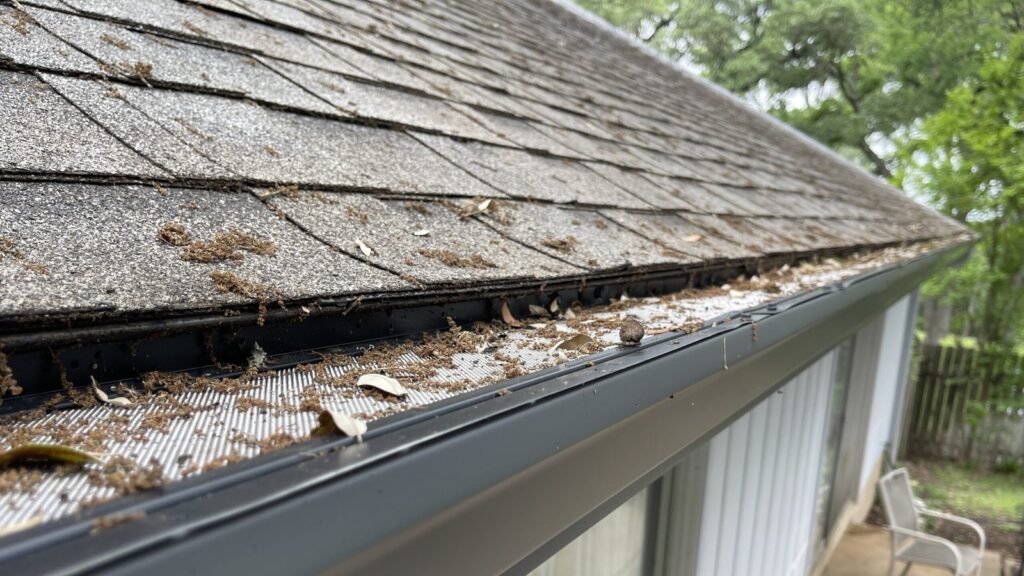
What about homes with gutter guards? Guards keep the big leaves and acorns out, so you can usually stretch the schedule, but they don’t make the gutter system maintenance-free. Fine debris, cedar elm seeds and shingle grit still work their way in, and leaves pile up on top of some guard styles. Plan on a look at guarded gutters about twice a year and a rinse when they need it.
Why one fall gutter cleaning in October isn’t enough
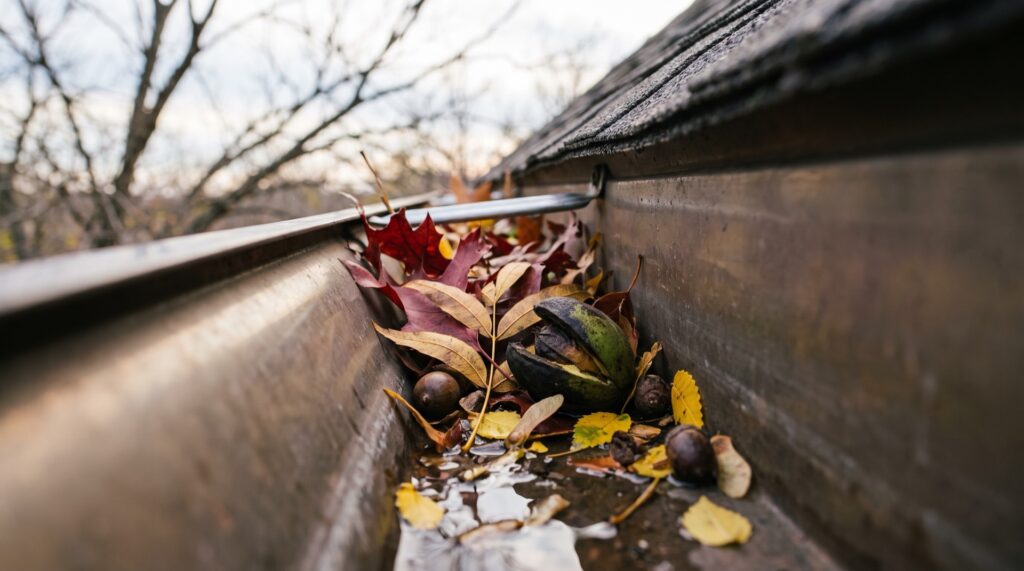
October is when most homeowners think about fall gutter cleaning, and it’s not a bad instinct, because Central Texas gets some of its heaviest rain in the fall. The catch is that most of our deciduous leaves are still on the trees in October. Clean then and you’ll have clear gutters for the fall storms, but you’ll be full again by Christmas.
That’s why we suggest thinking about fall in two parts. If you have cedar elms or a lot of overhanging trees, a quick clear in early fall gets seeds, twigs and summer debris out before the fall rains arrive, so the home goes into storm season with clear downspouts. Then the full cleaning happens once the pecans, red oaks and elms are bare, which in a typical year means late November into December. If you only clean once in the fall, wait for the trees.
For the full year of gutter care, from the live oak drop through winter freezes, our season-by-season gutter maintenance guide covers the rest.
What are the signs your gutters need cleaning?
Your trees set the schedule, but your gutters will also tell you when they’re overdue. Look for these:
- Water spilling over the front edge in a moderate rain
- Plants or grass sprouting from the gutter
- A gutter that sags or pulls away between hangers from the weight of wet debris
- Downspouts that trickle or stay dry while the gutter overflows
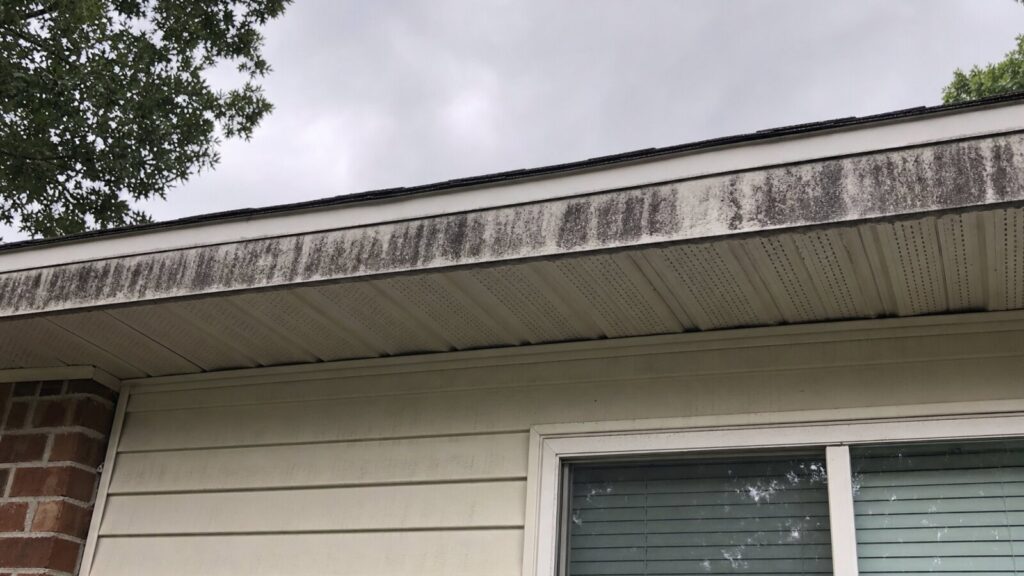
- Dark stains or streaks down the gutter face, fascia or siding
- Standing water in the gutter days after a rain, which also breeds mosquitoes
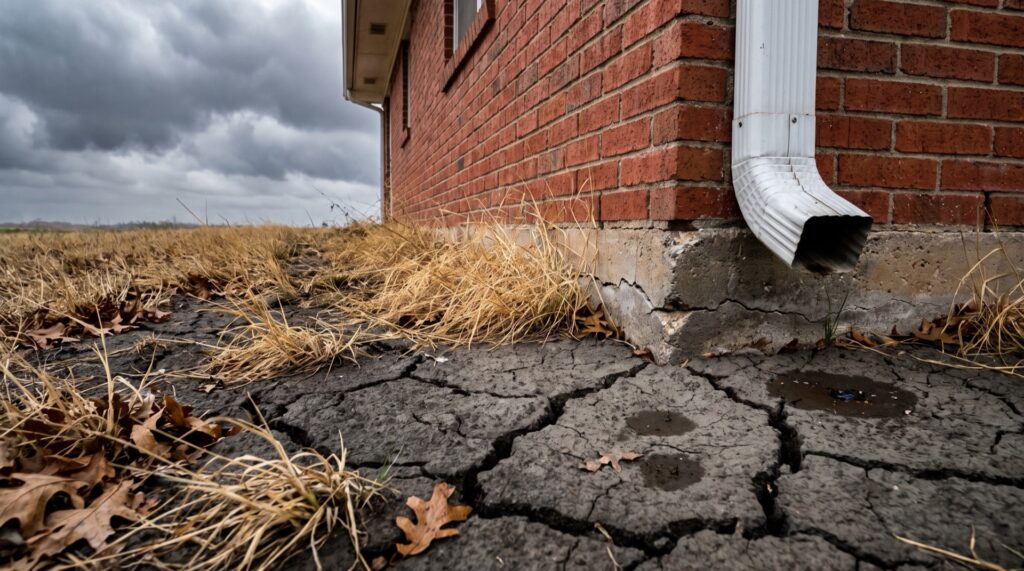
Any one of those is a reason not to wait for the next scheduled cleaning. Clogged gutters dump water at the base of the house, and on Central Texas clay that’s how foundations start to move unevenly. Water that backs up behind a packed gutter also soaks the fascia boards it hangs from, and wet wood in our warm climate rots faster than most people expect.
What should a professional gutter cleaning include?
Does gutter cleaning include downspouts? It should, and a downspout is often where the real clog is. When Gutters Made Easy does a professional gutter cleaning in Central Texas, the crew clears every run by hand, flushes each downspout with water and clears any clog in the elbows, then checks the joints, end caps and corners for leaks. They also look at the hangers and the slope of each run for sagging or standing water, and tell you what they found before they leave.
That inspection matters as much as the cleaning. Owner Tyler Smith has more than 20 years in rain gutters, and a crew that installs and repairs gutters for a living will spot a loose hanger, a leaking corner or a crushed downspout that a cleaning-only service might scoop right past. If something needs fixing, it can be handled in the same visit.
What does a cleaning cost? It depends on how many linear feet of gutter you have, whether the house is one or two stories, how packed the gutters are, and whether there are guards to remove and put back. That’s why we give a free estimate up front instead of a flat number over the phone.
Building a cleaning schedule you can keep
The easiest way to stay ahead of your trees is to put the cleanings on the calendar once and stop thinking about it. A schedule beats a reminder from an overflowing gutter. For a typical Central Texas yard, that’s late spring after the live oak drop and late fall or early winter after the pecans and oaks are bare, with an early fall pass if you have cedar elms or heavy canopy.
If you’re tired of climbing the ladder that often, leaf guards over your gutters cut the work down to an occasional check and rinse. They don’t make a gutter maintenance-free, but they keep the big leaves and seeds out.
Want someone else to handle it? Gutters Made Easy is a family-owned company based in Kyle, and we clean gutters for homeowners from Austin and Kyle down to New Braunfels and Canyon Lake. Call us at (512) 881-9204 for a free estimate, or set up gutter cleaning around your trees’ schedule and we’ll keep you ahead of the next leaf drop.