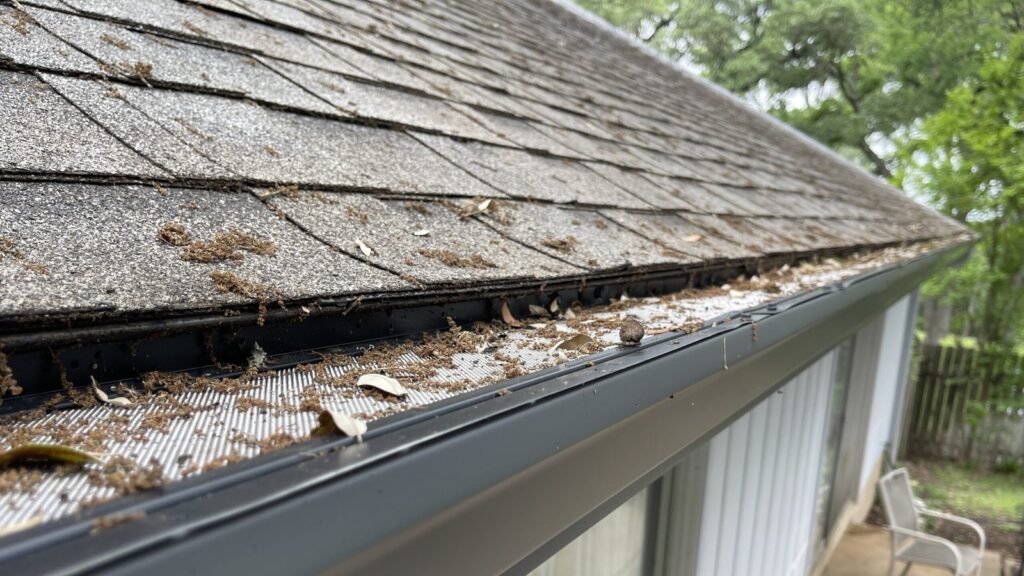
Ask three neighbors on the same Central Texas street how their gutter guards work and you can get three different answers. One loves them, one says they still clog, and one is back on the ladder every spring. The difference usually isn’t the brand. It’s the trees.
A pecan, a red oak and a live oak drop very different things at very different times of year. A guard that shrugs off one can struggle under another. This post walks through what each common tree sheds, what that debris does to a gutter, and which type of guard holds up under it, based on what our crews see on Hays, Travis and Comal County rooflines.
What type of gutter guard works best for oak and pecan trees?
The best gutter guard is the one that stops the smallest thing your trees drop. Under red oaks and pecans alone, a sturdy screen or perforated aluminum cover handles the big fall leaves. Under live oaks, or on any lot with a mix of oak and pecan, a fine stainless micro mesh is usually the right call, because spring catkins and small leaves slip through or wedge into coarser openings.
So when someone asks us about gutter guards for oak trees, the first question back is which oaks, and what else grows over the home. No guard is zero maintenance. Even the best one needs debris brushed off the top now and then, especially after the spring tassel drop. What a good match does is stop the overflow and the packed, heavy gutters that pull hangers loose and rot fascia boards. If you’re weighing options, our page on gutter guard systems matched to the trees over your roof shows the types we install.
Two debris seasons, two debris sizes
Most homeowners think of leaves as a fall problem. In Central Texas, the trees run on two clocks.
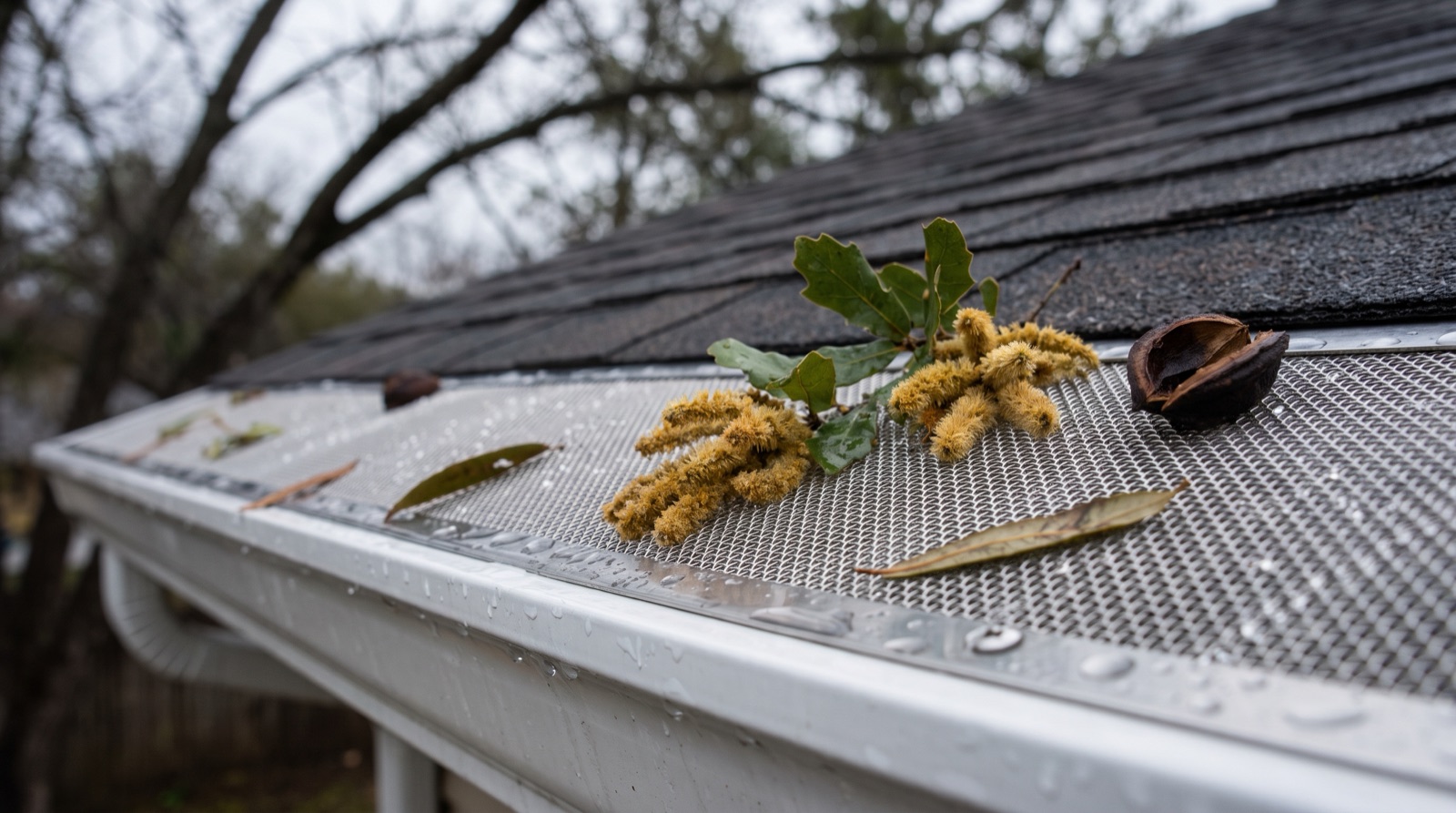
Spring is the season of small debris. According to the Lady Bird Johnson Wildflower Center at UT Austin, live oak “appears to be evergreen” but is actually deciduous, dropping its old leaves late each winter just as new ones emerge. Live oaks, red oaks and pecans all bloom from March through May, and the male flowers come down as catkins, the fuzzy tassels that pile up on driveways. Live oak catkins are only 2 to 3 inches long.
Fall is the season of big debris. Pecan leaves are compound, 12 to 20 inches long with 11 to 17 leaflets, and they let go in autumn along with the nut husks. The Wildflower Center notes that pecan husks often hang on the tree for weeks after the nut falls, so they keep coming down well after the harvest. Red oaks such as Shumard oak drop big leaves after their orange to deep red fall color (Texas A&M Texas Tree Planting Guide), plus acorns.
That’s why a guard chosen only for fall leaves can disappoint in April. So which season fills your gutters? Whatever the answer, choose for the smaller debris of the two.
What each tree drops and which guards hold up
Here’s how we match guard types to the trees we see most over Central Texas roofs. These are field judgments from our installs, not lab test results. We couldn’t find any independent testing that compares guards tree by tree.
| Tree | What falls, and when | What it does to an open gutter | Guard type that copes best |
|---|---|---|---|
| Live oak | Small leaves and 2 to 3 inch catkins, late winter through spring; small acorns | Packs into a dense, wet mat that drains slowly | Stainless micro mesh |
| Pecan | Catkins in spring; long compound leaves, husks and nuts in fall | Leaflets lie flat and layer; husks can collect at downspout outlets | Micro mesh, or a sturdy screen or perforated cover if fall is the main problem |
| Red oak (Shumard, Texas red) | Large leaves late in the fall; catkins in spring; acorns | Big leaves bridge the gutter and dam water at corners | Screen or perforated aluminum cover; micro mesh if live oaks are nearby |
| Cedar elm | Small leaves in fall; small winged seeds | Fine debris that slips through coarse openings | Micro mesh |
Live oak
Live oaks are the toughest test for a gutter guard here. The leaves are small and leathery, and the spring drop arrives at the same time as the catkins. On a coarse screen, that mix lodges in the openings. On micro mesh, it mostly sits on top, where it dries and either blows off or brushes away. If you have even one big live oak over the house, plan around it.
Pecan
Pecans hit twice. Spring brings catkins, and fall brings a heavy load of long leaflets and husks. Our gutter guards page calls a roll lock screen one of the most budget-friendly options for big leaves like pecan and red oak, and it does well with the fall load. If the same pecan also showers the roof with spring catkins, micro mesh is the safer choice.
Red oak
Red oak leaves are large, which actually makes them easy for most guards. They sit on top and slide or blow off once they dry. The weak spots are corners and valleys, where leaves collect against a guard and slow the water. Perforated covers and screens both handle red oak well on their own.
Cedar elm and mixed lots
Cedar elm leaves are small enough to behave more like live oak debris than red oak. And most Central Texas lots aren’t one tree. When you’ve got a live oak in front, a pecan out back and a cedar elm by the driveway, choose for the finest debris on the property. That usually points to micro mesh.
Screens, perforated covers and micro mesh compared
Gutter guards go by a lot of names, but most of what’s installed on Central Texas homes falls into three families.
Screens are expanded metal panels that snap into the front of the gutter or tuck under the first row of shingles. They’re the most affordable and handle big leaves well. Small leaves, catkins and seeds can catch in the openings, so they’re a better fit for red oak and pecan than for live oak.
Perforated aluminum covers are solid panels punched with holes. Some have a ribbed or wave pattern that stiffens the panel and helps wind lift dry debris off the top. They’re a strong middle option for big fall leaves and husks. We’ve written more about how a perforated aluminum cover handles live oak and pecan debris if you want the details on one we install often.
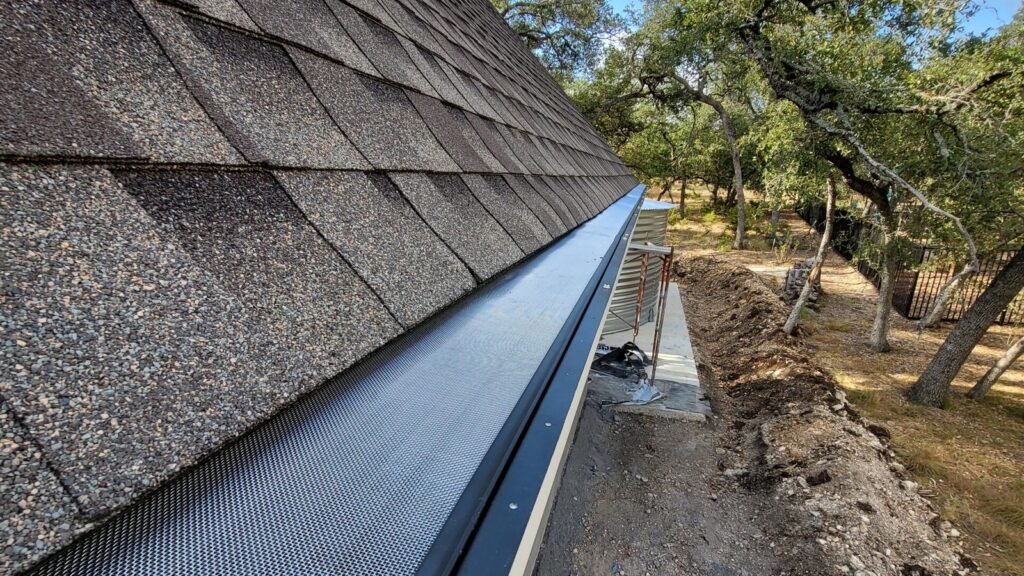
Stainless micro mesh uses a very fine woven screen over a support frame. It keeps out the smallest debris, along with mosquitoes, wasps, birds and rodents. It costs more and needs an occasional brushing when tassels mat on top, but on a live oak lot it’s the one that keeps water moving. Homes on steep cedar lots face a different mix again, which we covered separately.
The downsides of gutter guards
Guards are worth it under heavy trees, but they aren’t magic. Here’s what to expect honestly.
- Debris can sit on top. Catkins and wet leaves can mat on any guard and need brushing, especially in spring.
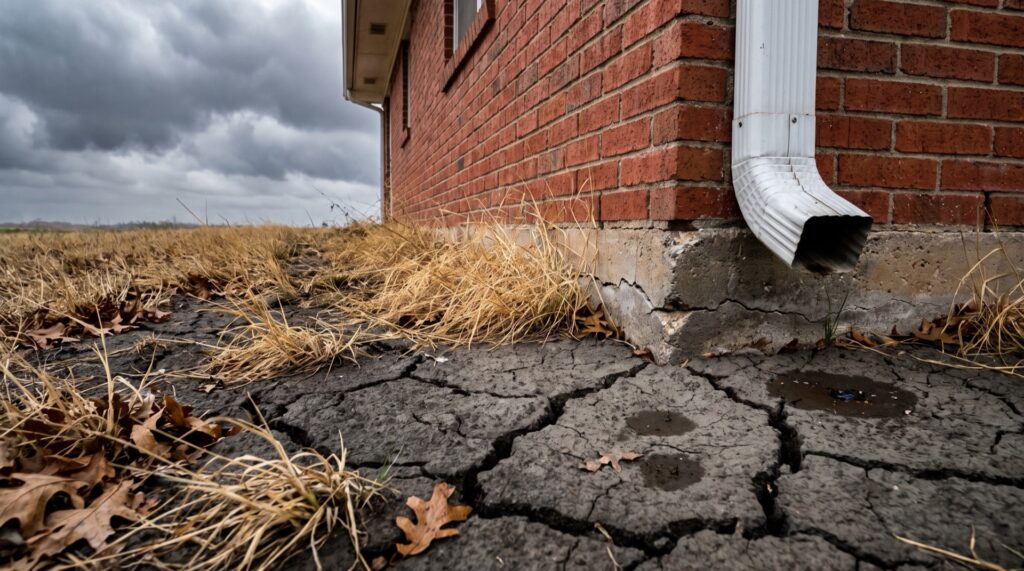
- Heavy rain can overshoot. A guard on a gutter that’s too small or poorly pitched won’t fix overflow. Sizing still matters.
- A bad fit fails fast. Gaps at corners, ends and seams let debris in behind the guard, where it’s harder to clean.
The fit point matters most, and so does the design of the guard’s front edge and attachment. Before you buy, ask who stands behind the guard and the installation, and what the warranty actually covers. Guards that are cut and fastened to match the gutter and roof edge on site stay put through Hill Country storms. Guards dropped onto a dirty or sagging gutter do not.
Is a leaf guard different from a gutter guard?
Not really. Leaf guards, gutter guards, gutter covers, gutter screens, leaf protection and covered rain gutters all describe the same job: a panel over the gutter that lets water in and keeps debris out. The real differences are the opening size, the material and how the guard attaches, which is why the tree-by-tree match above matters more than the name on the box.
Getting the installation right
A guard is only as good as the gutter under it. Before we install one, we clean out the existing gutters so the guard goes on over a clean, flowing system, and we check the hangers, pitch and downspouts while we’re up there. If a gutter is too small for the roof or pulling away from soft fascia, that gets fixed first.
Tyler Smith has spent more than twenty years on Central Texas rooflines, and the trees over your house are the first thing we look at on an estimate. If you want help choosing leaf protection for your home in Kyle, Buda or San Marcos or anywhere nearby, call Gutters Made Easy at (512) 881-9204. We’ll walk the property, look at what’s falling on your roof and recommend the guard that fits it.