For most Central Texas homes, seamless aluminum gutters are the right call. They don’t rust, they’re light, they come in dozens of colors, and they cost less. Galvalume steel earns its place when strength matters more than color: houses under big live oaks, homes that see a lot of ladder work, long heavy runs, and metal roofs. As for hail, steel shrugs off the small and medium hits that crease aluminum, but a truly big hailstorm will dent either one.
That’s the short version of the steel vs aluminum gutters question. The rest of this post walks through how our weather, our roofs and the way people actually use their houses here tip the decision one way or the other.
What “steel gutters” means on a Texas house today
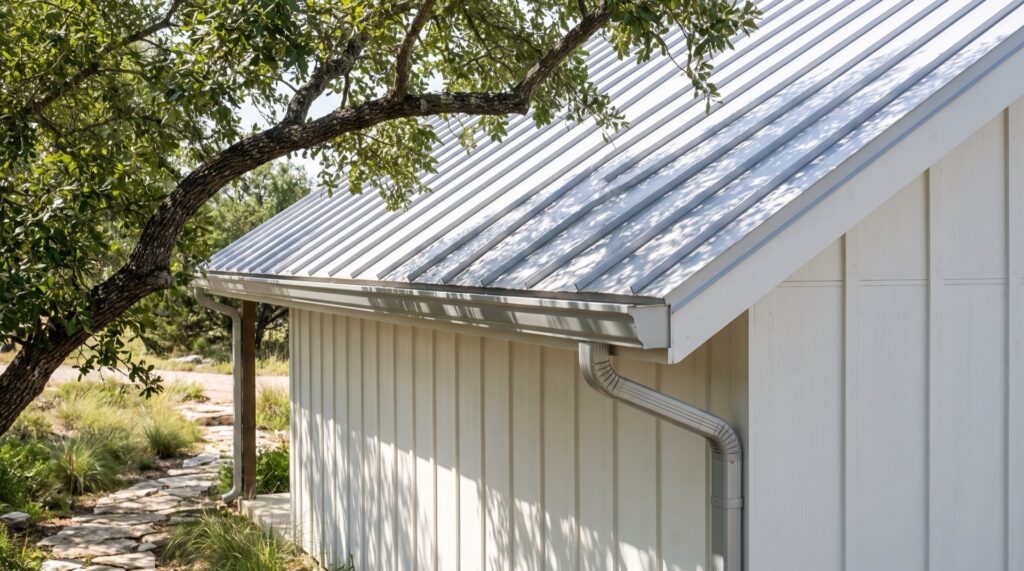
When someone in Central Texas talks about steel gutters now, they usually mean Galvalume. It’s sheet steel with a coating of roughly 55 percent aluminum and 43 percent zinc. The steel gives it strength and the coating keeps the steel from rusting. It’s the same material on many of the standing seam metal roofs around the Hill Country, formed into a gutter instead of a roof panel.
That’s different from the plain galvanized steel gutters on a lot of older homes, which carry a zinc-only coating and tend to rust at the seams and around the downspout outlets as they age. If you’re comparing materials for a new system, the real matchup is Galvalume against aluminum. Our page on seamless Galvalume gutter installs covers how the material is made and installed. Here, we’ll focus on which one fits your house.
Which holds up better to hail?
Hail is the question most Texas homeowners lead with, and for good reason. The Insurance Information Institute reports that Texas had 902 major hail events in 2025, the most of any state, counting storms with hailstones an inch across or larger (Insurance Information Institute, using Storm Prediction Center data). Spring storms through Hays, Travis and Comal counties bring their share.
Steel is stiffer and harder than aluminum, so it holds its shape better under impact. In practice, the smaller hail that leaves a row of little dents along the face of an aluminum gutter is much less likely to mark Galvalume. The difference shows most on the front face of the gutter, the part everyone sees from the street.
Be realistic about the limits, though. Golf ball and larger hail will dent a steel gutter too, and it’ll damage the roof above it. Neither material is hail-proof. What steel buys you is resistance to the common, moderate storms that would otherwise leave your gutters looking beat up after a few springs.
How do sun and heat affect a long gutter run?
Central Texas gutters also live through a huge temperature swing. A dark gutter on a west-facing eave can go from a cool winter morning to well over 100 degrees in summer sun. Metal grows and shrinks as it heats and cools, and aluminum moves about twice as much as steel. Standard physics tables put aluminum’s expansion at 24 millionths per degree Celsius, against about 13 for steel (HyperPhysics, Georgia State University).
Run the numbers on a 40-foot gutter and a 100-degree Fahrenheit swing between a January morning and an August afternoon. Aluminum changes length by about 0.64 inches, while steel moves about 0.35 inches. That movement works on the end caps, corners and sealant every single day. It’s one more reason seamless gutters do better here than sectional ones: there are fewer joints to flex. On very long runs, a stiffer steel gutter also holds its line better between hangers.
Both materials handle the sun itself fine. Aluminum’s baked-on finish is built for UV, and bare Galvalume has no paint to fade or peel at all.
Ladders, limbs and everyday dents
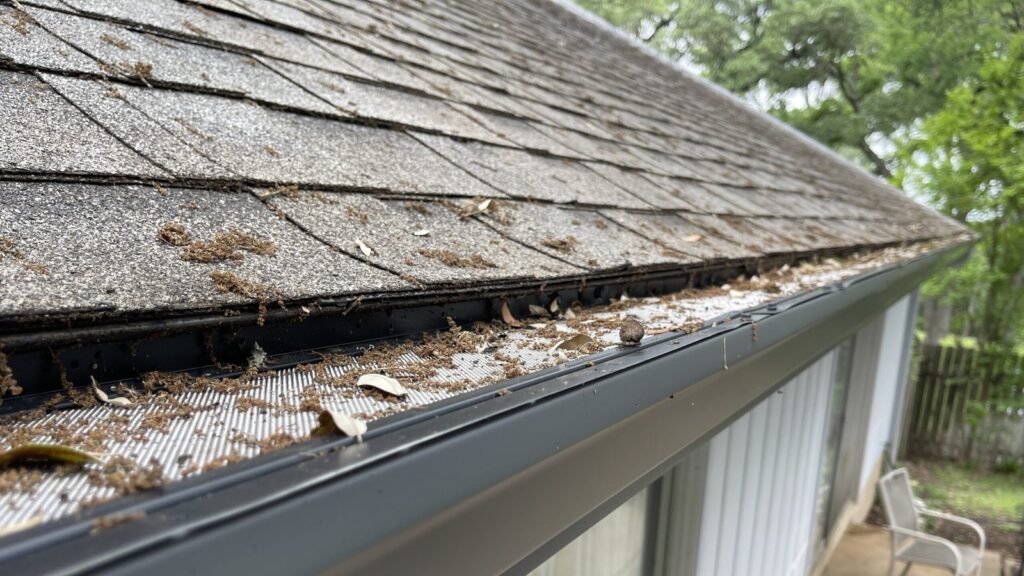
Here’s a part of the decision people don’t think about: how often something leans on your gutters. On a typical Central Texas house, ladders go up against the gutter line for roof repairs, pressure washing, painting, cable and satellite work, and hanging holiday lights. Live oak limbs scrape and drop on rooflines in every storm.
Aluminum dents and creases under that kind of point pressure. A ladder set against the lip can fold it, and once a gutter is kinked it holds water in that spot. Steel takes those small, everyday hits without complaint. If your house sees a lot of roof traffic or sits under big trees, Galvalume’s durability pays for itself in looks alone.
When is aluminum still the better material?
None of that makes steel the automatic winner. Aluminum is the most common gutter in Central Texas for good reasons:
- Color. Aluminum comes in a long list of baked-on colors that match painted trim, brick and stone. Galvalume is usually installed in its natural matte silver.
- No rust. Aluminum can’t rust. Galvalume resists it well, but a deep scratch or an unsealed cut edge can show rust over the years.
- Weight. Aluminum is light and easy on older fascia. Steel is heavier, so hangers need to be spaced for the extra weight.
- Cost. Aluminum costs less. Galvalume costs more than aluminum, though well under copper.
- Fewer material conflicts. Galvalume doesn’t get along with water running off copper, long contact with wet treated lumber, or fresh concrete and mortar.
For a lot of homes, especially ones where the gutter color is part of the look, aluminum is the better material. If color is driving your choice, our guide to picking a gutter color is a good next read.
Steel vs aluminum gutters by type of house
Here’s how we’d sort it for the homes we see most around Central Texas.
| Your house | Better fit | Why |
|---|---|---|
| Painted trim, gutter color matters | Aluminum | Wide color range, no rust |
| Standing seam or metal roof | Galvalume | Matches the roof and handles fast runoff |
| Big live oaks over the roofline | Galvalume | Resists dents from limbs and debris |
| Frequent ladder work on the house | Galvalume | Holds its shape under point pressure |
| Long runs on a large roof | Galvalume | Stiffer, moves less with heat |
| Tight budget, typical suburban roof | Aluminum | Lower cost, does the job well |
| Copper flashing or copper roof above | Aluminum or copper | Copper runoff corrodes Galvalume |
Metal roofs deserve a special mention. Water comes off metal panels fast and heavy, and a Galvalume gutter matches both the look and the toughness of the roof. If that’s your house, our post on gutters on a metal roof goes deeper.
How long does each material last?
We won’t give you a number of years, because how long a gutter lasts here depends more on installation and maintenance than on the metal. Both materials are durable when they’re hung right. What shortens their life is the same for both: wet leaves left sitting in the trough, joints that flex and leak, and downspouts that clog so the gutter overflows in heavy rain and causes water damage to the fascia behind it.
The failure modes are a little different, though. Aluminum doesn’t corrode in normal Central Texas conditions, so it usually ends its life bent, sagging or leaking at the seams. Galvalume rarely bends, but corrosion can start where the coating is broken: a deep scratch, a cut edge that wasn’t sealed, or a spot where copper runoff or wet treated lumber touches it. The best thing you can do for either one is keep it clean and have a loose hanger or leaking corner fixed early.
What it comes down to for your home
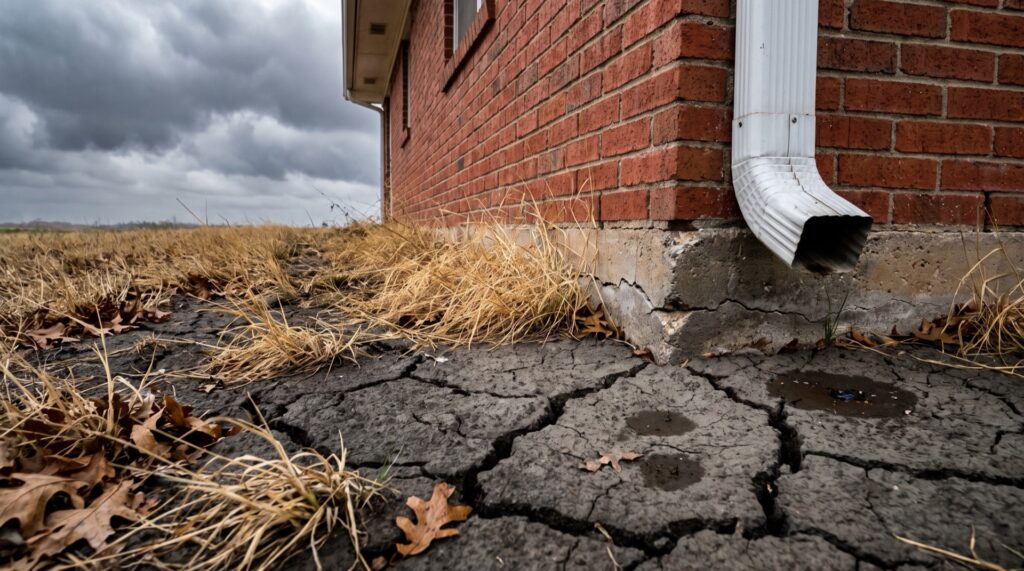
If you want color choice and the lowest cost, and your gutters don’t take much abuse, choose aluminum. If your house sits under big trees, sees regular ladder work, has a metal roof or long heavy runs, or you’re tired of dented gutters after every spring storm, Galvalume is worth the extra cost. Either way, the installation matters as much as the material. Seams, hanger spacing, sealed corners and downspouts that carry water away from the slab decide how long any gutter lasts.
Gutters Made Easy fabricates both seamless aluminum and Galvalume gutters on site, cut to the exact length of each run. Owner Tyler Smith has more than 20 years in rain gutters and sheet metal, and every system carries a lifetime manufacturer warranty on materials and our 10-year workmanship guarantee. Call us at (512) 881-9204 for a free estimate, or look through our Galvalume gutter options before we come out. We’ll look at your roof, your trees and your trim and tell you honestly which material fits.