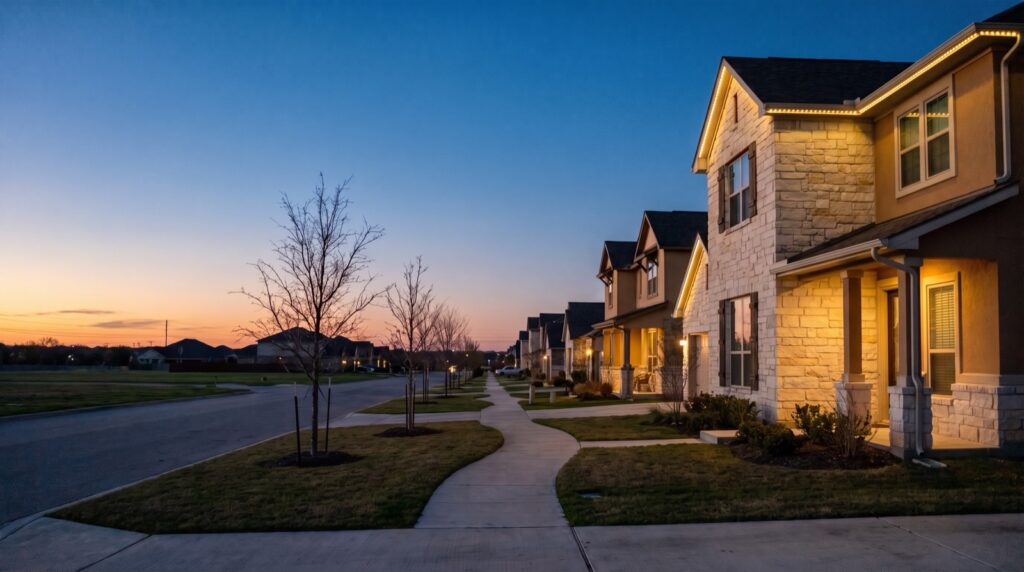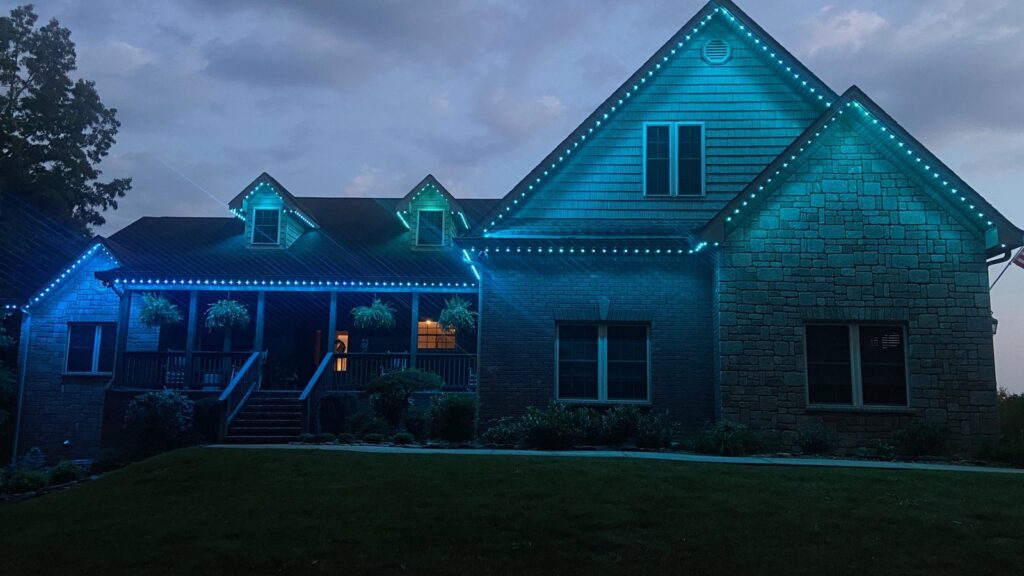
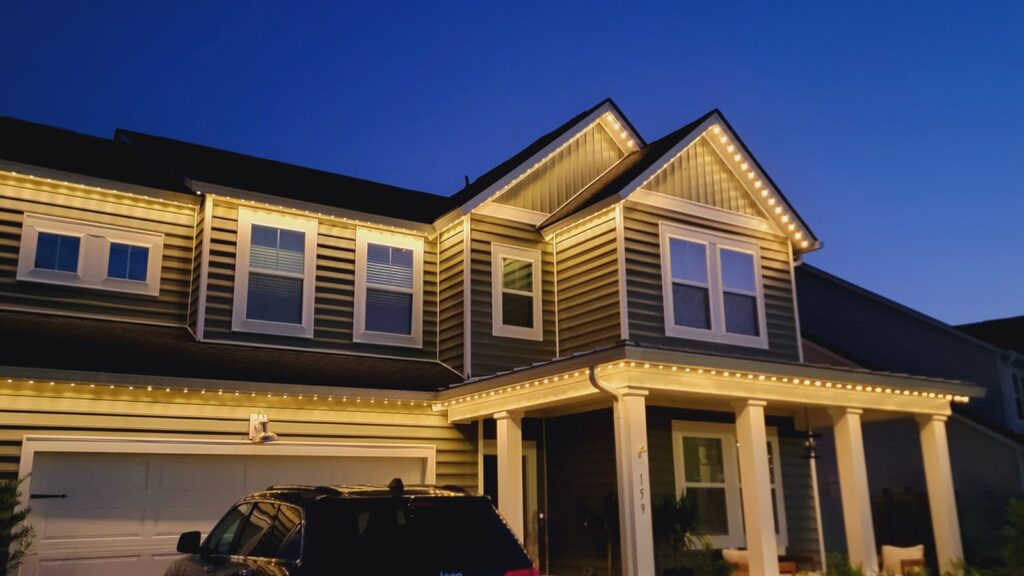
Wimberley takes its night sky seriously. In 2018 the cities of Wimberley and Woodcreek were designated together as the Wimberley Valley International Dark Sky Community, and the valley has since been named DarkSky Place of the Year (Visit Wimberley). So if you’re thinking about lights that stay on the roofline all year, the obvious question is whether they’re even allowed here.
It usually is. The catch is that a permanent system is on your house twelve months a year, while the town’s lighting rules treat the holidays and the rest of the year very differently. This post walks through what the Wimberley ordinance actually says, what it means for roofline lights, and how to plan a setup that keeps you on good terms with the city and your neighbors.
Can you install permanent roofline lights in Wimberley?
Yes, as long as you run them by the calendar. The City of Wimberley, Texas exempts decorative light strings from its outdoor lighting rules from November 1 to January 15. Outside that window, outdoor lights fall under the normal rules, including a 3000 Kelvin color temperature cap and limits on unshielded light. A permanent system that runs warm, low and on a timer most of the year fits that pattern well.
That last part is where permanent lights have an edge over the strands people staple up every Thanksgiving. A seasonal strand is either on or off. A permanent system is controlled from an app, so the same run can show full color in December and a soft warm white, or nothing at all, in March. The hardware stays put. What changes is how you use it.
What Wimberley’s outdoor lighting ordinance says
Wimberley’s rules live in Article 4.09 of the city code. We’re working from the published copy of the outdoor lighting ordinance shared by the Hill Country Alliance, so check the current version with the city before you plan around any number below. These are the sections that matter for dark sky lighting on a house:
| Section | What it says | What it means for roofline lights |
|---|---|---|
| 4.09.012(2) | Decorative light strings displayed November 1 to January 15 are exempt from the article. | Holiday color during that window is not the issue. |
| 4.09.004(c) | No fixture may use a lamp above 3000 Kelvins. | Outside the window, white light should be warm white, not cool or daylight white. |
| 4.09.004(a) | Fixtures over 1,500 initial lumens must be shielded so light stays below horizontal and the source can’t be seen from off the property. | Bright floodlights need shielding. Whether a run of small LEDs counts as one fixture is a question for the city. |
| 4.09.004(b) | Unshielded or nonconforming fixtures on a property may not total more than 7,200 initial lumens. | A long run of exposed lights counts toward one combined total, so brightness matters. |
| 4.09.002 | Light trespass means more than 0.1 footcandles landing on a neighboring residential lot, measured 4 feet inside the line. | Aim and brightness should keep light on your own house. |
Two more details are worth knowing. The ordinance gives an owner 30 days after notice to fix a violation before fines start, and it requires an outdoor lighting plan with a permit application. In plain terms, the process starts with a notice and a chance to fix things. It still makes sense to plan the system right the first time.
The November 1 to January 15 holiday window
Here’s the exact language from section 4.09.012: “Decorative light strings displayed during the seasonal holiday period from November 1 to January 15 of the next year are exempt from the provisions of this article.” That covers the stretch most people care about, from early November through New Year’s and two weeks past it.
During those eleven weeks or so, you can run reds, greens, chasing patterns and whatever else the family votes for. Even so, a little restraint goes a long way in a valley built around stargazing. The DarkSky organization’s principles for responsible outdoor lighting ask that light be useful, targeted, low level, controlled and warm colored. A schedule that shuts the display off at bedtime costs you nothing, since nobody is out admiring it at 2 a.m. anyway.
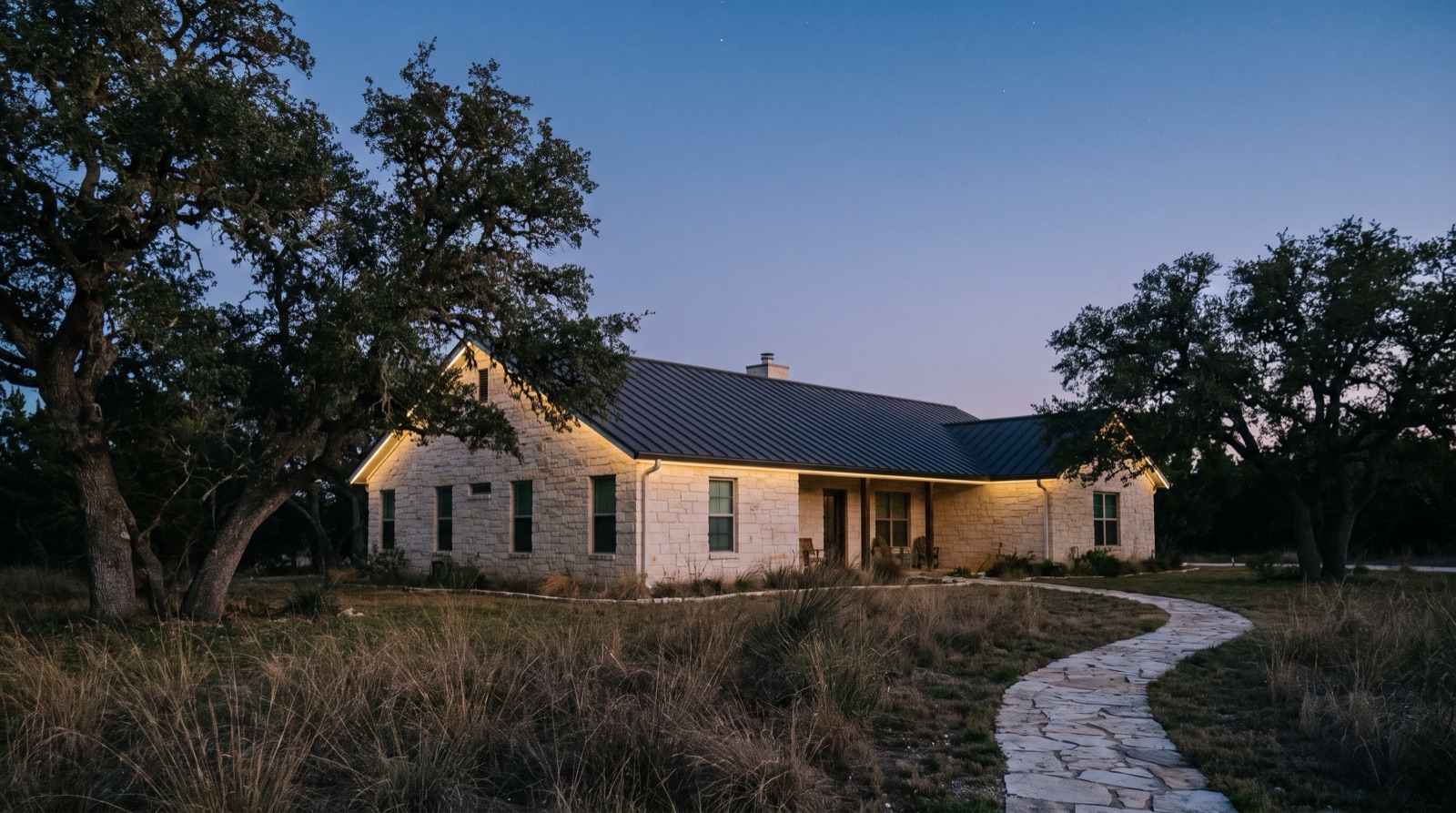
Warm, low and scheduled the rest of the year
From January 16 through October 31, treat your roofline system like any other outdoor light on the house. That means three habits:
- Keep white light warm. Pick a warm white setting rated at 3000K or below. Ask for the spec sheet so you know what each white setting actually is.
- Keep it low. Run the lights dim. Remember that every exposed light on the property counts toward the 7,200 lumen total for unshielded lighting.
- Keep it scheduled. Set the lights to come on at dusk and go off at bedtime, or leave them off on ordinary nights.
Game day colors in October or a birthday in June are where homeowners should slow down. Strictly read, the holiday exemption covers November 1 to January 15 only. Colored light outside that window isn’t automatically a violation, but it isn’t exempt either, so keep it brief, keep it dim and point it at your own house. Glare and light trespass are what neighbors notice, and they’re what the city’s nuisance rules are written around.
This is also where layout matters. Light that stays on the eave line lights your house. Light that shines up into the live oaks or across the street adds to light pollution. Reducing that kind of stray light is the whole point of the valley’s designation.
Is a permanent light track a fixture or a light string?
This is the honest gray area. The ordinance defines a light string as bulbs connected with wire “not contained in the structure of a fixture.” Permanent roofline lights sit in a mounted channel and run off a controller, which is not quite either picture. Whether the city treats your system as a fixture or as a light string is the city’s call, not ours.
It matters because the holiday exemption is written for light strings, while the 3000K cap is written for fixtures. If you plan to use warm white year round and color only during the holidays, you’re on the conservative side of both readings. If you want something more ambitious, call the City of Wimberley before the install and ask two things: how they classify a permanent channel system, and whether it needs a permit or a lighting plan for your property.
Ask in October, not February. A quick call settles it for your address.
Woodcreek and homes outside city limits
The dark sky community covers both Wimberley and Woodcreek, but each city writes and enforces its own ordinance. Woodcreek has its own dark skies ordinance, so if your home is inside Woodcreek, check that code rather than assuming Wimberley’s rules carry over.
A lot of houses with a Wimberley mailing address sit outside either city’s limits in unincorporated Hays County. City lighting ordinances apply inside city limits, so those homes may not be bound by Article 4.09 at all. Your subdivision’s deed restrictions can still have their own rules, and the neighbors on a dark hillside will notice a bright roofline either way. Our advice is the same everywhere in the valley: follow the city’s pattern even if it doesn’t technically apply to you.
Laying out dark sky friendly Christmas lights on a roofline
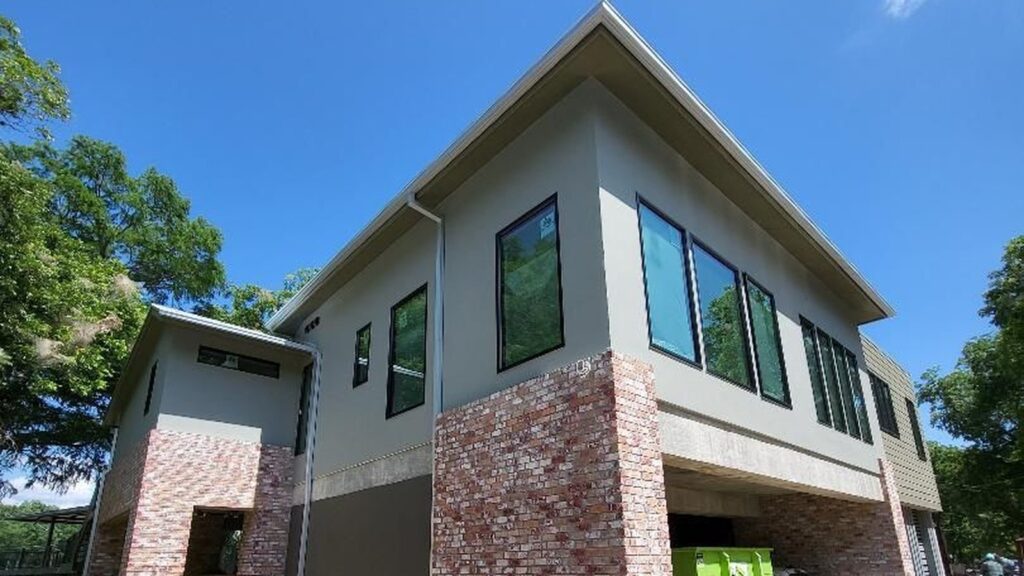
Most of the work in getting dark sky friendly Christmas lights right happens before the first clip goes up. Tyler Smith has spent more than twenty years on Central Texas rooflines, and our crews mount lighting on the same fascia and drip edge line we hang gutters on every week. When we design a permanent roofline lighting system for a Wimberley house, the plan starts with where the light should land.
On a dark sky home that usually means a few choices. We run the channel tucked under the drip edge so the lights sit at the eave, not on top of the roof. We light the main eave lines and leave out runs that would push light up into trees or across a property line. And the app schedule can be set with a warm white default for ordinary evenings and the full color shows saved for the holiday window. The goal is a house that looks finished at night without lighting up the hillside.
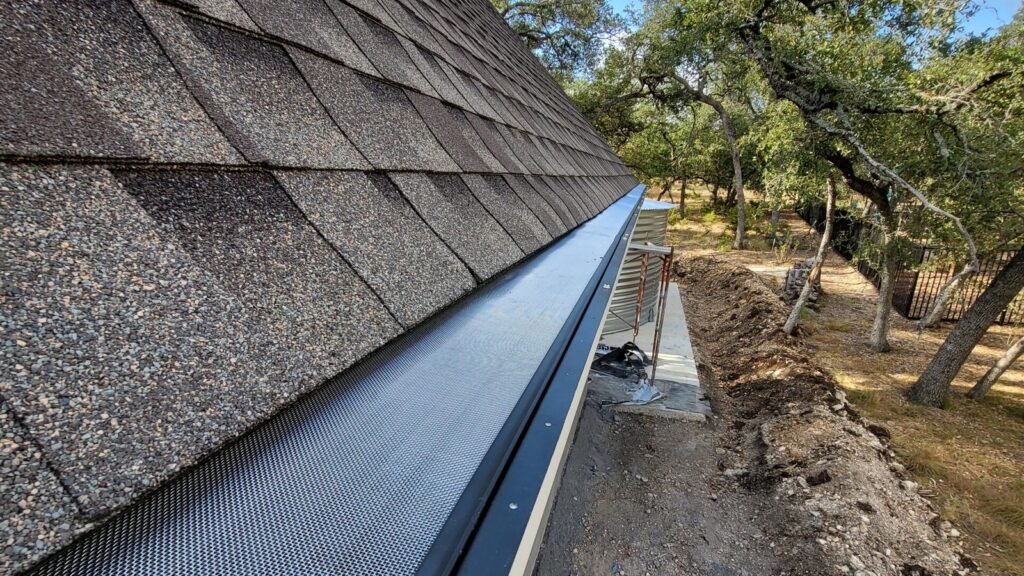
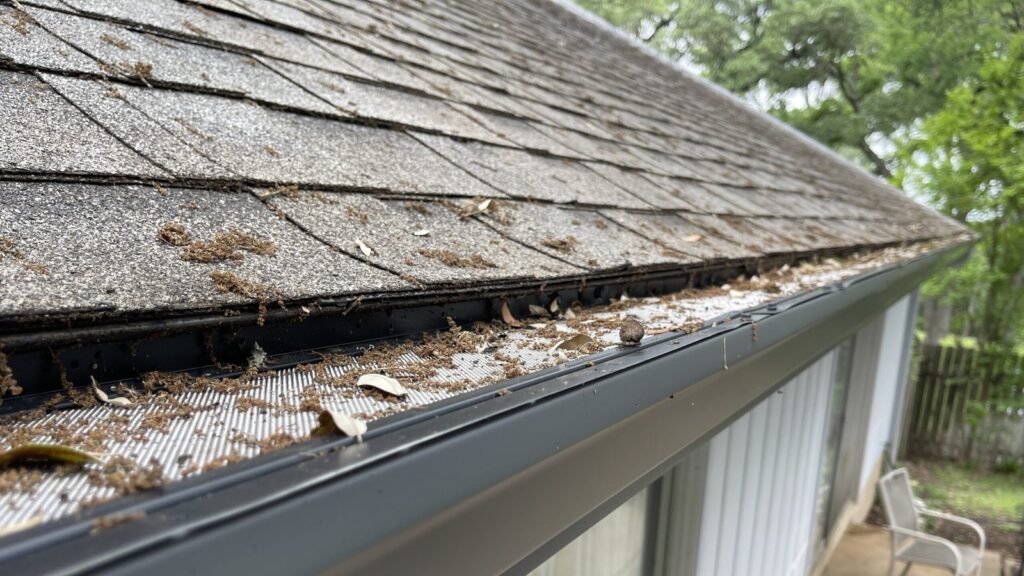
While we’re on the roofline, we also look at the gutters and fascia the lights will share. If you need gutter work in Wimberley too, it’s one visit instead of two. One note: our gutter warranty covers gutters, not lighting, so ask about the lighting terms when you get your quote.
Questions Wimberley homeowners ask
What color temperature is dark sky friendly?
3000K or lower is the line in Wimberley’s ordinance, and DarkSky’s principles favor warm colored light in general. Lower numbers look warmer and more amber, which is the direction the whole valley’s lighting rules lean.
What makes outdoor lights dark sky friendly?
Light that is only on when it’s useful, aimed where it’s needed, no brighter than necessary, controlled by a timer or schedule, and warm in color. For porch and security fixtures, dark sky-friendly lighting usually means a fully shielded fixture that points light downward, which keeps it on the walk for safety and out of your neighbor’s bedroom window. A permanent roofline system can meet the same goals if it’s laid out and programmed to minimize glare and stray light.
What happens if a neighbor complains?
Under the published ordinance, the city notifies the owner and allows 30 days to correct the problem or show there isn’t one. With a warm default, a bedtime schedule and lights kept on your own eave line, there’s usually little to correct.
Planning lights in the Wimberley Valley
Permanent lights and a dark sky town can live together just fine. Use the holiday window for color, keep the rest of the year warm, low and scheduled, and confirm with the city how it classifies your system before the install. If you’d like help planning roofline lighting for a Wimberley home, Gutters Made Easy can walk the house, show you a layout and give you a written quote. Call us at (512) 881-9204, or ask about it during your next gutter visit.