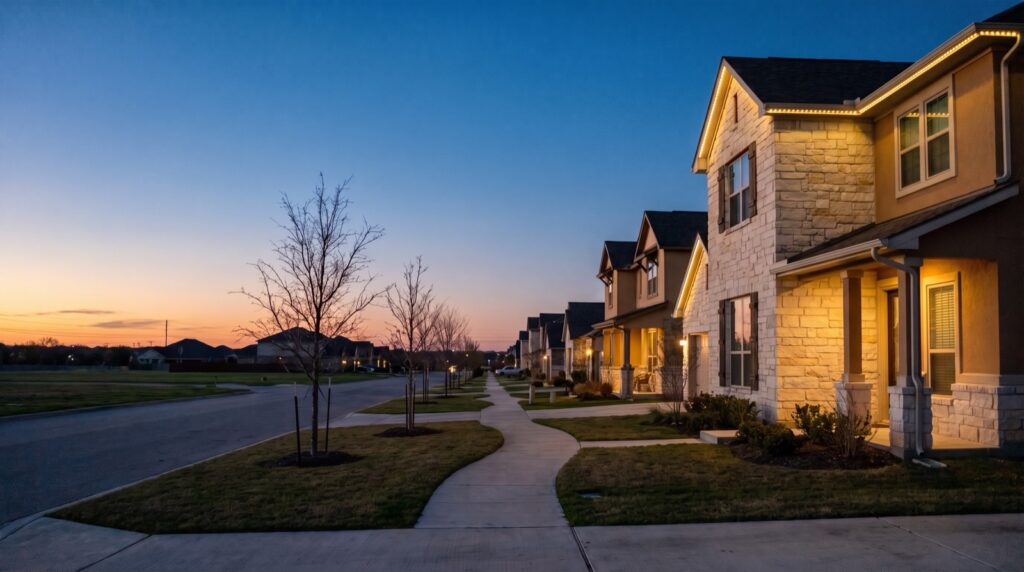
Kyle and Buda have grown fast, and much of that growth came as master-planned neighborhoods with a homeowners association and a set of deed restrictions. If you live in one and you’re thinking about permanent holiday lights this year, the first call probably isn’t to an installer. It’s a quick look at your HOA’s rules.
Texas has about 23,500 community associations with roughly 6.4 million residents, the third most of any state, according to the Foundation for Community Association Research. Each one writes its own rules, so there’s no single answer for every street. What we can do is explain how the approval process works in Texas, why permanent lights often go through it, and what to put in front of your architectural committee so the answer comes back yes before Thanksgiving.
Do you need HOA approval for permanent Christmas lights?
Often, yes. Seasonal decorations that go up in November and come down in January may be covered by a holiday decoration rule, if there’s a rule at all. A permanent system is different. It’s mounted hardware that stays on the house all year, so many deed restrictions treat it as an exterior change that needs approval from the architectural review committee before installation.
Texas law doesn’t settle the question for you. The Property Code protects a few specific things from HOA restrictions, such as flags, solar panels and certain religious displays, but it has no general protection for holiday or seasonal lighting. That leaves it to your association’s own declaration and guidelines. Read those first, and if they’re unclear, ask the management company in writing whether permanent roofline lights need an application.
Why permanent holiday lighting gets a different review
Think about it from the committee’s side. A set of clip-on Christmas light strings is temporary, and it goes back into storage in January. A permanent system is a channel fastened along the roofline, a controller and power connection, and lights that could be on any night of the year. Committees reviewing an exterior change tend to ask three questions:
- What does it look like in daylight? Most of the year the lights are off, so the hardware itself is what the neighbors see.
- How bright is it, and when is it on? Brightness, color and hours are the usual sources of neighbor complaints.
- Is it installed cleanly? Loose wires, visible clips and crooked runs read as clutter.
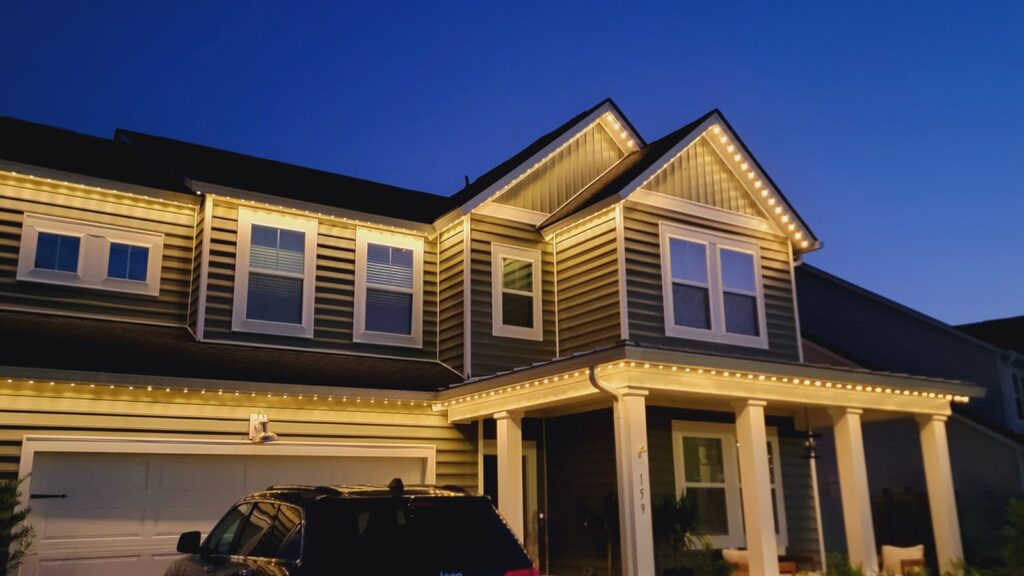
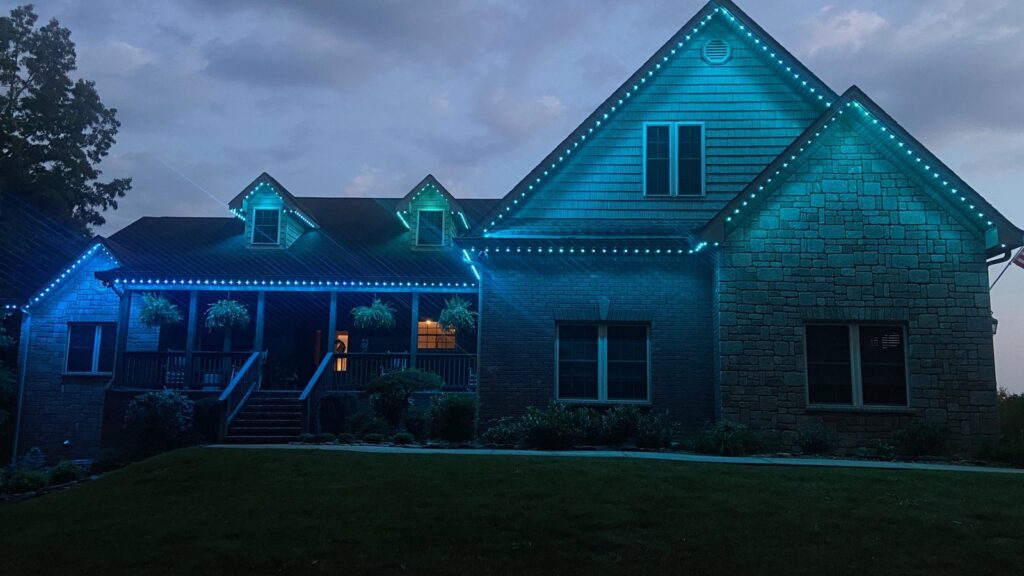
The good news is that a well-designed system answers all three, and it can add curb appeal instead of clutter. The low-profile permanent roofline lights we install sit in a slim channel fitted under the drip edge or along the fascia, so during the day the run reads as trim. At night, the app lets you set colors, brightness and a schedule, including a plain warm white for ordinary evenings. Those details are exactly what a committee wants to see on paper.
What Texas law says about HOA architectural review
Since 2021, Section 209.00505 of the Texas Property Code, Chapter 209 has set ground rules for architectural review in many subdivisions. In plain terms:
- It applies to property owners’ associations with more than 40 lots.
- If the committee denies a request, it has to send written notice that describes the basis for the denial in reasonable detail and any changes that would get the request approved.
- You can request a hearing before the board on or before the 30th day after the denial notice was mailed. The board then has 30 days to hold the hearing, and it can affirm, modify or reverse the committee’s decision.
Two other parts of the Property Code are worth knowing. Section 202.004 says an association’s use of its discretionary authority over a restrictive covenant is presumed reasonable unless it’s shown to be arbitrary, capricious or discriminatory. And Section 209.006 requires written notice and, for curable violations, a reasonable chance to fix the problem before a fine. We’re a gutter and lighting company, not a law firm, so treat this as background and check your own documents or an attorney for anything specific.
Newer Kyle and Buda neighborhoods still in the developer’s hands
Here’s a wrinkle that matters around here. Section 209.00505 does not apply during a development period, or while the developer controls who sits on the architectural committee or can veto its decisions. Some subdivisions on the edges of Kyle and Buda are still building out.
If yours is one of them, the developer’s committee makes the call under the declaration, and the statute’s written-denial and hearing steps may not apply yet. That isn’t a reason to skip the application. It’s a reason to make it as complete as possible the first time. Our own shop is in Kyle, and the gutter work we do around Kyle regularly takes our crews into newer subdivisions like these, and each one has its own rules.
What to send the architectural committee
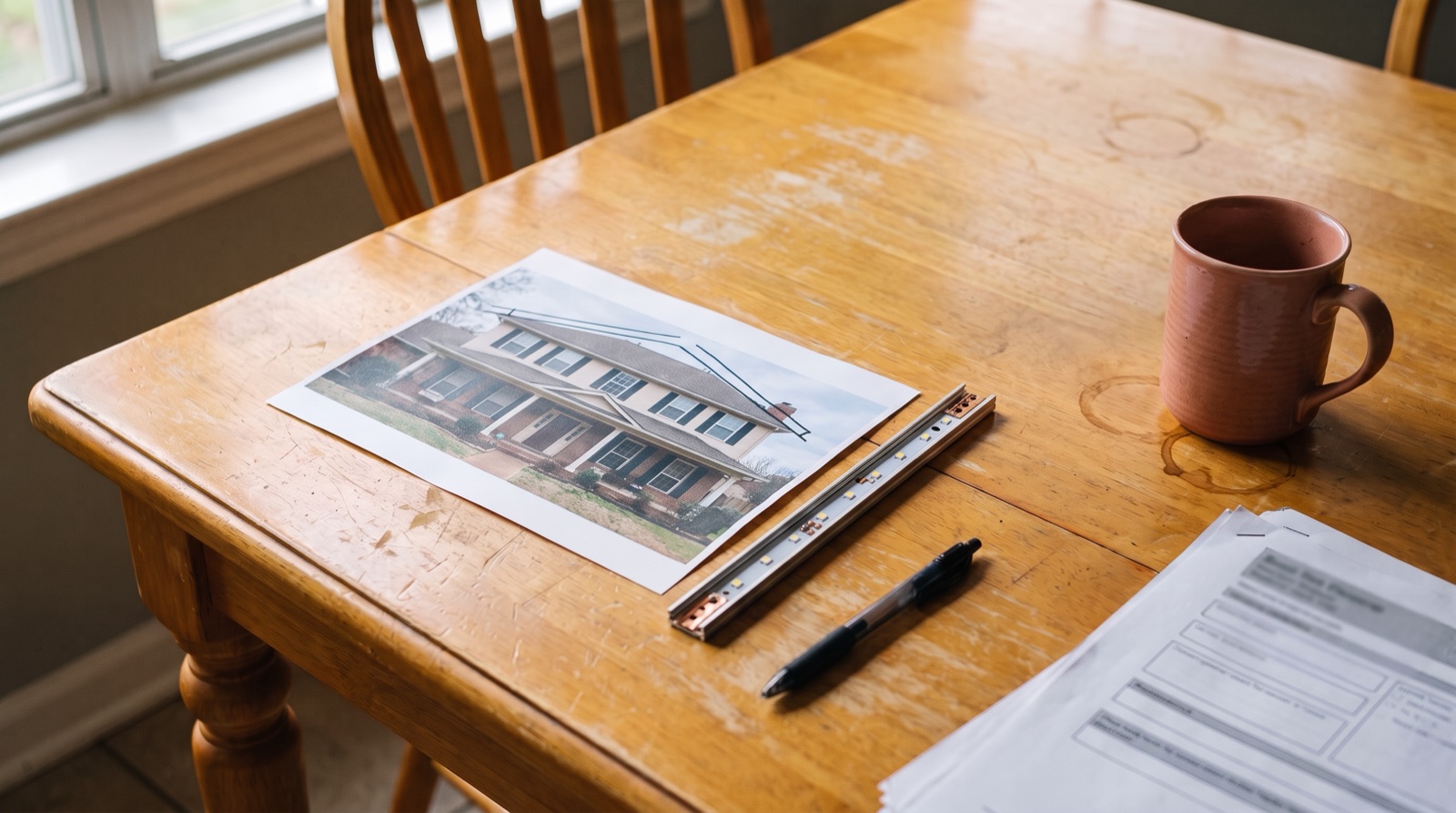
A thin application invites questions, and questions cost weeks. A complete one usually gets read once. Here’s what we suggest putting in the packet:
- The HOA’s own form, filled out completely, with your lot and contact details.
- A photo of each elevation with the planned light runs marked. Show which eaves, peaks and garage lines get lights and which don’t.
- A description of the hardware: a low-profile channel mounted under the drip edge or along the fascia, the channel finish and how it sits against your trim, and where the controller and power connection go.
- Daytime and nighttime photos of a similar installation, if you or your installer have them.
- Your operating plan: the hours the lights will run, a default warm white for everyday use, and when full holiday color will be on. Committees respond well to a schedule they can hold you to.
- Who is installing it, with the company name and phone number.
We can give you a layout of your roofline and a description of the system to drop into the application. Ask for those when you get your estimate.
Lighting options that make approval easier
Some design choices make a committee’s job easy. Why not hand them those choices up front? A few that tend to help with any permanent holiday lighting request:
Show how the channel blends with the trim. A run that reads as part of the fascia in daylight is much easier to approve than one that stands out. Light the main lines only. Eaves and peaks read as architecture; wrapping every window and column reads as a display. Lead with warm white. Offering a warm white default for most of the year, with full Christmas color during the holiday season, shows the committee you’ve thought about the neighbors. And offer a schedule, such as lights off by a set hour each night, so nobody has to guess.
None of these limit what the system can do. They just describe how you plan to use it, which is what the committee is really reviewing.
Timing your request before the holidays
The statute doesn’t give committees a deadline to decide on an application, so timing comes from your HOA’s own guidelines and meeting schedule. Some committees meet monthly. Others review on a rolling basis through the management company.
Work backward from when you want the lights on. If you’re aiming for Thanksgiving, an application in September or early October leaves room for one round of questions and still gets the install on the calendar. Waiting until mid November usually means plain strands this year and permanent lights next year. Approval first, installation second, every time. Section 209.006 even names failing to build according to approved plans as a curable violation, so build exactly what was approved and don’t let anyone start early.
If the committee says no
A denial isn’t always the end of it. In a subdivision covered by 209.00505, the written notice has to tell you the basis for the denial and what changes would get approval. Often the fix is simple: drop the lights from a side elevation, move a run to a less visible roofline, or commit to shorter hours.
Revising and resubmitting is often faster than a hearing. If you do want the board to review it, remember the 30 day window to request a hearing starts when the notice is mailed. Either way, a calm, complete request does better than an argument.
Getting started in Kyle or Buda
Gutters Made Easy is a family-owned company based in Kyle, and Tyler Smith has spent more than twenty years on Central Texas rooflines. We handle permanent lighting and gutter work in Buda and Kyle alike, often on the same visit. One note: our gutter warranty covers gutters, not lighting, so ask about the lighting terms with your quote.
If you’d like a layout to send your HOA, call (512) 881-9204 or ask us about permanent lights for your Kyle or Buda home. We’ll measure the house and put the details in writing so your committee has what it needs.