The right size water collection tank is the smaller of two numbers: how much water your roof can deliver to the tank, and how much water you’ll actually use between rains. The supply side is simple math. Multiply the square footage of roof that drains to the tank by the inches of rain, then by 0.62 gallons. In Central Texas, the use side is mostly about getting a garden through July and August.
Most sizing guides online are written for climates that get steady rain all year. Ours doesn’t. We get long dry stretches broken by storms that can drop several inches at once, so the right tank here is the one that catches the big storms and carries you through the dry spells. Here’s how to work out that number for your home.
The sizing formula, step by step
The Texas Water Development Board puts the starting point plainly: a rainwater system can collect about 0.62 gallons of water per square foot of roof for every inch of rain. The board adds that most installers use a collection efficiency of about 75 to 85 percent, because some water is always lost to first flush, evaporation, splash-out and overshoot from the gutters.
That gives you a working formula: roof area in square feet × inches of rain × 0.62 × 0.8 = usable gallons. Two details make the answer accurate:
- Measure the roof’s footprint, the flat area it covers from above, not the sloped surface of the shingles.
- Count only the part of the roof that drains to the downspouts feeding the tank. That area is your catchment area. A single downspout often serves just a quarter or a third of the house.
The second point is where most homeowners overestimate. If one downspout carries water from 500 square feet of roof, that’s the number to use, even if the whole house is 2,500 square feet.
How much a Central Texas roof can collect
According to the National Weather Service’s Austin climate summary, Austin’s annual rainfall averages around 35.5 inches. Run that through the formula for a 2,000-square-foot roof and you get roughly 1,000 usable gallons per inch of rain, which matches the board’s own example, and about 35,000 usable gallons in an average year.
The word that matters there is average. The same NWS summary lists Austin’s driest year on record at 11.42 inches, in 1954, and its wettest at 65.31 inches, in 1919. A tank sized only for an average year can run dry in a drought year, which is exactly when you’d want it most.
Why timing matters more than the annual total
Rain doesn’t arrive on a schedule here. NWS data shows May, October and June are Austin’s wettest months, while July and August tend to be relatively dry. Normal summer rainfall for June through August is about 8.38 inches combined, and June alone averages 3.68 inches of it. That leaves the hottest weeks of the year, when gardens and trees need the most water, with the least rain.
The pattern is getting more lopsided, too. When the National Weather Service compared the 1991 to 2020 climate normals with the previous 30 years, total rainfall rose at Austin while the number of rainy days held steady or fell, because there were more days with over an inch of rain. Fewer, heavier storms reward a larger tank, since a small barrel fills in the first few minutes of a big storm and the rest of the water goes to waste.
Match the tank to how you’ll use the water
The other half of the equation is demand. Most Central Texas homeowners use collected rainwater for landscape irrigation: vegetable beds, flower beds, young trees and potted plants. A simple way to estimate your outdoor water usage is to compare your water bill. Utilities bill in gallons, and the difference between a summer month and a winter month is a rough measure of how much goes to the yard.
Divide that monthly figure by 30 and you have a daily outdoor number. Multiply it by the number of days you want to cover without rain, and you have a storage target. Say your summer bill runs 3,000 gallons over your winter bill. That’s about 100 gallons a day outdoors, so a 55-gallon barrel covers about half a day and a 1,000-gallon tank covers about 10 days. Rainwater won’t replace all of that irrigation, but it can carry beds and young trees through the gaps between storms. Working the numbers this way gives you the right tank size for your goal. Drinking water is a different project with treatment requirements, so this guide sticks to outdoor use.
A quick tank size table
Here’s how fast each tank capacity fills, using 80 percent collection efficiency. Find the roof area that drains to your downspout, then read across to see how many inches of rain it takes to fill each size.
| Roof area draining to the tank | Usable gallons per inch of rain | Rain to fill 55 gallons | Rain to fill 500 gallons | Rain to fill 1,000 gallons |
|---|---|---|---|---|
| 250 sq ft | About 125 | 0.44 inch | 4.0 inches | 8.0 inches |
| 500 sq ft | About 250 | 0.22 inch | 2.0 inches | 4.0 inches |
| 1,000 sq ft | About 500 | 0.11 inch | 1.0 inch | 2.0 inches |
| 2,000 sq ft | About 1,000 | 0.06 inch | 0.5 inch | 1.0 inch |
Read it this way. If 500 square feet of roof drains to one downspout, a 55-gallon barrel overflows after about a quarter inch of rain, which is a light shower. A 500-gallon tank on that same downspout takes about 2 inches to fill, so it keeps catching water long after the barrel would have overflowed. That’s why many homeowners who start with a barrel move up to a tank, or connect several downspouts to one larger tank.
Texas rules that work in your favor
Texas is friendly to rainwater collection. The Texas Water Development Board notes that state law exempts rainwater harvesting equipment and supplies from state sales tax under Texas Tax Code section 151.355. State law also limits homeowners associations from banning rain barrels and rainwater harvesting systems, although an HOA can still set reasonable rules about things like placement and screening, so check yours before you choose a spot.
Some utilities also offer incentives. Austin Water has run a rainwater harvesting rebate for its customers, and the terms change from time to time, so check the Austin Water rebates page or ask your own utility before you buy. If you’re curious how harvesting can trim a water bill, our post on how Texas homeowners save with rain barrels and tanks goes further.
Get the gutters right before the tank
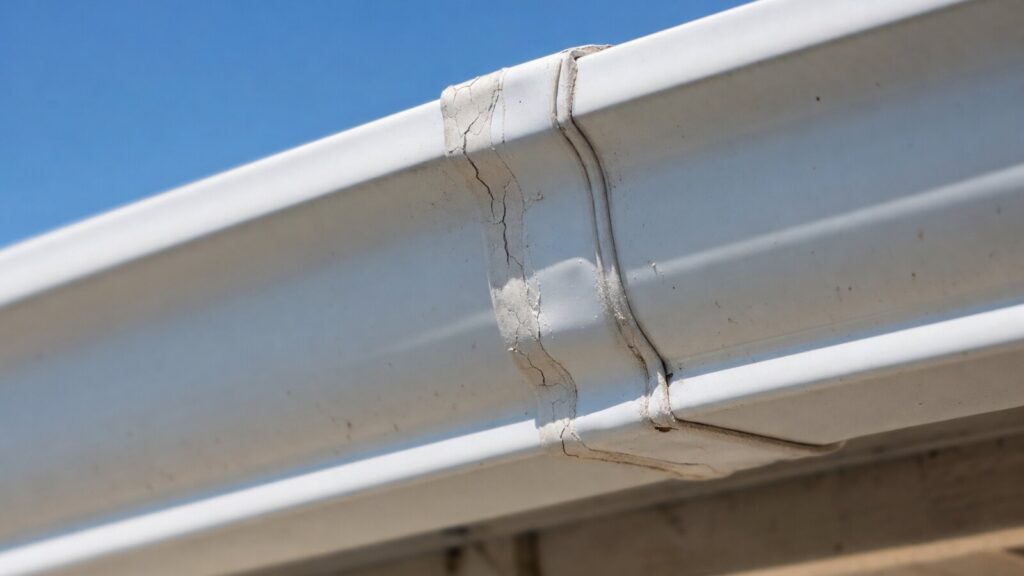
A rainwater harvesting system can only store what the gutters deliver. Gutters that overflow in a hard storm send your water over the edge instead of into the tank, and leaves in the gutter end up as sludge at the bottom of it. Before you buy, make sure the gutters feeding the tank are clean, sloped toward the right downspout and big enough for the storms we get.
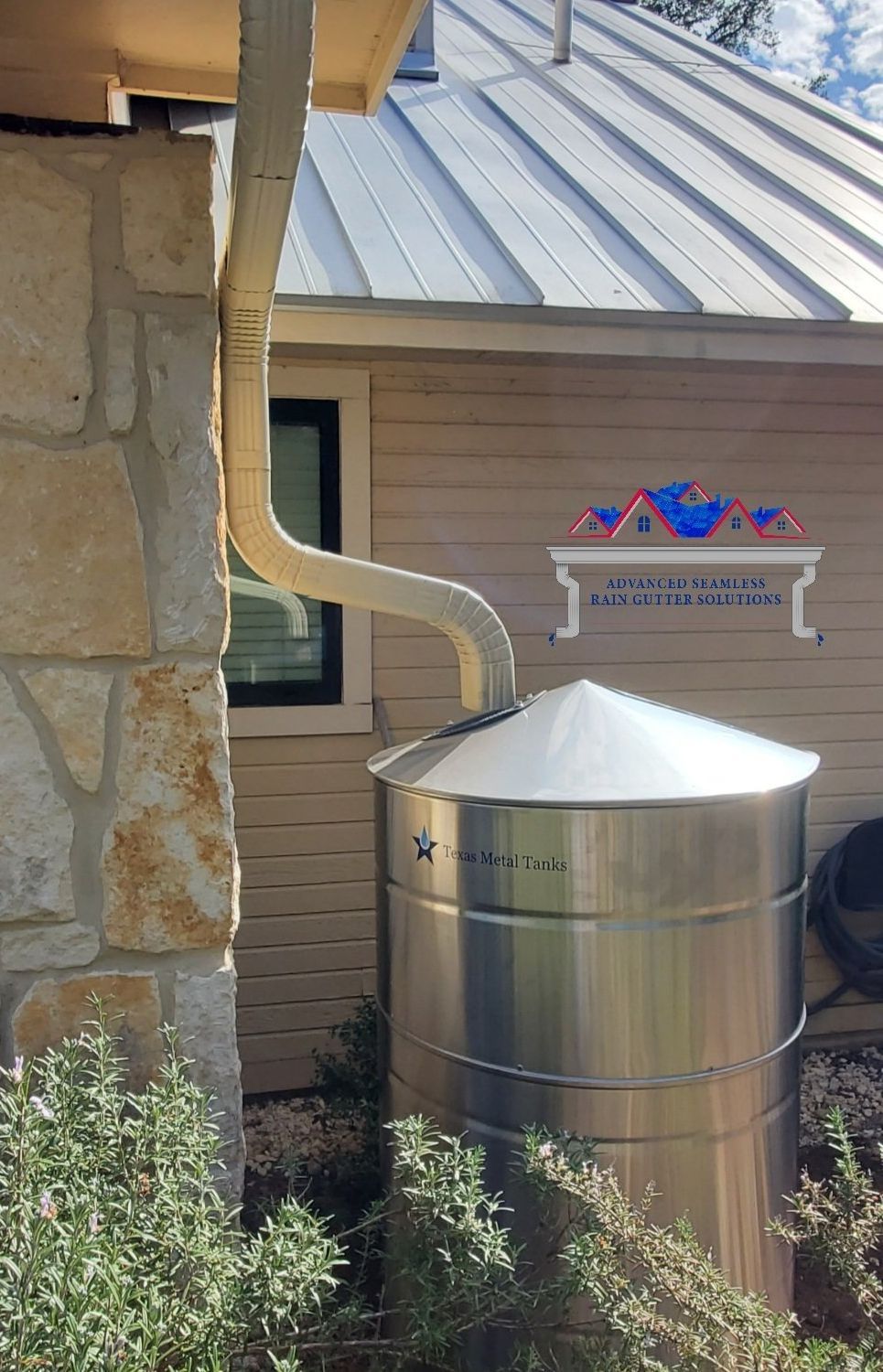
A few parts make the system work: a leaf screen at the inlet, a first-flush diverter that sends the dirtiest first water away, a sealed or screened lid so mosquitoes can’t breed inside, and an overflow pipe that carries extra water well away from your foundation. When we set up rain barrels and water collection tanks, we tie them into seamless gutters and downspouts sized to feed them. If a freeze is coming, our guide to preparing gutters and rain barrels for a Central Texas freeze covers the steps.
Placement and base
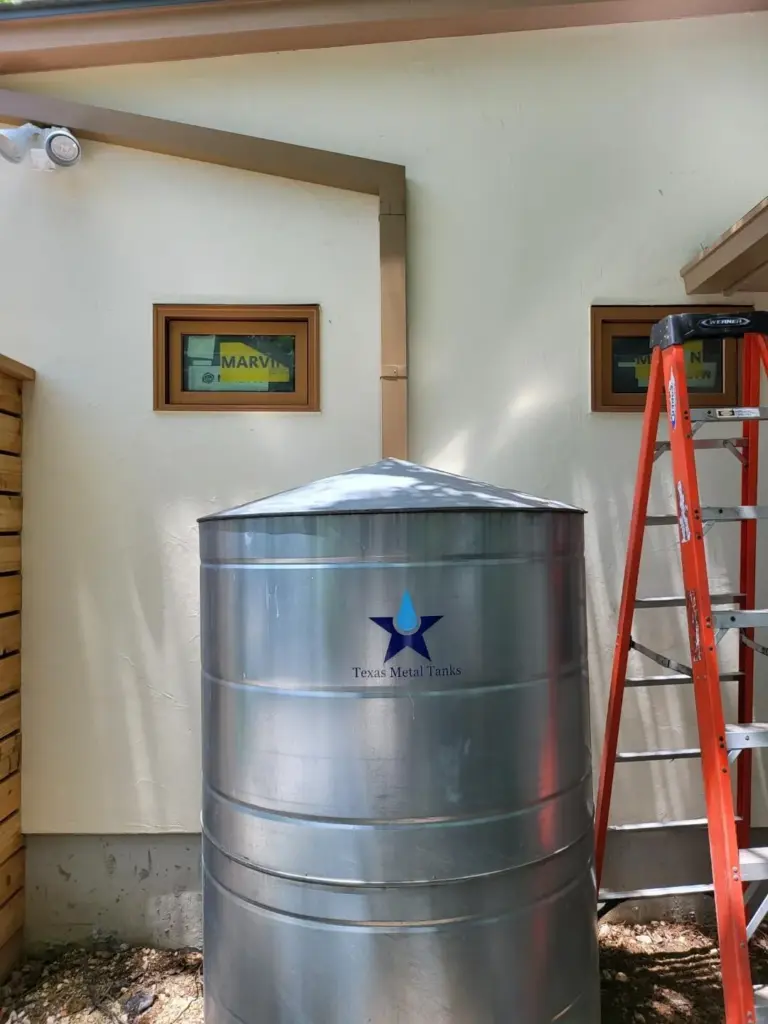
Water is heavy. Each gallon weighs about 8.3 pounds, so a full 500-gallon tank weighs more than 4,000 pounds. Set any tank on a level, solid base sized for its full weight, as close to the downspout as practical, and leave room to reach the spigot with a hose or a watering can. Steel and polyethylene are both common choices, and either works well when the base is right and the lid is sealed.
Gutters Made Easy is a family-owned gutter company based in Kyle, and owner Tyler Smith has more than 20 years of hands-on experience with rain gutters and sheet metal. If you’d like help sizing a tank and the gutters that feed it, call (512) 881-9204 or ask about a rain barrel or water tank for your home and we’ll walk the roofline with you.
Common questions about water collection tanks
What size rainwater tank do I need? Multiply the roof area that drains to the tank by 0.62 and by 0.8 to get usable gallons per inch of rain. Then size the tank to cover your outdoor use for the dry stretch you want to bridge, usually midsummer.
How long will a 500-gallon tank last? Divide 500 by your daily outdoor use. At 25 gallons a day for hand-watering beds, it lasts about 20 days. At 100 gallons a day for a larger garden, it lasts about 5.
Do rainwater tanks need a concrete slab? They need a level, solid base that can carry the full weight. A 500-gallon tank holds more than 4,000 pounds of water, so a compacted gravel pad or a slab is common for larger tanks.
Is rainwater harvesting legal in Texas? Yes. Texas encourages it, exempts harvesting equipment from state sales tax and limits HOAs from banning rain barrels, though they can set reasonable rules about placement and appearance.