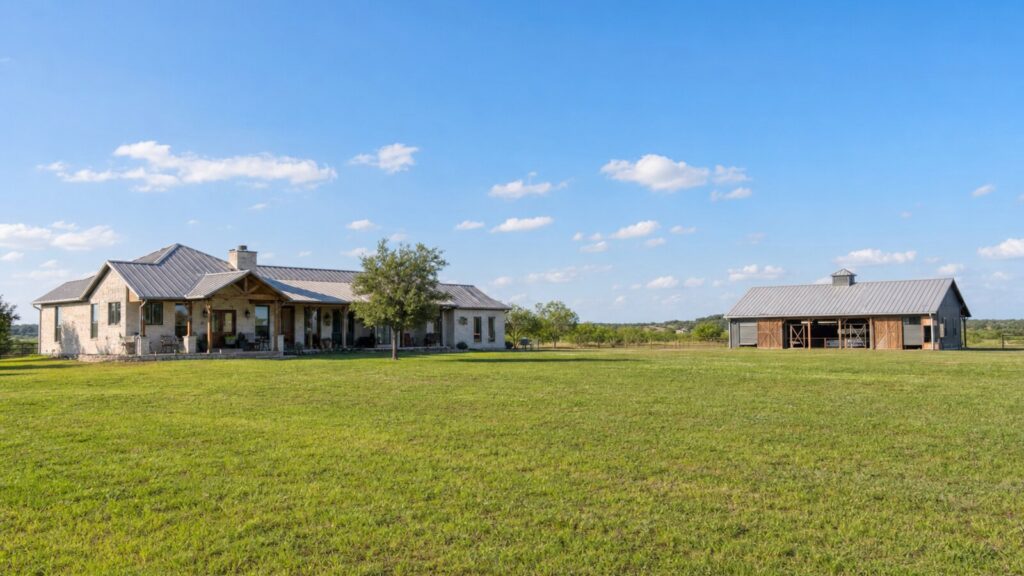
Out around Marion, a lot of homes and barns wear standing-seam metal roofs, and metal roofs move water differently than shingles. They are smooth and fast, so a hard rain sheets off them in a hurry and hits the gutter with real force and volume. That means gutters on a Marion acreage home have to be sized and hung for that fast sheet flow, not for a gentle drizzle. The upside is that the same big, clean metal roof that challenges your gutters is also close to ideal for serious rainwater collection.
Key takeaways
- Metal roofs shed water fast and in volume, so gutters have to be sized and hung to catch fast sheet flow.
- Larger roofs on Marion acreage properties, including barns and outbuildings, produce a lot of runoff.
- That fast, high-volume flow can overshoot undersized or poorly positioned gutters.
- A big metal roof is excellent for rainwater harvesting, which is genuinely useful on rural property.
Why metal roofs change the gutter math
A shingle roof is rough, so water slows as it travels down and reaches the gutter at a manageable pace. A standing-seam metal roof is the opposite. It is smooth and often steep, so water accelerates and comes off the eave fast, sometimes fast enough to shoot right over a gutter that is undersized or hung a hair too low. The gutter has to be positioned to catch that sheet and sized to carry it.
On a large Marion home or a barn, the roof area feeding each gutter run is bigger too, so more water arrives at once. Put fast flow and large roof area together and you have a real capacity demand. A standard 5-inch gutter set up for a small shingled house is often not the right answer for a big metal roof out on acreage.
Sizing gutters for a Marion metal roof
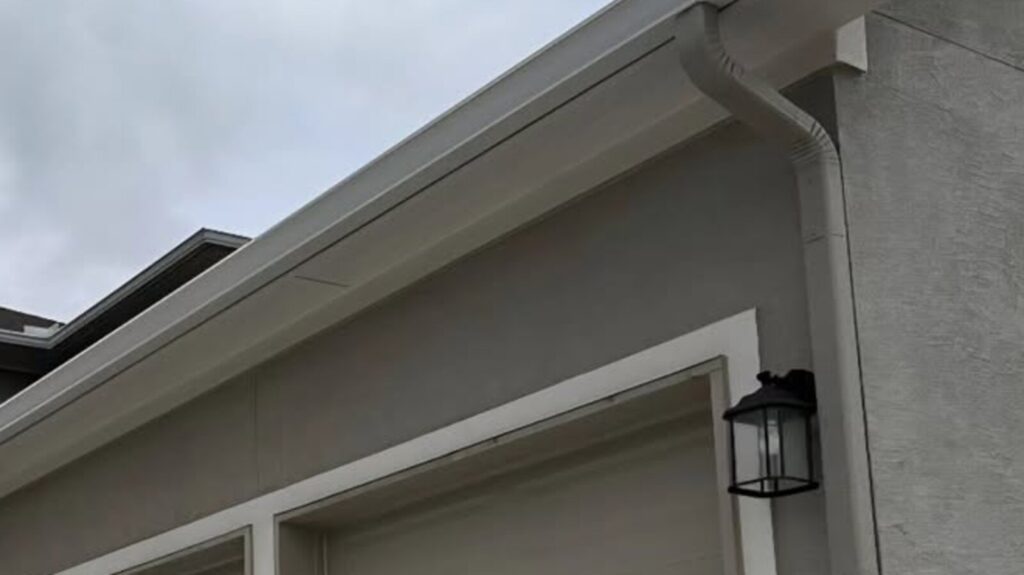
The fix is straightforward once you know what you are dealing with. Bigger roofs and faster flow usually call for a 6-inch gutter with larger 3-by-4-inch downspouts that drain quickly and resist clogging. Just as important is placement. On a steep metal roof, the gutter has to be set to catch water that is coming off with momentum, and the hangers have to be solid enough to hold a run that will carry heavy, fast-moving water.
Getting the pitch and the number of downspouts right finishes the job, so water is moved to the ground and away from the house without ever overrunning the trough. A properly specified seamless gutter system built for a metal roof handles the hardest Central Texas rain without the water launching off the eave or overflowing.
Turning a big roof into a water supply
Here is where rural property has an advantage. A large, smooth metal roof is one of the best rainwater collection surfaces there is. Metal is clean, it sheds water efficiently, and it does not shed the granules or organic material that a shingle roof does, so the water it collects is relatively clean to begin with. On acreage, that harvested water is genuinely useful for irrigation, gardens, livestock, or supplementing a well.
The volume adds up fast. A big roof can capture a substantial amount of water from even a moderate rain, and Central Texas gets enough intense rain events that a well-designed system fills quickly. The gutters and downspouts are the front end of any rainwater setup, so if you are sizing gutters for a metal roof anyway, it is the natural moment to think about routing some of that water into collection tanks instead of just sending all of it to the ground.
Planning gutters and collection together on acreage
On a Marion acreage property, a few things are worth thinking through up front:
- Size the gutters and downspouts for the metal roof’s fast, high-volume flow, not for an average house.
- Set the gutters to catch water coming off a smooth, steep roof with momentum.
- Decide which downspouts, if any, will feed rainwater collection tanks versus draining to the ground.
- Carry the rest of the water well away from the house and outbuildings so it does not pool at the foundations.
Planning the drainage and any collection together from the start is far easier than retrofitting later, and it makes the most of a roof you already have.
What a local Marion install looks like
A Marion property often means more than one roof to think about, so we look at the house, the barn, and any outbuildings together. We size each system for the metal roof feeding it, set the gutters to catch fast sheet flow, and decide with you which downspouts drain to the ground and which feed collection tanks. On acreage, that planning pays off, because a big metal roof captures a lot of usable water and the gutters are the front end of any collection setup. Homeowners searching for seamless gutters in Marion usually want a system that keeps up with a fast metal roof and makes the most of the rain that falls, and we build for both.
How Gutters Made Easy serves Marion homeowners
We work throughout Marion and Guadalupe County, on homes, barns, and outbuildings alike, and owner Tyler Smith has more than twenty years of experience sizing and hanging gutters for metal roofs and rural properties. We spec the profile, downspout size, and placement to match a metal roof’s fast flow, fabricate the gutters on site to fit your buildings, and can set the system up to feed rainwater collection where you want it.
Everything is backed by our lifetime materials warranty and 10-year workmanship guarantee. If you have a metal-roof home or barn near Marion and want gutters that keep up and maybe capture some of that water, talk to us about seamless gutters for your Marion property.
Common questions about gutters for Marion metal roofs
Do metal roofs need bigger gutters? Often, yes. Metal roofs shed water fast and in volume, so on a large or steep roof a 6-inch gutter with larger downspouts is usually the right call to catch and carry that fast sheet flow.
Why does water shoot off my metal roof past the gutter? Because a smooth, steep metal roof accelerates the water, and it comes off the eave with momentum. The gutter has to be sized and positioned to catch that fast flow, which a standard install may not do.
Is a metal roof good for rainwater harvesting? Very good. Metal is clean, sheds water efficiently, and does not shed granules like shingles, so the collected water starts out relatively clean. A large metal roof can capture a lot of water on acreage.
Can I add rainwater collection to my existing gutters? Usually yes, though it is easiest to plan the gutters and collection together. The downspouts are the front end of any system, so routing some of them into tanks is a natural addition.
What about barns and outbuildings? They benefit from the same approach. Large metal outbuilding roofs produce plenty of runoff worth managing and often make excellent collection surfaces for irrigation or livestock water.
How much rainwater can a metal roof collect? A lot. A large roof can capture hundreds of gallons from even a modest rain, and Central Texas gets enough intense storms that collection tanks fill quickly. On acreage where every bit of irrigation or livestock water helps, that makes harvesting off a big metal roof genuinely worthwhile rather than just a nice idea.