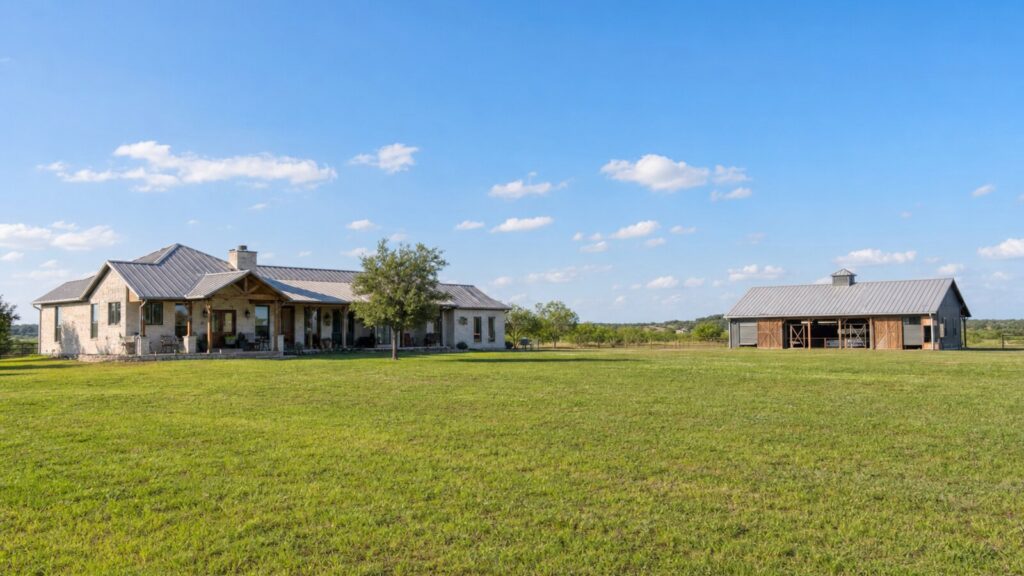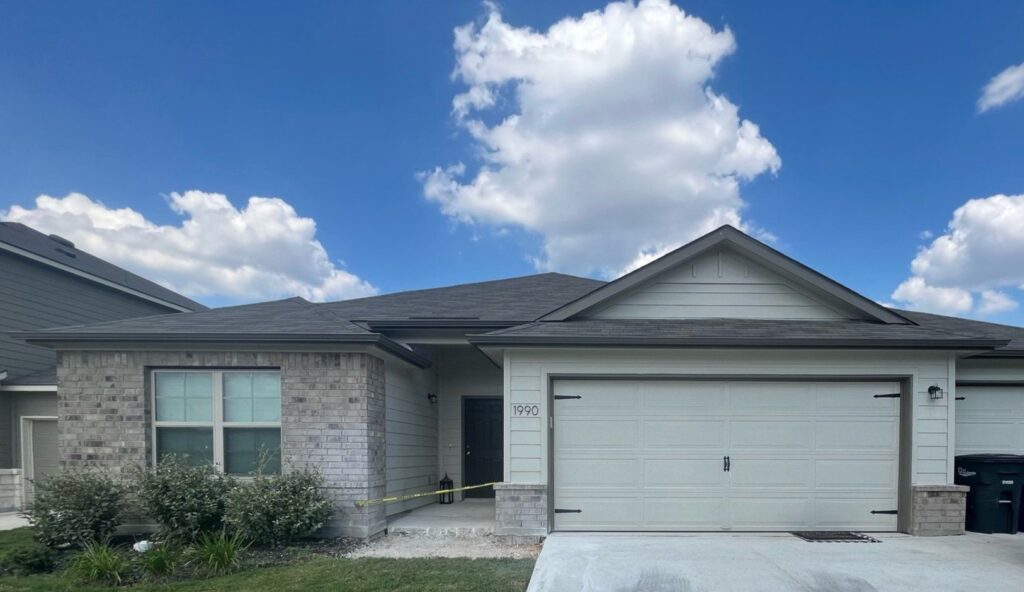
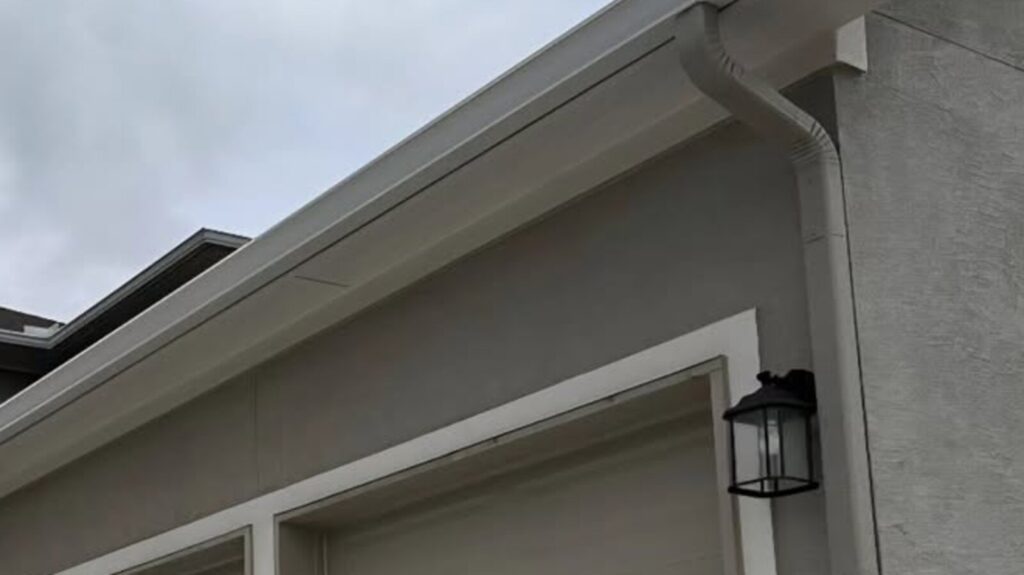
Buda has been one of the fastest-growing towns in Central Texas, and a lot of that growth is brand-new homes in subdivisions like Garlic Creek and Whispering Hollow, much of it near the Onion Creek watershed. Those new homes look move-in perfect, but many sit on expansive clay that swells when wet and shrinks when dry. On soil like that, where your downspouts send the water matters as much as the gutters themselves, because water dumped at the base of the house is water working against your slab.
Key takeaways
- Buda’s rapid new-home growth has put many houses on expansive clay near the Onion Creek watershed.
- Expansive clay swells and shrinks with moisture, and repeated soaking against a slab is what drives foundation movement.
- Builder-grade gutters often discharge right at the foundation, which is the opposite of what clay soil needs.
- The fix is carrying roof water several feet away from the house, often with buried drainage on a flat lot.
Why new Buda homes need a drainage plan, not just gutters
A new house comes with new gutters, so it is easy to assume drainage is handled. Often it is not. Builder gutters are usually sized to code and installed fast, with downspouts that elbow out and dump water a foot or two from the wall. On well-draining soil that might be fine. On the expansive clay under much of Buda, it is a slow-motion problem.
The issue is not the gutter catching the water. It is where the water goes after the downspout. If it lands right at the foundation and soaks in, it feeds the exact moisture cycle that clay soil reacts to. A new home is the best time to get this right, because you can correct the discharge before years of soaking have done anything.
Onion Creek, clay soil, and your foundation
The land around Onion Creek and the newer Buda subdivisions includes a lot of expansive clay. Clay like this holds water and changes volume dramatically with moisture. When it gets wet it swells, and when it dries out in a Texas summer it shrinks and cracks. A foundation sitting on soil that is constantly swelling and shrinking gets pushed and pulled, and over time that shows up as cracks, sticking doors, and uneven floors.
The single biggest thing a homeowner controls in that cycle is how much water reaches the soil against the house. Gutters that overflow, or downspouts that discharge at the base of the wall, keep that soil wet right where you least want it. Onion Creek’s history of flooding is a reminder of how much water this area can get at once. Managing your own roof runoff is the part you can actually control, and it starts at the downspout.
Where the water needs to go on a flat Buda lot
Many new Buda lots are graded fairly flat, which makes it harder for water to naturally run away from the house. On a flat lot, a downspout that just elbows out a few inches leaves the water to pool and soak in. The goal is to move roof water several feet away from the foundation to a spot where it can drain or daylight safely.
On some lots, extensions and proper grading do the job. On many flat Buda lots, the cleaner answer is underground drainage, where the downspouts tie into buried pipe that carries the water out to a discharge point away from the house. It keeps the yard usable, moves the water decisively, and takes the soaking away from the slab. Paired with a properly sized gutter system, it turns roof runoff from a foundation risk into a non-issue.
Getting it right on a new home
If you have a newer Buda home, a few things are worth checking before the next wet season:
- Watch where each downspout discharges in a storm. If water pools at the base of the wall, that is a problem to fix.
- Look for gutters that overflow, which soak the foundation even faster than a short downspout.
- Check that the ground slopes away from the house, and be honest about how flat your lot really is.
- On expansive clay, plan to carry water several feet out, with buried drainage if the grade will not do it.
What a local Buda install looks like
On a newer Buda home, our first job is to see where the water goes today, not to assume. We look at the grade, watch where each downspout discharges, and check how flat the lot really is, because that decides whether extensions are enough or the downspouts need to tie into buried drainage. From there we size the gutters for the roof, set the downspouts to carry water past the foundation zone, and route the discharge to a safe point away from the slab. Homeowners looking for seamless gutters in Buda are usually trying to protect a big investment on reactive clay, and getting the drainage right on a new home is the cheapest foundation insurance there is.
How Gutters Made Easy serves Buda homeowners
We work throughout Buda and the surrounding Hays County subdivisions, and owner Tyler Smith has more than twenty years of experience with exactly this kind of soil and drainage. We look at your lot, your grade, and where the water actually goes, then build a gutter and drainage plan that carries roof runoff away from the foundation instead of into it. Our seamless gutters are fabricated on site, and we can tie downspouts into underground drainage where a flat lot needs it.
All of it is backed by our lifetime materials warranty and 10-year workmanship guarantee. If you own a newer home in Buda and want to protect the foundation before the clay starts moving, talk to us about seamless gutters and drainage for your Buda home.
Common questions about new-build drainage in Buda
My Buda home is new. Do I really need better drainage? Possibly. Builder gutters often discharge right at the foundation, which is the wrong setup on the expansive clay common around Buda. A new home is the best time to correct it, before years of soaking affect the slab.
What is the problem with expansive clay? It swells when wet and shrinks when dry, and that constant volume change pushes on a foundation. Keeping roof water away from the soil against the house is the main way a homeowner limits that movement.
Why does a flat lot make drainage harder? Because water does not naturally run off a flat lot. A downspout that only reaches a few inches out leaves water to pool and soak in, so flat lots often need extensions or buried drainage to carry it away.
What is underground drainage? It is buried pipe that connects to your downspouts and carries roof water out to a safe discharge point away from the house. On flat Buda lots it is often the cleanest way to protect the foundation.
Does this apply to homes near Onion Creek specifically? The soil and flat grading common in that part of Buda make roof-water management especially worth doing right. Controlling your own runoff is the part you can manage regardless of the larger watershed.