Seamless rain gutters are gutters formed on-site from a coil of metal, most often aluminum, so each straight run along your roof edge is one continuous piece instead of short sections joined together. In Texas, where rain often arrives in short, heavy bursts and much of the soil is expansive clay, that construction pays off in fewer leaks, better protection for your foundation and less upkeep over the years.
This post covers the benefits that matter most for Texas homes, where the extra cost goes, and how to tell whether a seamless system is worth it for your house. If you want the side-by-side breakdown of how the two systems are built, read our post on the difference between seamless and sectional gutters. Here, we’ll focus on what a seamless system does for you once it’s on the house.
Why Texas weather favors a seamless gutter
Texas rain is less about yearly totals and more about how fast it falls. Central Texas sits in what’s known as Flash Flood Alley, and the Lower Colorado River Authority says the region has one of the greatest risks for flash floods in the United States because of its steep terrain, shallow soil and unusually high rainfall rates. A gutter system here has to handle a lot of water in a short window.
The volume adds up fast. The Texas Water Development Board estimates that a roof sheds about 0.62 gallons per square foot for every inch of rain. On a 2,000 square foot roof, a 1-inch storm sends roughly 1,240 gallons toward your gutters. A 2-inch afternoon storm doubles that.
When that much water hits a gutter, every weak point gets tested. Joints that seep in a light shower can drip steadily in a downpour, and a run that sags between hangers can spill over the front edge. A seamless run has fewer weak points to begin with, which is the root of most of its advantages, including its durability in Texas weather conditions.
Fewer seams, fewer leaks
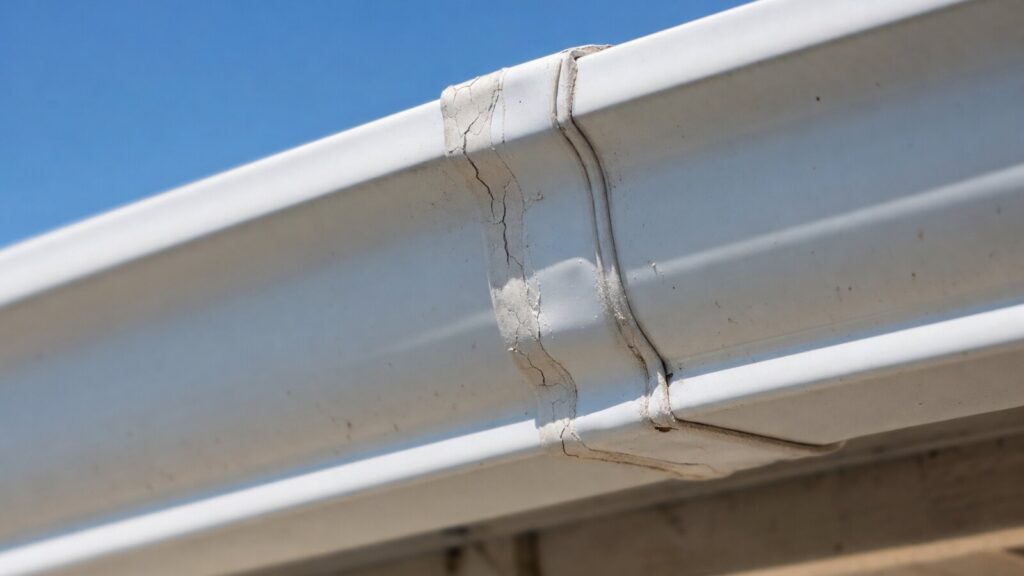
A traditional sectional gutter is assembled from pre-cut lengths that overlap and get sealed at every joint. Each joint depends on sealant, and Texas heat is hard on sealant. Years of summer sun dry it out until it cracks, and then the joint starts to drip.
A seamless gutter only has joints where it has to, at the corners, end caps and downspout outlets. A long straight run across the front of the house has none at all. Fewer joints means a lower risk of leaks and fewer places for water to escape, which keeps water off your fascia, the board your gutters hang from, and off the siding below.
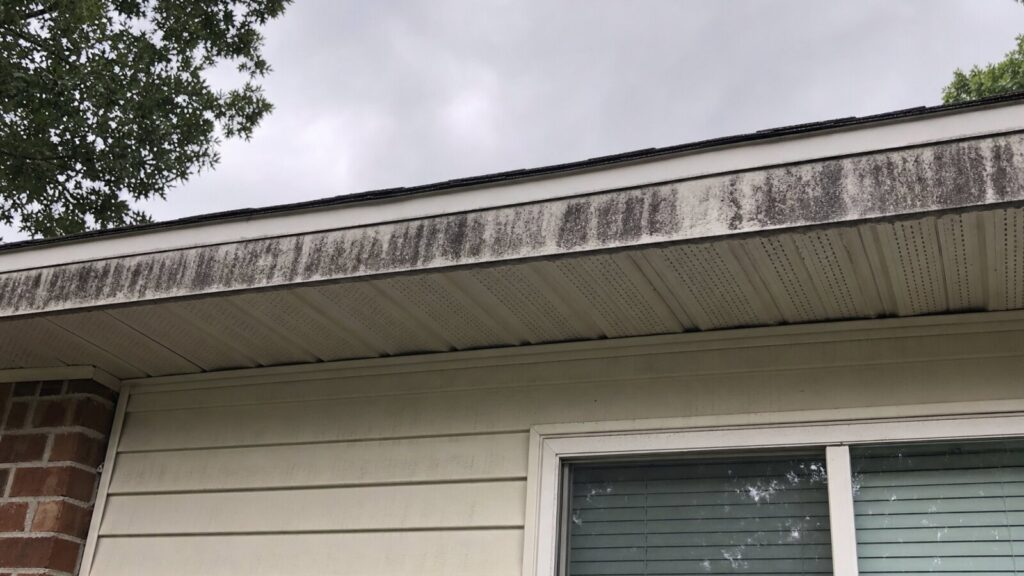
That also helps the gutter last. Water that seeps out at a seam runs down the back of the gutter, soaks the fascia and can start wood rot behind the gutter where you won’t see it. A continuous run keeps the water moving to the downspout instead.
Better protection for foundations on clay soil
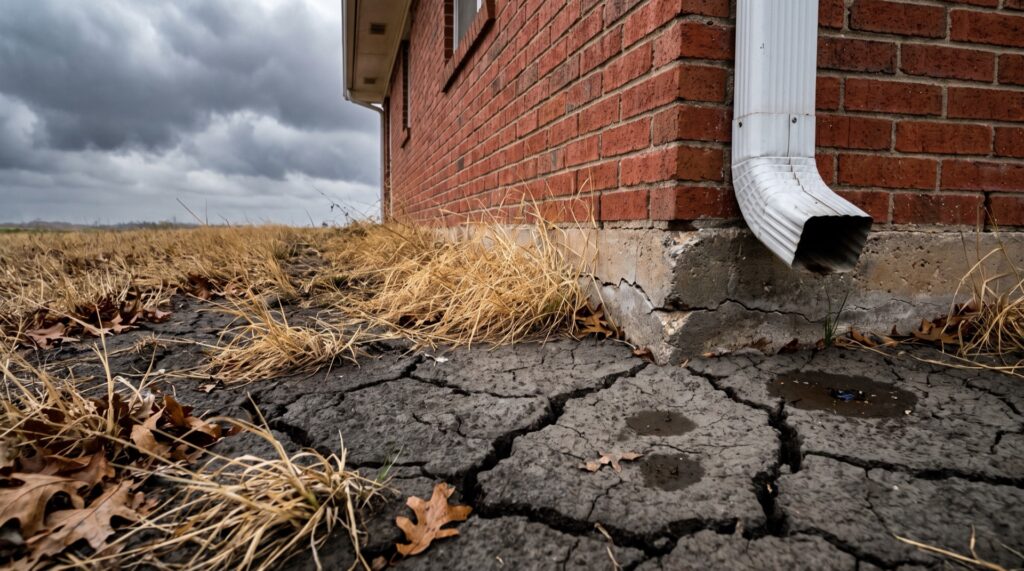
Much of Central Texas sits on expansive clay that swells when it’s wet and shrinks when it dries. When roof water pours off a leaky or overflowing gutter onto the ground next to the slab, the soil along that side of the house goes through hard wet and dry swings. That uneven movement is one of the things that stresses a foundation over time.
Building codes recognize the problem. Where expansive soils are known to exist, section R801.3 of the International Residential Code calls for roof drainage to be discharged at least 5 feet from foundation walls or into an approved drainage system. A gutter can only meet that goal if it actually carries the water to the downspout. A system that leaks along the way puts water right back at the wall.
Seamless gutters paired with well-placed downspouts and extensions give you the most control over where that water lands. Where the yard is flat, we can also tie downspouts into underground drainage that carries water well away from the house.
A custom fit, made on your driveway
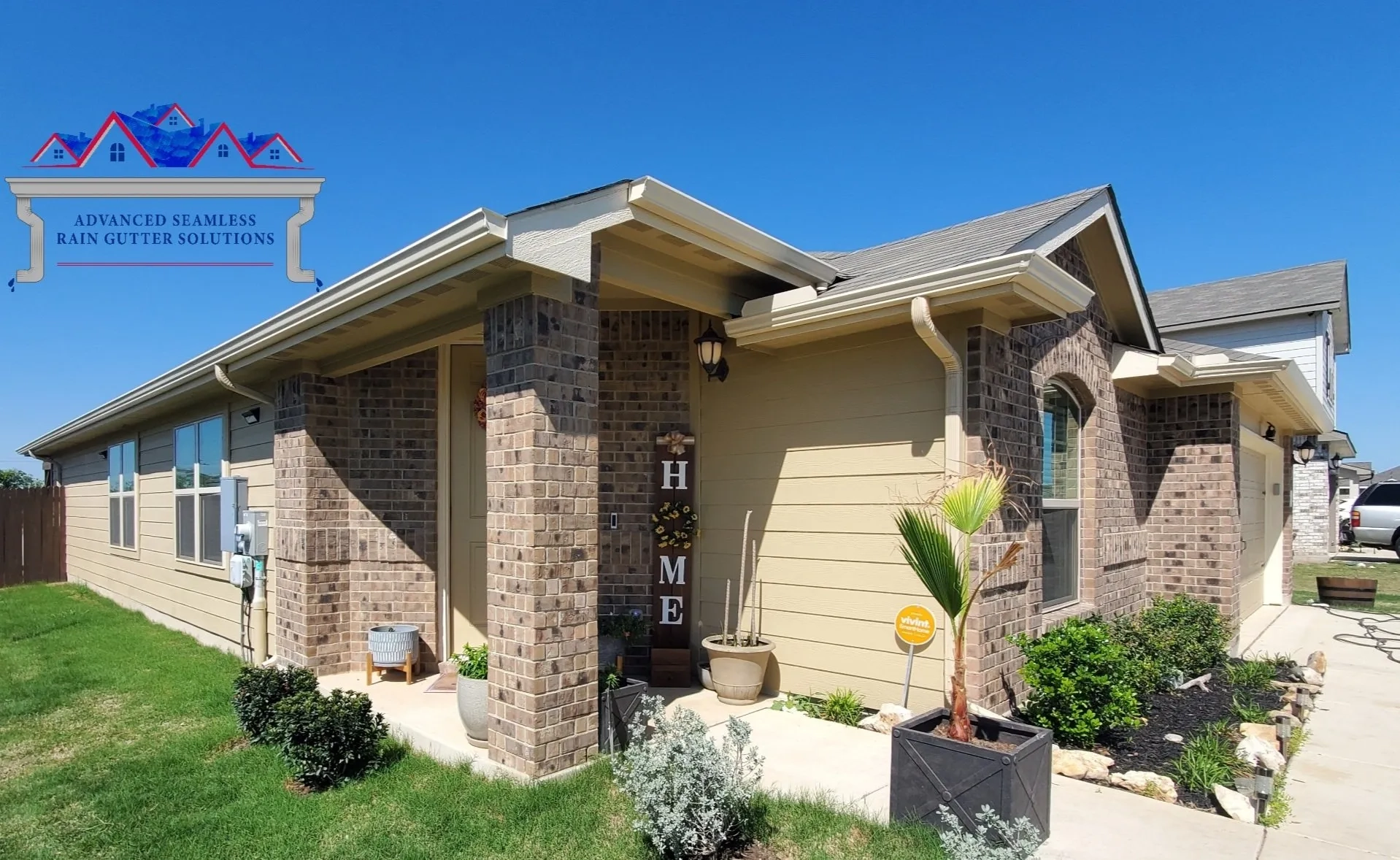
Because seamless gutters are formed on-site, every run is cut to the exact length of your roof edge. Our crew brings the forming machine to the house, measures each run, and fabricates the gutters right there. There’s no piecing together store-bought sections to approximate the length.
That fit lets us match the gutter to the house. We install K-style, half-round, box, copper and galvalume profiles, and the right material and design depend on the roof, the look you want and how much water the roof sheds. If you’re curious how one common profile compares, our post on the benefits of K-style gutters is a good place to start. You can also see how we approach custom-fit seamless gutters built on-site from measurement to cleanup.
Less maintenance over the life of the system
No gutter is maintenance-free, but a seamless system asks for less. Sectional joints catch debris at every overlap and need resealing as they age. A continuous run gives leaves and grit fewer places to snag, and there’s no sealant along the straight runs to redo.
You’ll still want to clear your gutters, especially after the spring live oak leaf drop and again in the fall. Adding gutter guards on top of seamless gutters cuts down on cleaning further, which is a real benefit on two-story homes where nobody enjoys the ladder. Clean gutters also mean no standing water, which matters in Texas because still water in a clogged gutter can become a mosquito breeding spot during the warm, rainy months.
Long-term cost and home value
A seamless system usually costs more up front than do-it-yourself sectional gutters from a big-box store. The difference is professional fabrication and installation. Where seamless gutters earn that back is in what doesn’t happen later: fewer joint repairs, fewer resealing jobs, and less water damage to fascia, siding and the soil around the slab.
Looks count too. Clean, unbroken lines and a factory finish that never needs painting make the roofline look finished, which helps curb appeal when you go to sell. Gutters are rarely the reason a buyer falls in love with a house, but stained fascia and sagging, patched gutters are something buyers and inspectors notice.
Every system we install comes with a lifetime manufacturer warranty on materials and a 10-year guarantee on our workmanship. That warranty is a big part of the long-term value, because it covers you well past the years when a cheaper system would typically start to show problems.
Is a seamless system worth it for your house?
For most Texas homes, yes. If the gutters are on your house, run along a visible roofline, and handle runoff near your foundation, the leak resistance and custom fit are worth the extra cost. That’s especially true on homes with clay soil, long roof runs or heavy tree cover.
Sectional gutters can make sense on a small shed, a detached outbuilding or a short run where looks and foundation protection don’t matter much. For the house itself, a seamless system is the better long-term buy.
Here’s a short video from our team on what we do:
Talk to a local seamless gutter installer
Gutters Made Easy is a family-owned company based in Kyle, serving homeowners across Central Texas from Austin to San Antonio. Owner Tyler Smith has more than 20 years of hands-on gutter and sheet-metal experience, and every system we hang is fabricated on-site to fit your house. Financing is available.
If you’re ready to see what seamless gutters would look like on your home, explore our rain gutter installation options or call us at (512) 881-9204 for a free estimate.