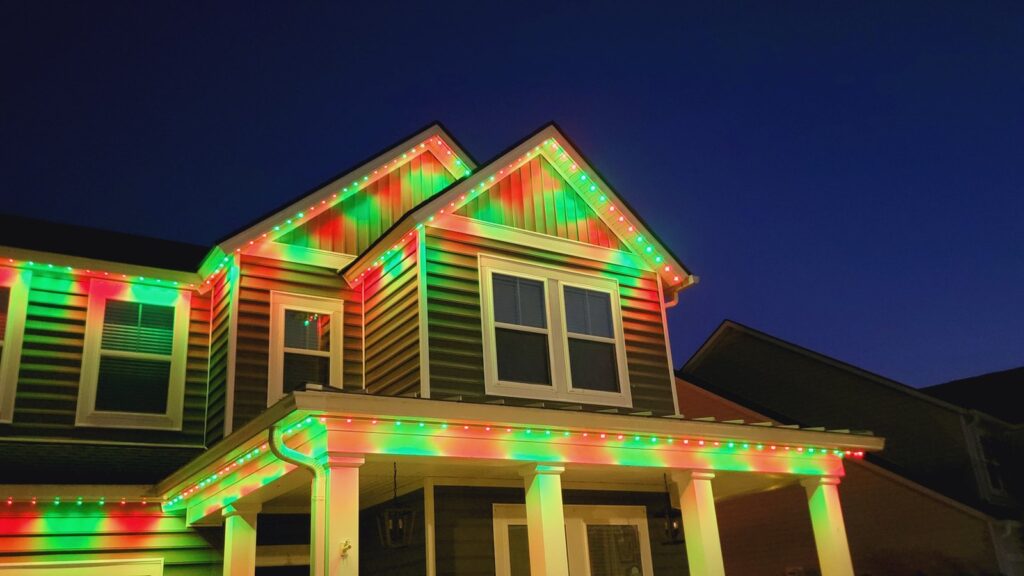
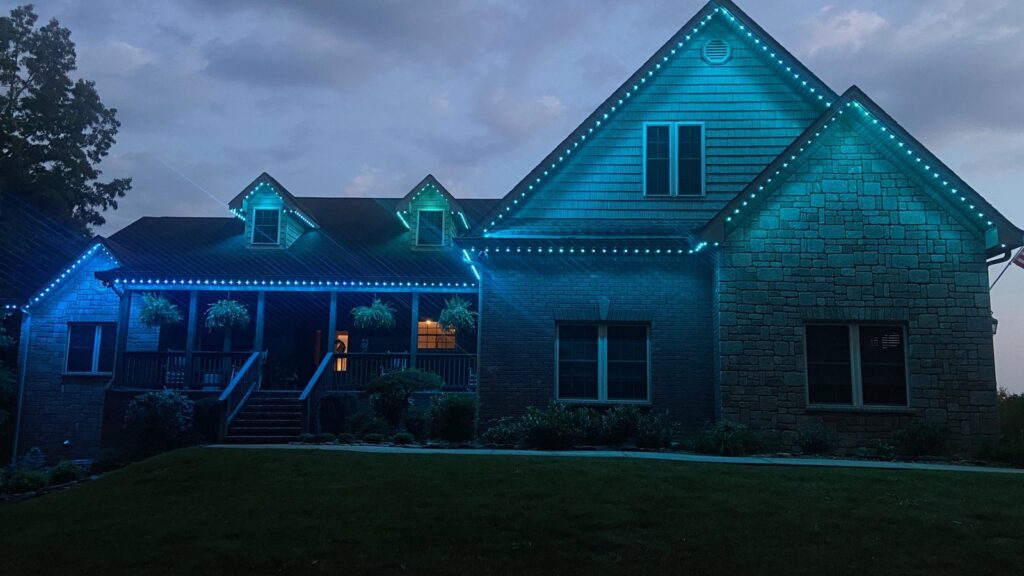
Yes, you can put permanent Christmas lights on a house with gutters, and done right they won’t hurt the gutters or the fascia board they hang from. The track mounts under the drip edge or along the fascia, and the gutter itself is never the thing being screwed into. When lights do cause damage, it almost always traces back to one of three things: fasteners driven through the gutter, a fascia board that was already soft, or a light run sitting right where the gutter overflows.
We install both, so we look at the roofline from both sides. Here’s what a gutter crew checks before a single clip goes up, and why each check matters on a Central Texas house. Most of it comes down to the wood behind the gutter.
Can permanent Christmas lights be installed on gutters?
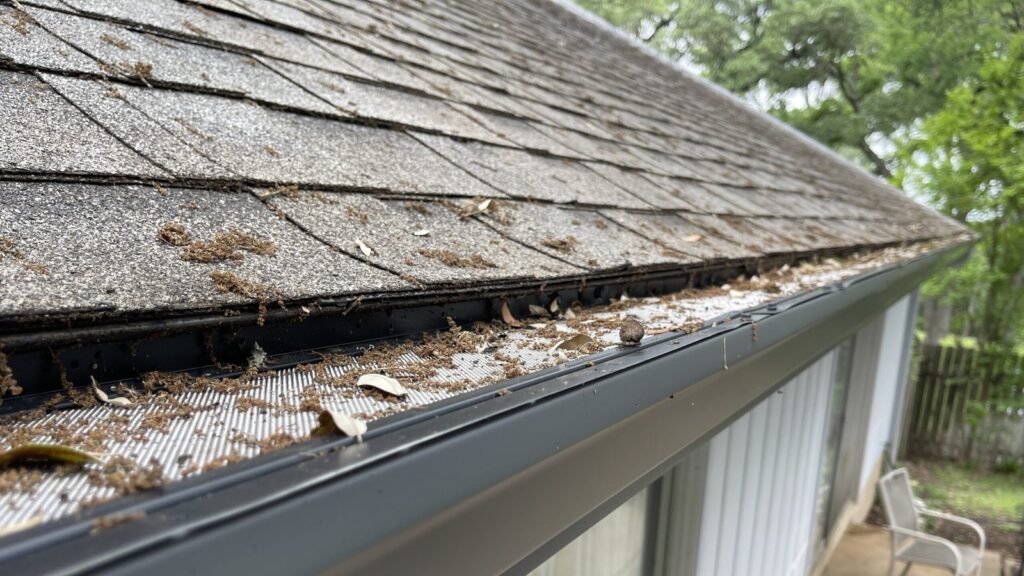
They can go on a house with gutters, but not into the gutters. That difference matters more than any other detail. A permanent system is a low profile channel with LEDs inside it, fastened to the fascia (the board along the edge of the roof) or tucked under the drip edge, the metal flashing that sheds water off the shingles and into the gutter. On the rake edges and gables, where there’s no gutter, the channel runs along the fascia on its own. Along the eaves, the layout is planned around the gutter so the channel never has to go through it.
The gutter trough should never be the mount. A screw through the back or bottom of a gutter is a hole in a water channel. It leaks, it holds water around the fastener, and over time that drip lands on the fascia and the siding below. That’s true of aluminum gutters, steel and copper alike. Seamless gutters are fabricated as one continuous piece for exactly this reason: fewer joints, fewer places for water to get out. Drilling a row of holes along it undoes that.
How lights end up damaging gutters and fascia
So do Christmas lights damage gutters? The lights themselves rarely do. Christmas lights damage gutters when they’re hung badly, and the usual culprits look like this:
- Screws or staples driven through the gutter body, the drip edge or the shingle edge
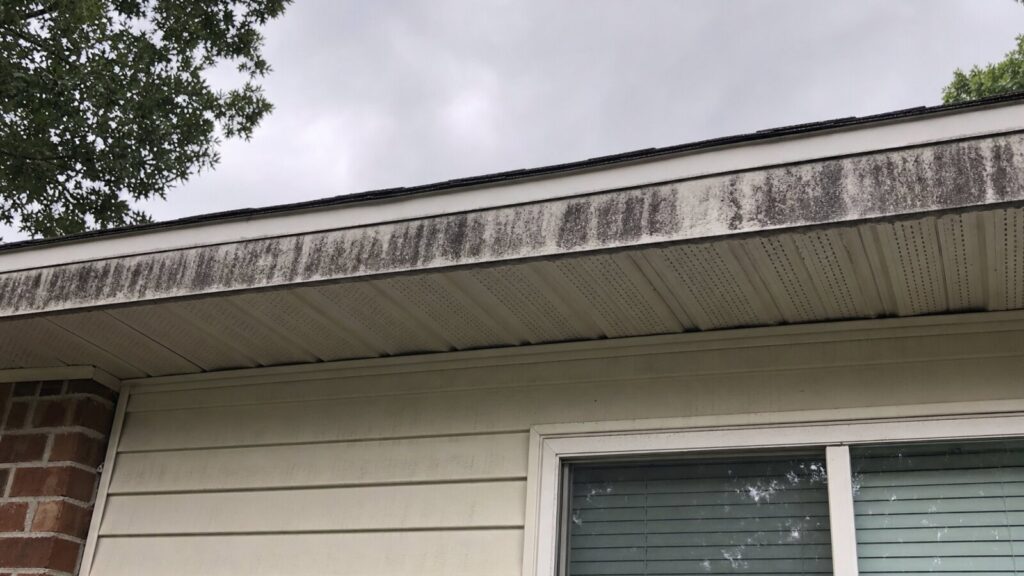
- Fasteners driven into fascia that was already soft, so they pull loose and let water in
- Gutter lips bent down by ladders leaned against them or by clips that pry the edge open
- Wires or channels laid across the gutter trough, catching leaves and slowing the water
- A run mounted right where the gutter overflows, so water sheets over the lights all storm long
You can avoid every one of those. A permanent system is actually easier on the roofline than strands that go up and come down every year, because the fastening happens once, into sound wood, by someone who knows where the water goes. Seasonal holiday lights mean a new set of clips, a new set of ladder marks and a new chance to bend something each November.
Is the fascia sound enough to hold both?
The fascia carries everything. Your gutter hangers screw into it, and the light channel fastens to it. If the wood is soft, neither one holds for long.
Central Texas is hard on wood fascia because of our heat. Research from the USDA Forest Service puts the best conditions for most wood decay fungi at 70 to 90 degrees Fahrenheit, with the wood wet past its fiber saturation point, roughly 25 to 30 percent moisture (Carll and Highley, USDA Forest Service, 1999). The same research notes that wood wetted only briefly doesn’t decay. The trouble is fascia that stays wet, behind a leaking seam or under a gutter that overflows every storm, through a long warm season. That’s a lot of the year here, and it’s why we don’t fasten anything to wood we haven’t checked.
So before we quote a light run, we press on the fascia, look for peeling paint and dark stains, and check the corners where water collects. If you want to know what to look for on your own house, our guide to spotting fascia water damage walks through it. We repair soft sections or wrap them in aluminum before we fasten anything new to them.
How is the gutter hung?
Most modern gutters ride on hidden hangers, brackets inside the gutter that screw through the back of the gutter into the fascia every couple of feet. Those screws and the light channel are sharing the same band of wood. A good layout keeps the two from fighting each other, so the channel isn’t fastened right on top of a hanger screw and the hangers aren’t disturbed to make room for it.
This is also when we look for a gutter that’s already pulling away. If a run has started to sag, a hanger has backed out, or the gutter is tipping forward, adding lights to that stretch only makes the problem more visible. The right order is to re-hang or repair the sagging run first, then mount the lights to a roofline that’s straight and solid. Lights only look as straight as the line they follow.
Where does the water go past the lights?
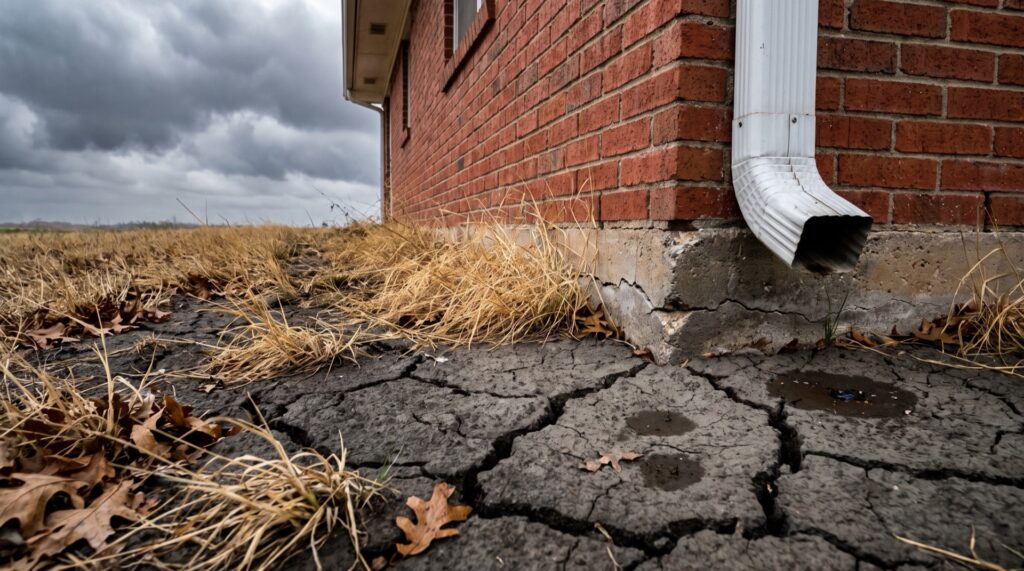
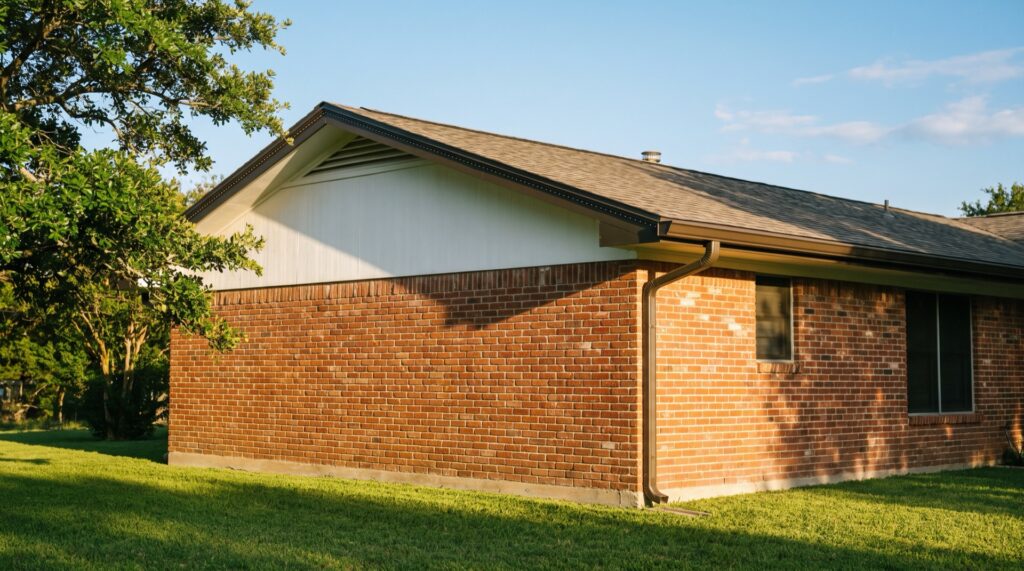
Permanent lights are sealed and rated to stay outdoors year round, so getting rained on isn’t the issue. Sitting under a waterfall is. If a gutter overflows at one corner every heavy storm, a run of lights mounted there takes the full force of it, and so does the fascia behind it.
We look at how water currently leaves the roof: where the downspouts are, which runs overflow, and whether valleys dump extra water into one spot. In the fall, we also look up. Oak and pecan litter fills gutters across Central Texas from October on, and a clogged gutter overflows even in a modest rain. If your house sits under big trees, clean gutters or gutter guards are part of keeping a light system dry and straight. The goal is simple: water stays in the gutter, and the lights stay out of its path.
Corners, downspouts and power
The roof’s corners and transitions are where layouts get tricky, and where a sloppy install shows first. Downspouts drop right where you’d like a clean line of light to turn the corner, and gables, porch roofs and garage roofs all change direction. On a permanent system, every one of those is worked out on paper before installation: where each run starts and stops, how it gets around a downspout, and where controllers and power points go.
Power deserves the same care. The Electrical Safety Foundation advises plugging outdoor lights and decorations into circuits protected by ground fault circuit interrupters (GFCIs) and fastening outdoor lights securely without damaging the cord’s insulation (ESFI). That applies to permanent systems and seasonal strands alike. Keep wires out of the gutter trough, where they catch debris and sit in water. A gutter is a drain, not a cable tray.
Hanging Christmas lights on gutters without a permanent track
Not ready for a permanent system? You can still hang lights without hurting your gutters if you take a little care. Hanging lights the old way is mostly about the clips you choose and where the ladder goes.
Start with plastic gutter clips that hook over the gutter lip, or shingle clips that slide under the shingle edge without lifting it. Make sure they grip without prying the lip outward. Skip nails, staples and screws entirely. Avoid clips that wedge into the trough itself, since they catch leaves all season. Don’t lean the ladder against the gutter itself; use a ladder standoff or set it against the wall. And when the lights come down in January, check that every clip came with them, since a forgotten clip in the trough is one more thing to catch leaves. Hang Christmas lights this way each year and the gutters will be fine, though you’ll still be making the climb twice a season. That climb is the main reason people switch to permanent Christmas lights in the first place.
Doing the gutter work and the lights together
Because the lights mount to the same fascia, soffit and drip edge line your gutters hang on, it makes sense to look at both at once. Owner Tyler Smith has spent more than 20 years on Central Texas rooflines, and our crews already work on gutters, fascia and soffits every week. That’s the reason Gutters Made Easy added lighting: we can plan a permanent light layout around your gutters instead of around a catalog, and fix what we find along the way.
If a run needs repairs, the fascia needs wrapping, or the gutters are overdue for leaf protection, that’s one visit instead of two. We’d rather fix the roof edge first than mount permanent Christmas lights to a board that won’t hold them. One note worth knowing: our lifetime materials warranty and 10-year workmanship guarantee cover gutters. Lighting is quoted on its own terms.
Thinking about lights this year? Call Gutters Made Easy at (512) 881-9204 for a free estimate. We’ll check your fascia, hangers and drainage first, then show you how our permanent lighting installs would look on your house.