Rain chains are one of the prettiest ways to move water off a roof, and in the right spot they work beautifully. In a hard Hill Country downpour, though, a rain chain has limits. It can only guide so much water before the flow overwhelms it and starts splashing and sheeting down the wall. That does not make rain chains a bad choice. It means you have to put them where the volume is low and lean on a real downspout where the volume is high.
Key takeaways
- Rain chains guide water down a series of links or cups instead of an enclosed downspout, and they are as much decoration as drainage.
- They handle light and moderate rain well but can be overwhelmed by the intense downpours Central Texas gets.
- Use rain chains on low-volume roof sections, like a small porch or entry, and keep downspouts on the runs that carry the most water.
- Wherever the water lands, it still has to be carried away from the foundation.
How a rain chain actually moves water
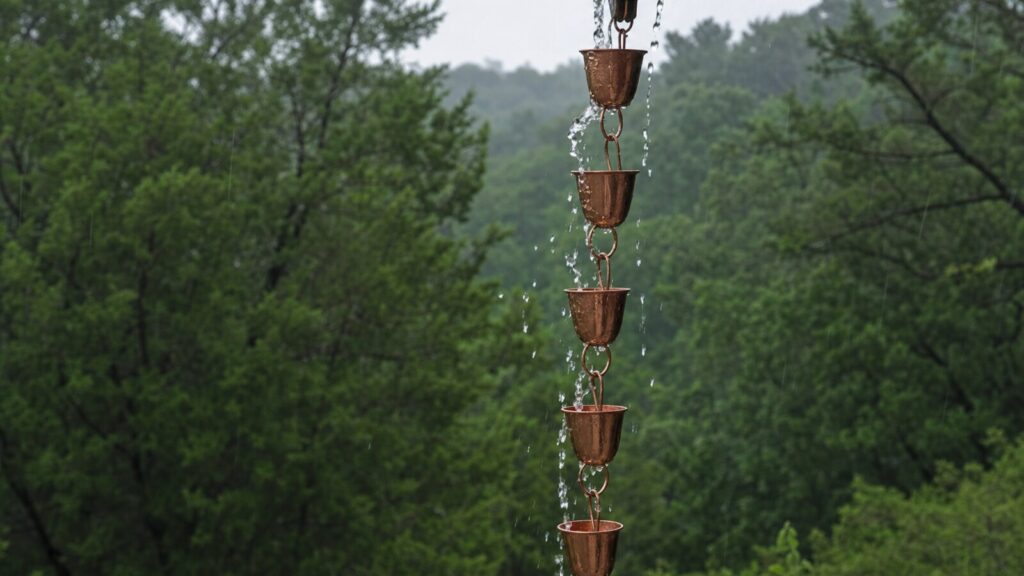
A rain chain hangs from a gutter outlet where a downspout would normally attach. Instead of enclosing the water in a pipe, it lets the water cling to and cascade down a chain of links or a series of small cups. Surface tension keeps most of the flow on the chain in light rain, and the effect is genuinely lovely to watch and listen to. That is a big part of why people choose them for a front entry or a garden-facing wall.
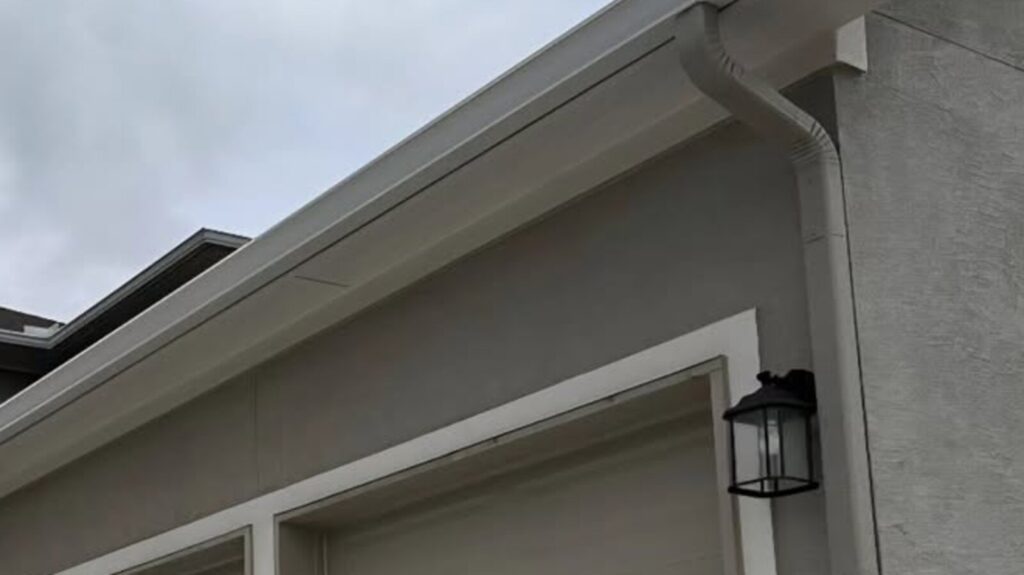
The key difference from a downspout is that a rain chain is open. A downspout is a sealed channel that can carry a large, fast column of water straight down and away. A rain chain relies on the water staying attached to the links, and there is a limit to how much water will do that before physics takes over.
Where Hill Country rain pushes them past their limit
Central Texas does not do gentle. When a real storm comes through, the rain rate spikes and a lot of water hits the roof in a short time. On a large or steep roof section, all of that water funnels to the gutter outlet at once. A downspout swallows it. A rain chain cannot. Past a certain flow, the water stops clinging to the links and starts jumping off, splashing wide, and running down the wall behind the chain.
That splash is the problem. Instead of a controlled column landing where you aimed it, you get water sheeting against the siding, foundation, and any beds below. In a climate where we care a lot about keeping water off the foundation, that is the opposite of what you want during the exact storms that matter most. The chain that looked perfect in a spring sprinkle can make a mess in a September downpour.
When a rain chain is the right call
None of this means you should skip rain chains. It means matching them to the right roof section. A rain chain shines where the water volume is naturally low:
- A small porch, portico, or entry roof that only drains a little area.
- A short gutter run on a single-story section.
- A decorative, highly visible spot where the look matters and the flow is modest.
Pair that with a basin, a splash rock, or a drain at the bottom so the water that does come down is directed away from the house. Used this way, a rain chain gives you the charm without the splash problem, because it never has to handle more water than it can.
Where a downspout wins
On the big stuff, use a downspout. Long runs, steep roofs, valleys that concentrate water, and anything draining a large roof area need the capacity only an enclosed downspout provides. A downspout also makes it easy to carry water well away from the house, either with an extension or by tying into a buried line. The most practical setup for a lot of Central Texas homes is a mix: real downspouts on the high-volume runs, and a rain chain or two on a low-volume entry where you want the look. Our rain chains can be part of a system like that, working alongside a properly sized seamless gutter system that handles the storms.
Getting the most out of a rain chain
If you want rain chains, a few choices make them work far better here:
- Put them only on low-volume roof sections, and keep downspouts on the runs that carry real water.
- Give the bottom a basin or a drain so the water is captured and directed, not just dropped at the foundation.
- Choose a cup-style chain over a plain link chain for heavier flow, since cups guide more water before it jumps off.
- Anchor the bottom so wind and heavy flow do not swing the chain and fling water sideways.
Wind is part of the equation too
Central Texas storms rarely bring rain straight down. The same fronts and microbursts that spike the rain rate also bring gusty wind, and wind is hard on a rain chain. A strong gust can push the falling water right off the chain and fling it sideways against the wall or away from the basin you set below it. A chain that drains politely on a calm, wet morning can throw water several feet in a gusty storm. That is one more reason to keep rain chains on sheltered, low-volume spots like a covered entry, and to anchor the bottom so the chain cannot swing freely. Where wind and volume both run high, an enclosed downspout simply is not affected the same way, which is part of why it stays the workhorse on the exposed, high-flow runs.
How Gutters Made Easy handles it
We install rain chains where they make sense and steer people away from them where they do not, because we would rather your system actually keep water off the house than look good and splash. Tyler Smith has spent more than twenty years matching drainage to Central Texas roofs, and we will tell you honestly which sections can carry a rain chain and which ones need a downspout.
Whatever the mix, we fabricate the seamless gutters on site to fit your home and back the work with our lifetime materials warranty and 10-year workmanship guarantee. If you love the look of a rain chain but want to be sure your foundation is still protected in a real storm, talk to us about where a rain chain fits in your system.
Common questions about rain chains in heavy rain
Do rain chains work in heavy rain? Up to a point. They handle light and moderate rain well, but a hard Central Texas downpour on a large roof section can overwhelm a chain and cause splashing down the wall. Keep them on low-volume sections.
Are rain chains as good as downspouts? For capacity, no. A downspout carries far more water and directs it more reliably. Rain chains are best thought of as a decorative option for low-flow spots, not a replacement for downspouts on the whole house.
Will a rain chain hurt my foundation? Only if it dumps water at the base of the house. Give the bottom a basin or drain that carries water away, and keep chains off the high-volume runs, and they will not be a foundation risk.
Which rain chain style handles more water? Cup-style chains generally guide more water than plain link chains before it starts jumping off, so they are the better pick if you expect heavier flow on that section.
Can I mix rain chains and downspouts? Absolutely, and it is usually the smart move. Use downspouts on the runs that carry the most water and a rain chain on a low-volume entry where you want the look.