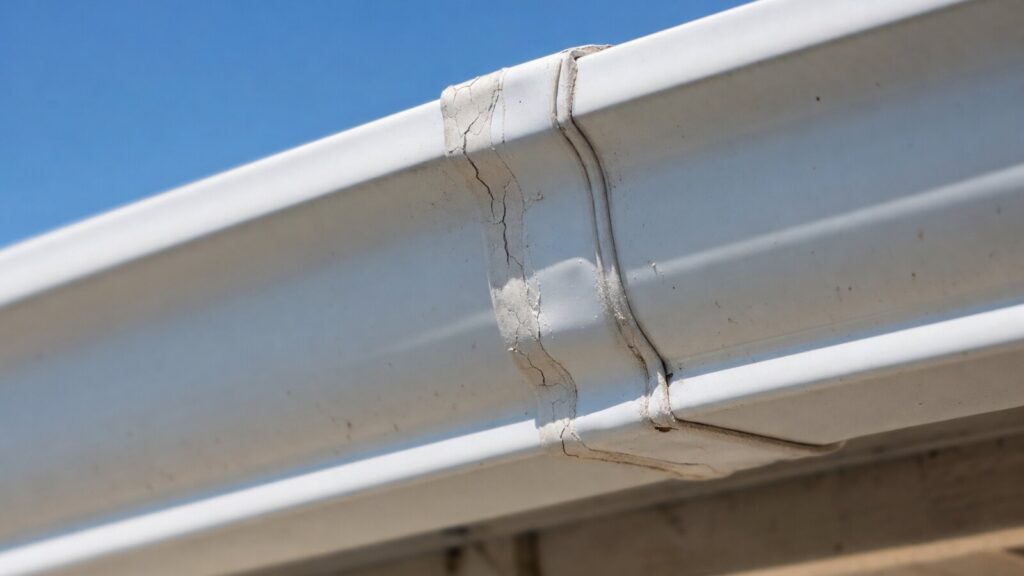
If an old gutter starts dripping at a joint in the middle of a dry July, the heat is usually the reason, not rain. Texas summers bake the sealant at gutter seams and end caps day after day, and the metal underneath expands and contracts with every 100-degree afternoon and cooler night. Over a few seasons that cycle cracks the sealant and works the joints loose, so the first real rain after a long dry spell finds every weak seam. On a seamless gutter there are far fewer of those joints to fail in the first place.
Key takeaways
- Sealant at seams and end caps is the part of a gutter most likely to fail, and Texas heat speeds it up.
- Metal expands and contracts with our big daily temperature swings, which slowly works joints loose.
- Leaks often show up in dry weather because a dried, cracked seam only reveals itself when water finally runs through it.
- Seamless gutters remove most joints, so there is far less sealant to crack in the first place.
Why the seams fail before anything else
A gutter is mostly a simple trough, and the metal itself lasts a long time. The weak points are the joints: the seams where sections meet, the corners, the outlets where downspouts connect, and the end caps. Those joints rely on sealant to stay watertight. Sealant is the part that ages, dries, shrinks, and eventually cracks, and once it does, water finds the gap.
Central Texas is hard on sealant. Austin sees well over a dozen 100-degree days in a typical summer, and the sun beats directly on south and west-facing gutters for hours. That constant UV and heat dries sealant out faster than a milder climate would, so a joint that might last a decade elsewhere can start failing here in half the time.
How heat cracks a sealed joint
Metal moves with temperature. Aluminum, the most common gutter material, expands and contracts noticeably as it heats and cools. In Central Texas summer, a gutter can swing from a hot afternoon well over 100 degrees at the metal surface to a much cooler overnight low, then do it again the next day. Every cycle makes the metal grow and shrink a little.
The sealant at the joints has to flex with all that movement. Fresh sealant is elastic and handles it. Old sealant has dried and hardened, so instead of flexing it cracks, and the joint it was sealing starts to open. This is why leaks so often appear in dry weather. The seam quietly failed in the heat weeks ago, and you simply did not know until water ran through it during the next storm. On older sectional gutters, with a seam every ten feet plus corners and end caps, there are a lot of these joints waiting to give.
Where Texas gutters leak first
When we inspect a leaking system, the same spots come up again and again:
- End caps, especially on the hot south and west sides, where sealant dries fastest.
- Inside and outside corners, which take stress from two directions.
- Downspout outlets, where water concentrates and the seal works hardest.
- Section seams on long runs of older sectional gutter.
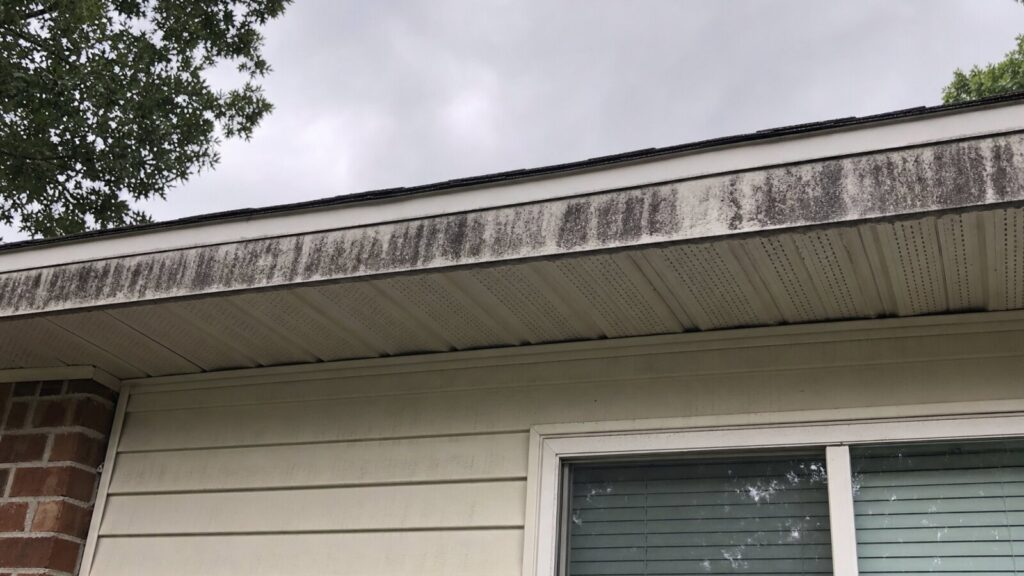
Stains streaking down the fascia below a joint, or a rusty drip mark on the outside of a seam, are the tells. If you see those in dry weather, the joint is already compromised.
Reseal, or step up to seamless
For a gutter that is otherwise sound, resealing the failed joints is a legitimate fix. The old sealant has to be cleaned out completely first, because new sealant will not bond to dried, flaking old material, and then the joint is resealed with a quality gutter sealant rated for the movement and UV it will see. Done right, that buys years. Done as a quick smear over old sealant, it fails again in a season.
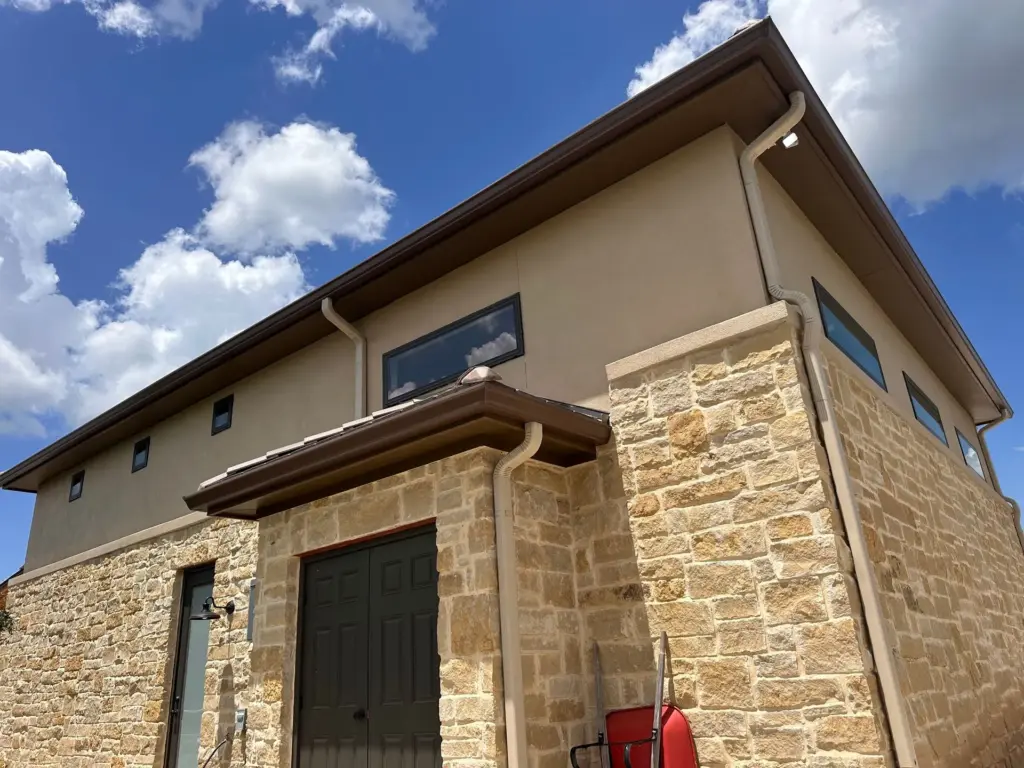
If a system is old and leaking at many joints at once, chasing each seam gets expensive and you are still left with all the other joints waiting their turn. That is the case for seamless. A seamless gutter is formed from one continuous piece for each run, so the only joints are at corners, outlets, and end caps, a fraction of what a sectional system has. Far fewer joints means far less sealant exposed to the heat, and far less to fail. Our gutter repair and maintenance service can reseal what is worth saving, and where a system is past that point we can replace it with a custom-fit seamless rain gutter system that has almost nothing to crack.
Keeping seams alive longer
You cannot stop the heat, but you can slow the wear and catch failures early:
- Look at your gutter joints once a year, ideally at the end of summer, for cracks, gaps, or drip stains.
- Reseal a failing joint promptly instead of waiting for it to leak through a whole storm.
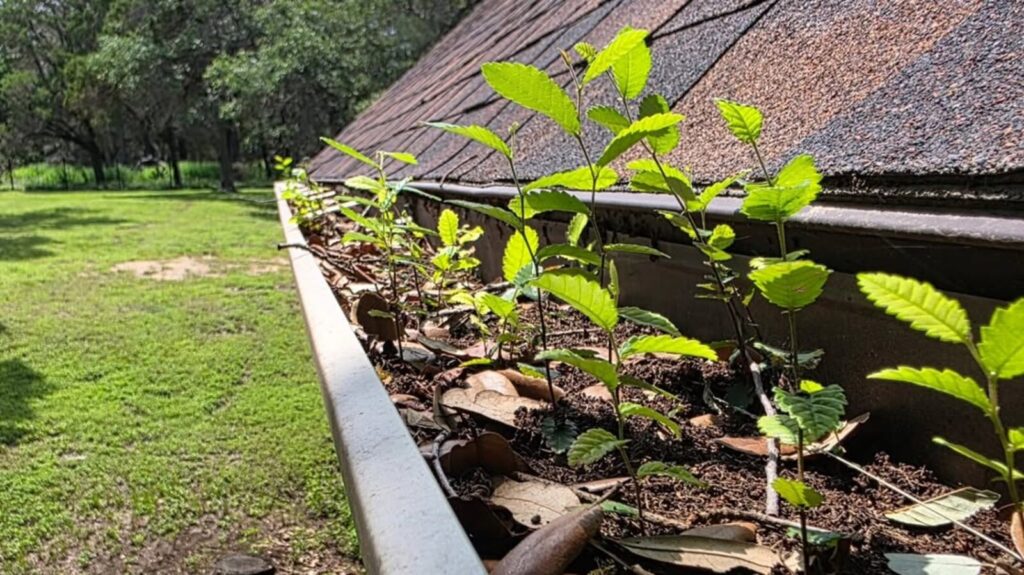
- Keep gutters clear so standing water and debris are not sitting on the joints and accelerating corrosion.
- When a system reaches the age where several joints are failing at once, price a seamless replacement instead of endless spot repairs.
How Gutters Made Easy handles it
We fabricate seamless gutters on site, so each run comes off the machine as one continuous length cut to fit your home. Tyler Smith has more than twenty years of experience hanging and repairing gutters in this climate, and we seal the joints that do exist with materials chosen for Texas heat and UV, not whatever is cheapest. When we repair an existing system, we clean joints back to bare metal before resealing so the fix actually lasts.
Everything we install is backed by a lifetime manufacturer warranty on materials and a 10-year guarantee on our workmanship, because a gutter should not be leaking at the seams a couple of summers after it goes up. If your gutters are dripping at the joints, schedule a repair and maintenance visit and we will find every failing seam and tell you honestly whether to reseal or replace.
Common questions about gutter seams and summer heat
Why is my gutter leaking when it has not rained? The leak was set up by heat, not rain. Sun and temperature swings crack the sealant at a joint during dry weather, and you only see the drip when water finally runs through that seam in the next storm.
Can I just reseal a leaking gutter joint myself? You can, if you clean out all the old sealant first and use a quality gutter sealant. New sealant will not bond over dried, flaking old material, so the prep is the part that decides whether the fix lasts.
Do seamless gutters really leak less? Yes. A seamless run has no mid-length seams, so the only joints are at corners, outlets, and end caps. Fewer joints means far less sealant exposed to Texas heat and far fewer places to fail.
How often should I check my gutter seams here? At least once a year, and the end of summer is ideal, since that is when heat has done the most damage to the sealant. Catching a cracked joint early is a quick reseal instead of a storm-day leak.
Which joints fail first? Usually end caps and corners on the hot south and west-facing runs, along with downspout outlets. Those spots see the most sun and the most concentrated water.