Fascia board water damage almost always starts with water that ends up somewhere it shouldn’t: a gutter that overflows, a seam that drips, or rain that runs off the shingles and slips behind the gutter instead of into it. Wood fascia can handle being rained on now and then. What it can’t handle is staying wet, and the board behind your gutters is the one most likely to stay wet.
The good news is that most of these problems are easy to spot early if you know what to look for, and the fix is usually simpler than people expect once the water source is found. This guide covers why fascia boards rot, the warning signs, what causes water to leak between the gutter and the fascia, and when a board can be repaired instead of replaced.
Why fascia boards rot
Rot is a fungus, and the fungus needs wet wood. The USDA Forest Products Laboratory’s Wood Handbook explains that serious decay only happens when wood stays above its fiber saturation point, about 30% moisture, and that air-dried wood at 20% or less “should provide a reasonable margin of safety against fungal damage.” The handbook also notes that wood only gets that wet from rain, condensation or contact with wet ground. Humid air alone won’t do it.
So fascia rot doesn’t happen because a board is old. It rots because water keeps reaching it. Every source of fascia damage comes back to the same question: what keeps getting this board wet, and why doesn’t it get a chance to dry out?
On a Central Texas home, the answer is usually the gutter system. The fascia is the board your gutter hangers screw into, so any water that escapes the gutter lands on it first. Here are the most common culprits we find:
- Clogged gutters that overflow. Oak leaves, cedar debris and roof grit fill the trough, and the next storm spills over the back edge onto the board.
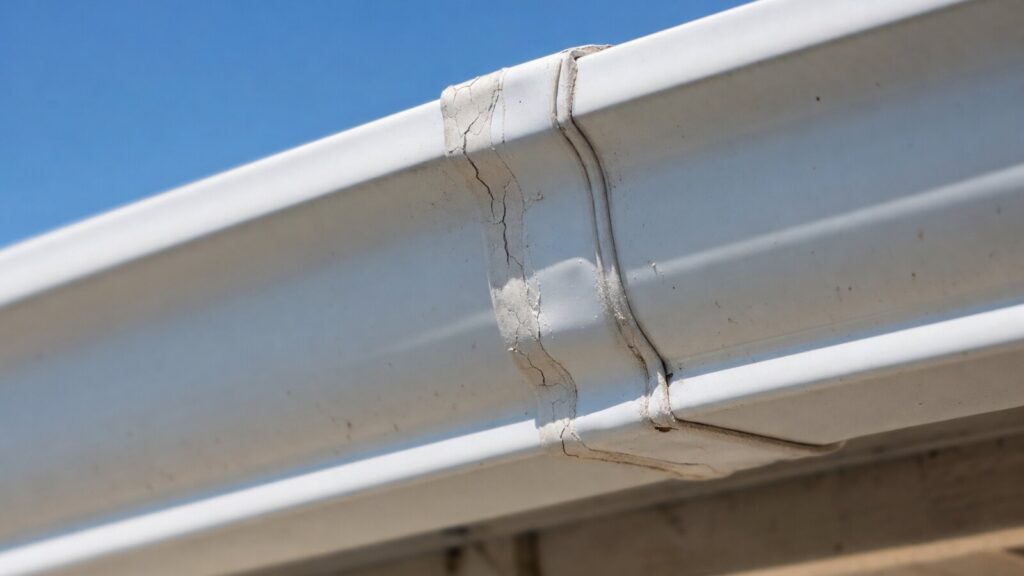
- Leaking seams and end caps. Sealant on sectional gutters cracks after a few hot summers, and drips run straight down the fascia face.
- Gutters pitched the wrong way. A gutter that sags or slopes away from the downspout holds standing water against the board.
- Missing or short drip edge. Rain runs off the shingles, curls under the roof edge and soaks the top of the fascia behind the gutter.
- Undersized gutters and downspouts. A heavy cloudburst simply outpaces them.
Water leaking between the gutter and the fascia
If you see water dripping from behind your gutter during a storm, the gutter itself may be fine. The water is getting between the gutter and the fascia board, and the most common reason is the roof edge above it.
That’s the job of the drip edge, a strip of metal flashing installed at the edge of the roof that carries water out past the fascia and into the gutter. The International Residential Code, section R905.2.8.5, requires drip edge at the eaves and rakes of shingle roofs and calls for it to extend at least 1/4 inch below the roof sheathing. Older homes, and some roofs that were replaced quickly, don’t have it at all, or have a piece that stops short.
Other causes of water behind the gutter include a gutter hung too low on the board, so roof runoff misses it, and shingles that stop short of the gutter instead of overhanging into it. A gutter apron, a bent piece of flashing that bridges the roof edge and the back of the gutter, can also fix the problem on some homes. If you want to understand drip edge in more depth, our post on what a drip edge does and why your roof needs one covers it in detail.
The tricky part is that this kind of damage is hidden. The wet strip is behind the gutter, so the first sign is often paint peeling just below it, or a gutter that starts pulling away because the screws have nothing solid left to hold.
Signs of fascia rot and water damage
Most homeowners first notice fascia problems from the yard. You can check most of this from the ground with a pair of binoculars, and the rest from a ladder. Look for:
Peeling or bubbling paint. Paint lifts when water gets behind it. A strip of peeling paint right under the gutter line is a classic early sign.
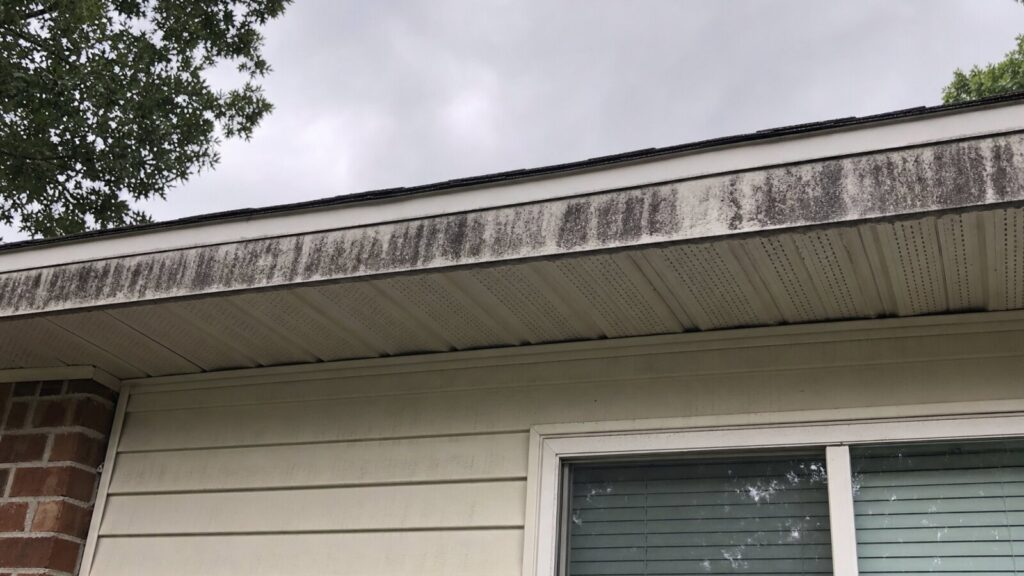
Dark stains or streaks. Water staining on the fascia face or the soffit below usually lines up with a leaking seam, a corner or an overflow point.
Soft spots. Press a screwdriver into the board. Sound wood resists. Rotted wood gives, crumbles or lets the tip sink in.
A sagging gutter or one pulling away from the roofline. Hangers need solid wood to grip. When the fascia softens, the gutter starts to tilt, which sends even more water onto the board. That cycle speeds up fast.
Gaps, cracks or pests. Wasps, birds and squirrels like softened fascia because it’s easy to get through into the attic.
Mold or mildew on the soffit. Persistent moisture along the roofline often shows up as dark growth underneath the overhang.
Is fascia board waterproof?
No. A wood fascia board is only as water-resistant as its paint, and paint is a thin film that cracks with sun, heat and age. Composite and PVC trim boards hold up better against moisture, but the gutter screws still pierce them.
The two ways to really protect the board are keeping water off it in the first place and covering it in metal. Many homeowners choose to cover sound fascia in pre-painted aluminum so it never needs paint again. If you’re weighing that option, our guide to how fascia wrapping works and when it’s worth it explains the materials and the pitfalls. Just remember that covering a board doesn’t fix the water problem that damaged it. Find the source first.
Repair or replace a damaged fascia board?
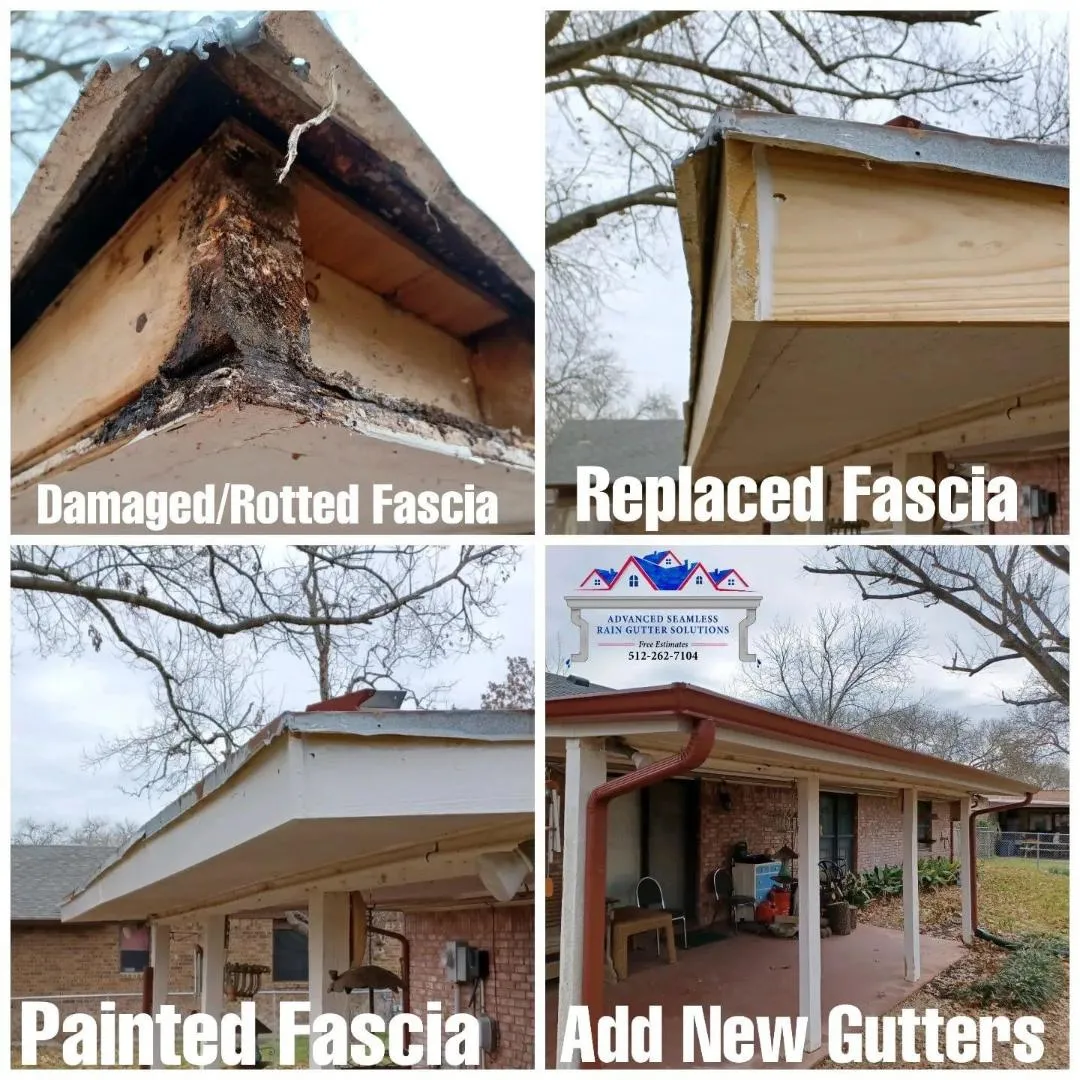
Most fascia damage is local, which keeps fascia repairs manageable. A corner under a leaking miter, a section under an overflow point, or a run where the drip edge was missing. In those cases the rotted section can be cut out and a new piece of lumber spliced in, primed, painted or wrapped, and the gutter rehung. Full replacement only makes sense when the rot runs along most of the roof edge.
A few things decide which way it goes:
How far the soft wood extends. Probe several feet past the visible damage. Rot often spreads further inside the board than it looks from outside.
Whether the rafter tails are affected. If water has been sitting for years, the ends of the rafters behind the fascia can be damaged too. That’s a carpentry repair, not a quick board swap.
Whether the gutters are worth rehanging. The gutter has to come down for any fascia repair. If it’s an old sectional system with leaking seams, that’s a natural time to replace it rather than put the same problem back up.
Whatever the repair, it only holds if the cause is fixed at the same time. A new board under the same overflowing gutter will rot the same way. That’s why, when we come out to look at a leaking gutter system, we check pitch, seams, downspouts and the roof edge before we touch the wood.
How to keep fascia dry in Central Texas
Prevention here is mostly about timing. The National Weather Service’s Austin climate summary puts annual rainfall around 35.5 inches, with May, October and June the wettest months. You want clean, working gutters before those storms arrive, not after.
- Clean the gutters in spring. Live oaks shed their old leaves in early spring as the new ones emerge, so March or April is a good time to clear them out before the May rains.
- Check seams and end caps at the end of summer. Heat breaks down sealant, and you want any leaks found before the October storms.
- Keep downspouts clear and discharging away from the house. A blocked downspout backs water up the whole run.
- Watch the gutter during a hard rain. It’s the easiest inspection there is. Overflow at one spot means a clog, a sag or an undersized outlet.
- Repaint or cover exposed wood promptly. Bare wood soaks up water quickly. Don’t let a peeled spot sit through a wet season.
Seamless gutters help too, because a run with no mid-length seams has far fewer places to drip. And a gutter sized for our heavy downpours is less likely to overflow onto the board in the first place.
How Gutters Made Easy can help
Gutters Made Easy is a family-owned company based in Kyle, and owner Tyler Smith has spent more than 20 years working on rain gutters and sheet metal around Central Texas. Almost every rotted fascia board we’re called out to traces back to a water problem that could have been caught earlier.
If you’re seeing stains, peeling paint or a gutter pulling away from the house, we’ll find where the water is coming from and give you an honest answer about whether to repair, replace or wrap. Our work is backed by a 10-year workmanship guarantee and a lifetime manufacturer warranty on gutter materials. Schedule a gutter repair visit or call (512) 881-9204, and if your boards are sound and you want them protected for good, ask us about covering them in aluminum.
Common questions about fascia water damage
Can damaged fascia be repaired instead of replaced? Usually, yes. Rotted sections can be cut out and new lumber spliced in, as long as the rafter tails behind them are sound. The water source has to be fixed at the same time or the new wood will fail the same way.
Why is water dripping from my fascia board when it rains? Most often the water is getting behind the gutter. A missing or short drip edge, a gutter hung too low, or an overflowing gutter are the usual causes.
Can you replace a fascia board without removing the drip edge? Sometimes, if the drip edge can be lifted slightly and the new board slid into place. On older roofs the flashing may be bent or nailed through, and it’s often better to replace it while the board is open.
How long does a fascia board last? A painted wood fascia that stays dry and gets repainted on schedule can last decades. One that stays wet behind a leaking gutter can rot in a few years.