Copper rain gutters are worth it when you plan to stay in your home a long time, when the house is the kind that copper suits (historic, traditional or high-end custom), and when you like the idea of a gutter that changes color as it ages. They cost more up front than aluminum, but they last far longer, and on the right house nothing else looks quite the same.
Copper also behaves differently from other gutter materials. It’s installed differently, it weathers on its own schedule, and it has a few rules about what it can touch. This guide covers how long copper gutters last, how the patina develops in a Central Texas climate, what upkeep they need, and what drives their cost, so you can decide whether copper belongs on your home.
How long do copper gutters last?
Copper is one of the longest-lasting gutter materials you can buy. InterNACHI’s life expectancy chart puts copper gutters at 50+ years and copper downspouts at about 100 years. For comparison, the same chart lists aluminum gutters, downspouts, soffit and fascia at 20 to 40+ years, galvanized steel gutters at about 20 years and vinyl gutters at 25+ years.
The reason is the metal itself. Copper doesn’t rust the way steel does. As it weathers, it forms a thin surface layer, first brown and eventually green, that protects the metal underneath and slows any further corrosion. Copper roofing in clean rural air corrodes at a rate of less than 1/64 of an inch over 200 years, according to the summary of copper industry data in Wikipedia’s copper in architecture article.
In practice, the life of a copper rain gutter system depends less on the metal and more on the installation. Copper gutters are joined by soldering, not by caulk or rivets, so the seams become part of the metal instead of a sealant that dries out in the heat. A finished copper system behaves like one continuous, seamless piece of metal. Well-soldered joints, properly spaced hangers and the right slope are what let copper reach the long end of that range.
That longevity is the heart of the cost argument. An aluminum system may need replacing once or twice over the life of a copper one. If you plan to stay in the house for decades, or you’re restoring a historic home you want done right, copper’s higher price is spread over a much longer service life.
Do copper gutters turn green?
Yes, eventually, but probably not as fast as you’d expect, and maybe not all the way here. Copper goes through stages. Bright new copper darkens to a penny brown within months, then deepens to chocolate and nearly black browns over the next several years. The blue-green patina comes last.
How long that takes depends on the air. According to the same source, the full patina can form in seven to nine years in marine climates and fifteen to twenty-five years in industrial areas, while in clean rural air the final stage may take ten to thirty years. In arid environments a green patina may never form, and the copper matures to a deep brown instead. Vertical surfaces also patina more slowly than flat ones, because rain runs off them quickly.
Central Texas sits between those extremes. The National Weather Service’s Austin climate summary describes a humid subtropical climate with around 35.5 inches of rain a year, but we also get long, hot, dry stretches. Gutters are mostly vertical faces with water running off them. Put together, most copper gutters around Austin, Kyle and New Braunfels spend many years in the brown stages before any green shows, and some may stay brown. If you’re searching for what copper gutters look like after five years, the honest answer for our area is a rich, dark brown.
Can you keep copper gutters shiny?
You can, but it takes ongoing work. To hold the bright new-penny color, the copper has to be cleaned and coated with a clear protective finish, and that finish has to be renewed as the sun breaks it down. In Texas sun that’s a recurring chore, and any spot the coating misses will darken unevenly.
Most owners decide to let the copper weather naturally. The brown stages look warm and rich on stone, brick and painted wood, and you skip the maintenance entirely. If you want the green look right away, pre-patinated copper is made at the mill with a finish that imitates the aged color.
Caring for copper gutters
Copper gutters need less care than most systems, but the care they need is specific:
- Keep them clear of debris. Leaves and grit hold moisture against the metal and block flow, just like any gutter. Live oak leaf drop in spring is the big one in our area. If you choose gutter guards, pick copper or a compatible metal so the guard doesn’t react with the gutter.
- Never mix metals. Copper and aluminum or galvanized steel react when they touch in the presence of water, and the other metal corrodes quickly. Copper gutters should use copper hangers, copper or stainless fasteners and copper downspouts.
- Clean gently. Skip wire brushes and harsh chemicals, which scratch the surface and leave the weathering patchy.
- Watch the stone and concrete below. Runoff from copper can leave blue-green stains on light limestone, concrete or stucco, so plan where downspouts discharge.
A once-a-year look at the solder joints, hangers and downspout connections is enough for most homes. Copper doesn’t fail quickly, so problems you catch at a yearly check are almost always small.
Copper on historic and high-end homes
Copper has been used on roofs, gutters and downspouts for centuries, and it still shows up most on the homes where it’s always looked best. Older homes in central Austin, Victorians in Lockhart and limestone houses out toward Wimberley and Canyon Lake are classic fits. For older homes under heavy tree cover, our post on gutters for historic Austin homes under big trees covers the extra planning those roofs need.
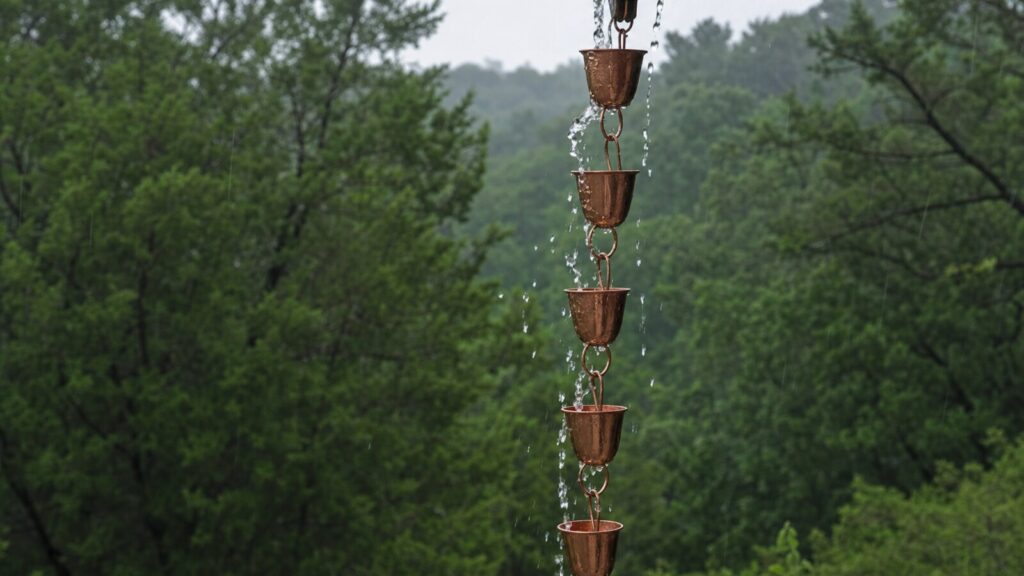
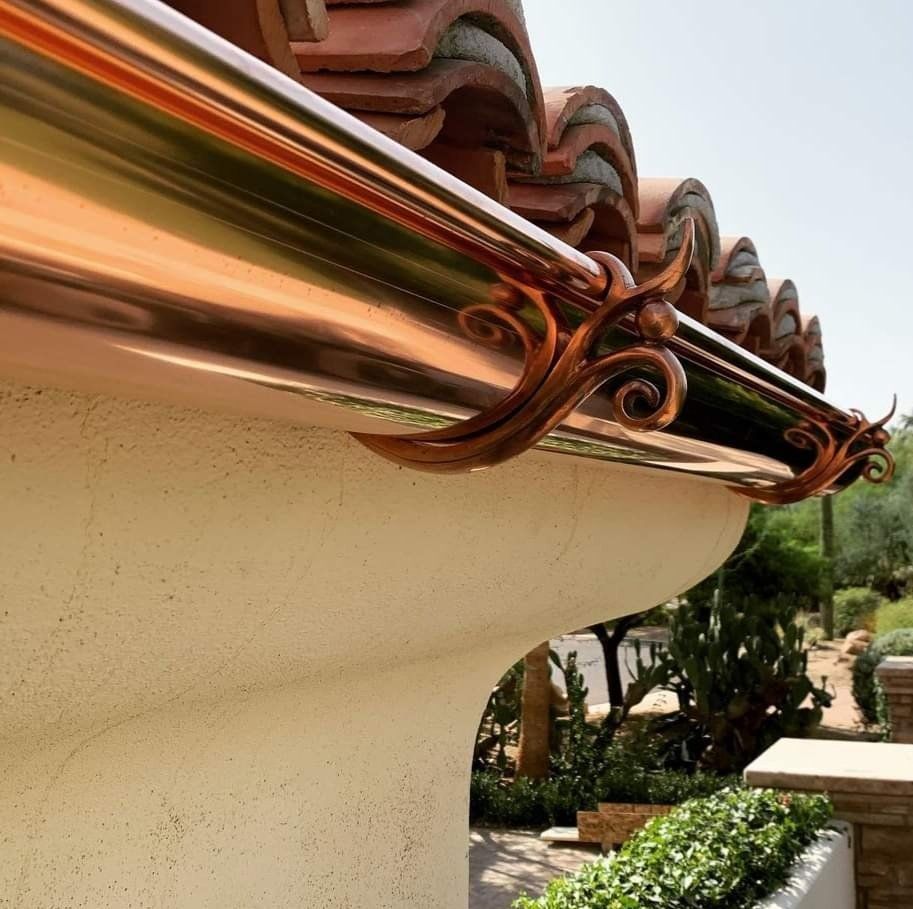
Half-round copper with round downspouts is the traditional pairing on historic homes, often with decorative external brackets. Copper K-style is a good choice when you want copper’s look with more water capacity on a larger roof, and you can see our copper work in either profile before you decide. If you’re torn between the two profiles, our comparison of K-style and half-round gutters lays out capacity, cost and cleaning side by side.
Copper is also a natural match for custom details like conductor heads, the boxes where a gutter outlet drains into a downspout, and for homes that already have copper flashing, roof accents or a standing-seam copper bay roof.
On newer homes, copper works best as an accent where it can be seen and enjoyed, such as a front porch, a turret or a bay window, while the rest of the house uses aluminum in a matching color.
What drives the cost of copper gutters?
Copper gutters cost more than aluminum, and the difference is significant, even though both do the same basic job of protecting your foundation and siding from water damage. We don’t quote copper by a flat rule of thumb because several things move the price:
The copper market. Copper is a traded commodity, so material cost rises and falls with metal prices.
Labor and skill. Soldered joints, custom miters and careful handling take more time and more skill than aluminum.
The size of the job. Linear feet of gutter, number of downspouts, number of stories and the number of inside and outside corners all add up.
Profile and details. Half-round with external brackets, conductor heads and custom elbows cost more than a plain run.
The fair way to compare is cost over time. A copper system that lasts 50 years or more, needs no paint and keeps its value can make more sense than a cheaper system you’ll replace once or twice in the same span.
Alternatives that give a similar look
If copper doesn’t fit the budget, there are good options that get close. Aluminum gutters come in colors made to resemble aged copper, so you get the warm tone without the price, though they won’t weather or last like the real thing. Galvalume, a steel with an aluminum-zinc coating, gives a natural metal look on modern and farmhouse homes. Some owners use real copper only on the front of the house and a copper-tone aluminum elsewhere.
How Gutters Made Easy installs copper gutters
Gutters Made Easy is a family-owned company in Kyle, and owner Tyler Smith has more than 20 years of experience with rain gutters and sheet metal. Copper is sheet metal work at its most demanding, and we take the time it needs: soldered joints, compatible hangers and fasteners, and downspouts placed where runoff won’t stain your stone or walkways. We’ll also tell you honestly if copper isn’t the best fit for your house.
If you’re thinking about copper for your home, see our copper gutter options and request a free estimate, or call (512) 881-9204. Our installations are backed by a lifetime manufacturer warranty on materials and a 10-year workmanship guarantee.
Common questions about copper rain gutters
Are copper rain gutters worth it? They’re worth it if you’ll stay in the home long enough to benefit from a 50-plus-year lifespan, and if the house suits the look. For a short ownership or a tight budget, quality aluminum is usually the better value.
Do copper gutters rust? No. Copper doesn’t rust. It oxidizes into a brown and then green surface layer that protects the metal underneath.
Are copper gutters recyclable? Yes. Copper is fully recyclable and keeps value as scrap, so old copper gutters don’t need to go to a landfill.
Can I use aluminum downspouts with copper gutters? It’s not a good idea. Copper and aluminum react when they’re wet and in contact, and the aluminum corrodes. Keep the whole system copper or use compatible metals.
How do I clean copper gutters? Clear debris by hand or with a soft brush and rinse with plain water. Avoid wire brushes, acids and pressure washing up close, which can leave the color uneven.