
Box gutter maintenance comes down to three things: keeping the flat bottom clear so water doesn’t sit, keeping the corners, seams and outlets sealed, and keeping the gutter pitched toward its downspouts. Box gutters carry more water than most other styles, which is exactly why a clog or a failed joint in one can do more damage. A few checks a year, timed around our wettest months, prevent most box gutter problems.
This guide covers the two kinds of box gutters you’ll find on Central Texas homes, the problems we see most, a simple seasonal maintenance schedule, how to clean a box gutter safely and the signs that it’s time for a repair. If you’re planning a new box gutter system instead, we’ll point you to what a good installation should include.
Two kinds of box gutters
The name “box gutter” gets used for two different things, and they need different care.
Hung box gutters are a rectangular gutter profile that mounts on the fascia board like any other gutter. They have a squared, boxy shape with straight lines, and they’re popular on modern homes and commercial buildings. On houses and small businesses they commonly run 5 to 6 inches wide with 2×3-inch downspouts, while 6, 7 and 8-inch box gutters with 3×4-inch downspouts are used on larger roofs. These can be fabricated as seamless runs, just like K-style gutters.
Built-in box gutters are set into the roof structure itself, usually hidden behind a cornice or parapet so you can’t see them from the ground. They’re found on some older homes and commercial buildings, and they’re lined with sheet metal or a membrane. When a built-in box gutter leaks, the water goes straight into the structure of the building rather than down the outside wall, so they need closer attention.
Either kind can be made from aluminum, steel or copper, and the material changes the upkeep a little. Steel needs watching for rust, copper needs compatible fasteners, and aluminum mainly needs its joints kept sealed. Most of the advice below applies to both kinds, with notes where they differ.
Common box gutter problems
Box gutters are reliable when they’re kept up, but their shape creates a few predictable weak spots:
- Standing water and debris. The wide, flat bottom holds leaves, grit and roof granules. Wet debris holds water against the metal and feeds rust on steel gutters.
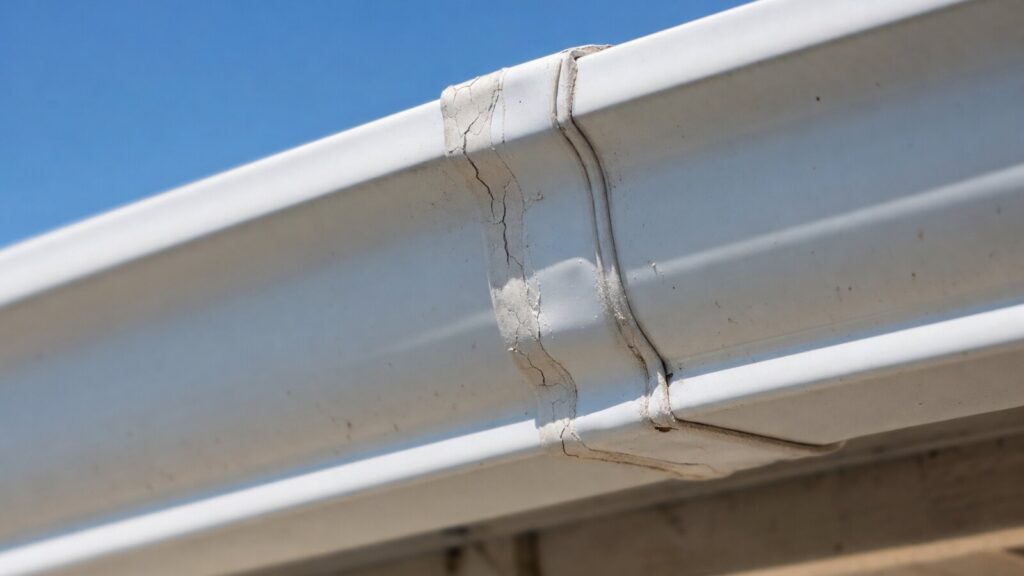
- Leaking corners and seams. Mitered corners, end caps and any mid-run joints are sealed with sealant or solder. Heat breaks sealant down over time, and the joints start to drip.
- Overflow at corners and valleys. Where two roof planes meet, a lot of water lands on a short stretch of gutter. If the nearest outlet is small or partly blocked, it overflows.
- Lost pitch. A box gutter needs a slight slope toward the downspouts. Loose hangers or soft fascia let it sag, and water pools in the low spots.
- Failing linings on built-in gutters. Old metal or membrane linings crack, pull loose or rust through, and water leaks into the soffit, walls or ceiling below.
The common thread is water that stays where it shouldn’t. A box gutter that drains completely after every storm will last for decades. One that holds water for days won’t.
A seasonal box gutter maintenance schedule for Central Texas
The National Weather Service’s Austin climate summary puts average rainfall around 35.5 inches a year, with May, October and June the wettest months. The goal of a maintenance schedule is simple: have your box gutters clean and sealed before those storms, not after.
Trees set the rest of the calendar. According to the Texas A&M Plant Clinic, live oaks aren’t true evergreens. They drop their old leaves as new leaves emerge in the spring, which means many homes get their heaviest load of gutter debris just before the May rains.
A practical schedule for most homes looks like this:
Early spring (March to April). Clean out live oak leaves and winter debris. Flush each downspout and check that water runs freely to the outlets.
Before the May storms. Watch the gutters during the first good rain. Note any overflow, drips at corners or water standing after the storm ends.
Late summer (August to September). Inspect seams, corners and end caps. Months of heat are hardest on sealant, and this is when cracks show up. Reseal anything that’s opened up before October.
Late fall. Clear any leaves from deciduous trees and check hangers after summer storms.
On heavily wooded lots, add a mid-summer cleaning. On built-in box gutters, schedule a professional box gutter inspection at least once a year, since a small failure in the lining leaks inside the building. It’s also worth a look any time the roofing above is replaced.
How to clean a box gutter safely
If you’re comfortable on a ladder and your gutters are on a single-story roof line, cleaning a hung box gutter is a reasonable do-it-yourself job. Two-story roofs and built-in gutters are better left to a pro.
- Set the ladder on firm, level ground and use a stabilizer so the ladder doesn’t rest on the gutter itself.
- Scoop out leaves and debris by hand or with a gutter scoop, working toward you rather than reaching.
- Flush the gutter with a garden hose, starting at the end farthest from the downspout.
- Watch where the water goes. It should run steadily to the outlet with no puddles left behind.
- Check each downspout. If water backs up, clear the clog from the bottom or top before it hardens.
- Look closely at corners, seams and end caps while they’re wet. Drips or stains mean a joint needs attention.
Skip the pressure washer inside the gutter. High pressure can force water under the roof edge or loosen sealant. If you’d rather not climb, our gutter cleaning crew can handle it and check the joints at the same time.
Signs your box gutter needs repair
Cleaning solves most problems. These signs mean something more is going on, and that a box gutter repair is worth scheduling before the next wet season:
Water standing a day after a storm. The gutter has lost its pitch or an outlet is undersized.
Drips or rust streaks at corners. A seam or miter has failed and needs resealing or resoldering.
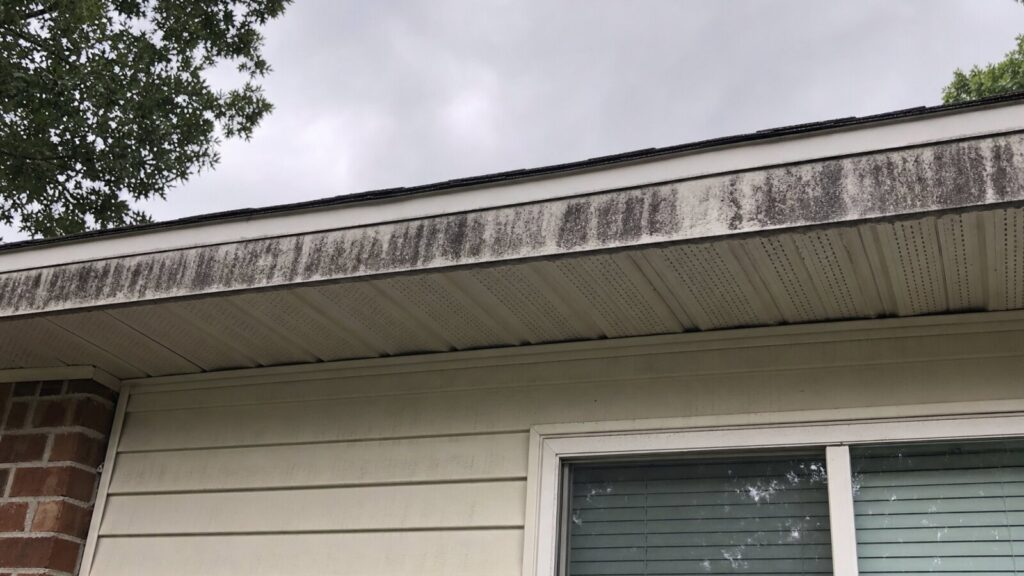
Stains on the soffit, fascia or walls. Water is getting behind the gutter. On built-in gutters, stains on interior ceilings near the roof edge are a red flag. Our guide to spotting fascia water damage explains what to look for on the boards behind the gutter.
Sagging sections or loose hangers. The fascia behind may be soft, or the hangers too widely spaced for the weight of water a box gutter carries.
Rust holes in steel gutters. Small spots can sometimes be patched, but widespread rust usually means replacement.
Can box gutters be relined?
Built-in box gutters often can. When the lining fails but the wood structure underneath is sound, the old lining can be removed and replaced with new sheet metal or a membrane system. Any rotted wood in the gutter bed has to be repaired first, and the new lining needs proper slope and outlets. It’s a bigger job than resealing a hung gutter, but it’s usually far less work than rebuilding the cornice. Hung box gutters are rarely relined. If one has widespread rust or many failing joints, replacing the run with a seamless box gutter is usually the better value.
When the installation is the real problem
Some box gutters overflow no matter how often they’re cleaned. When that happens, the cause is usually the original install: a gutter that’s too small for the roof area, too few downspouts, outlets in the wrong place or a slope that was never right.
Maintenance can’t fix those. The fix is a properly sized system with enough outlets for the roof and runs pitched so water drains completely. If you’re replacing old box gutters or adding them to a new home, read about what goes into a properly sized box gutter system before you get quotes.
How Gutters Made Easy can help
Gutters Made Easy is a family-owned company in Kyle, and owner Tyler Smith has more than 20 years of hands-on experience with rain gutters and sheet metal, including box gutters on homes and commercial buildings. We fabricate seamless box gutters on site to fit each run, and every installation carries a lifetime manufacturer warranty on materials and a 10-year workmanship guarantee.
Whether your home’s box gutters need a cleaning, a gutter repair at one corner or a full replacement, we’ll tell you plainly which one makes sense. Get a free box gutter estimate or call (512) 881-9204.
Common questions about box gutters
Are box gutters a problem? Not when they’re sized and maintained properly. Their flat bottom holds debris and water more than a rounded gutter does, so they need regular cleaning and a good slope to drain fully.
How often should box gutters be cleaned? At least twice a year in Central Texas, in early spring after live oak leaf drop and again in late summer or fall. Homes under heavy tree cover may need three cleanings.
Do box gutters need more maintenance than K-style? Slightly. Both need regular cleaning, but a box gutter’s wide flat bottom can hold more debris and standing water if the pitch is off.
What’s the best time of year to clean gutters here? March or April, after live oaks drop their old leaves and before the May storms, with a second cleaning before October.