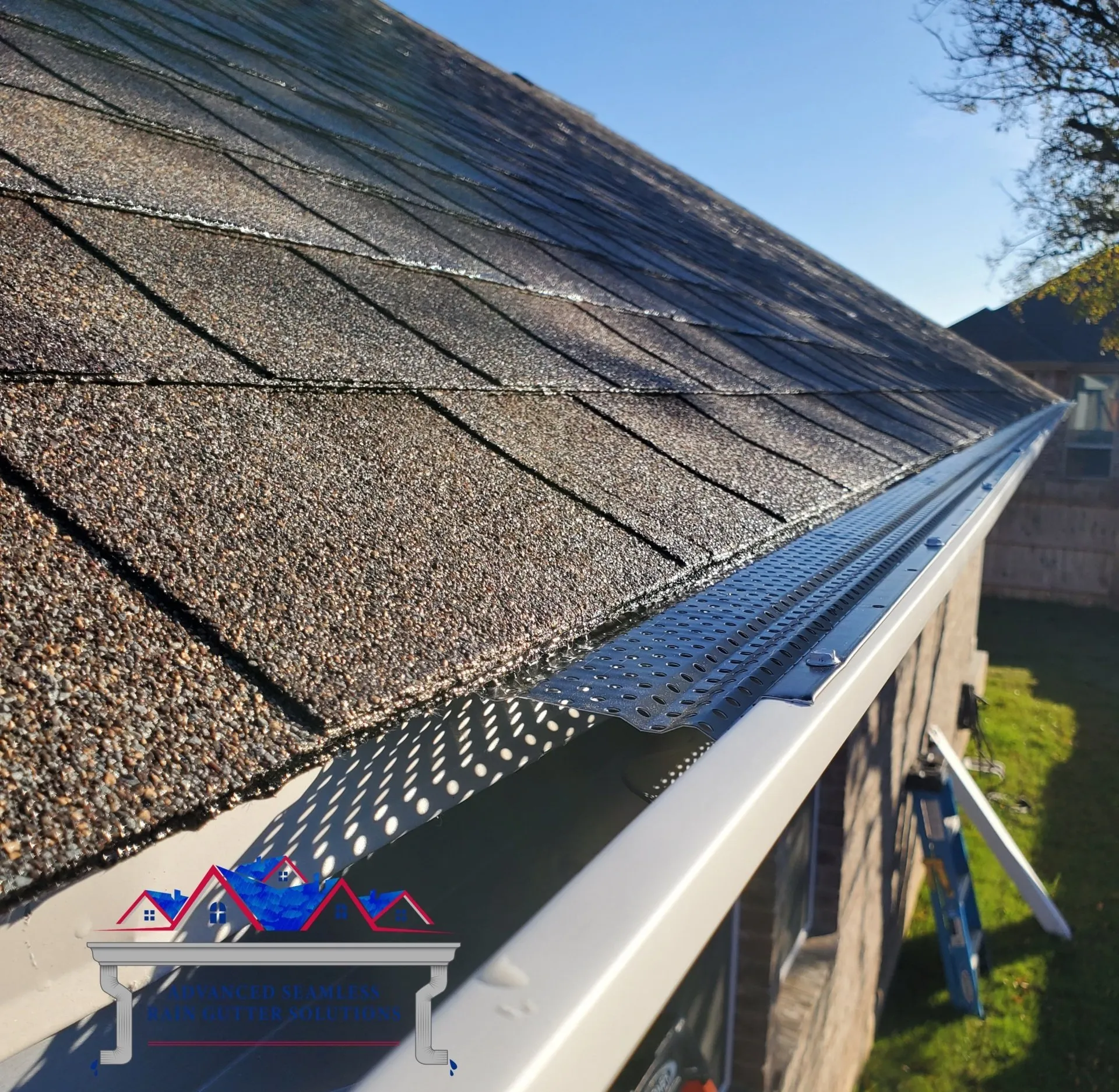
For most Central Texas homes, yes. Seamless gutters cost more upfront than a sectional system, but they have far fewer joints, and joints are where gutters leak, sag and fail first. Whether they’re worth it for your house depends on how long you’ll own it, the size and shape of the roof, and how much water your gutters actually have to move in our storms.
We don’t publish a price list, because two houses on the same street can need very different systems. What we can do is explain what actually drives the number on a seamless gutter estimate, so you can judge whether a quote is fair and whether the upgrade makes sense for you.
What you’re paying for with seamless gutters
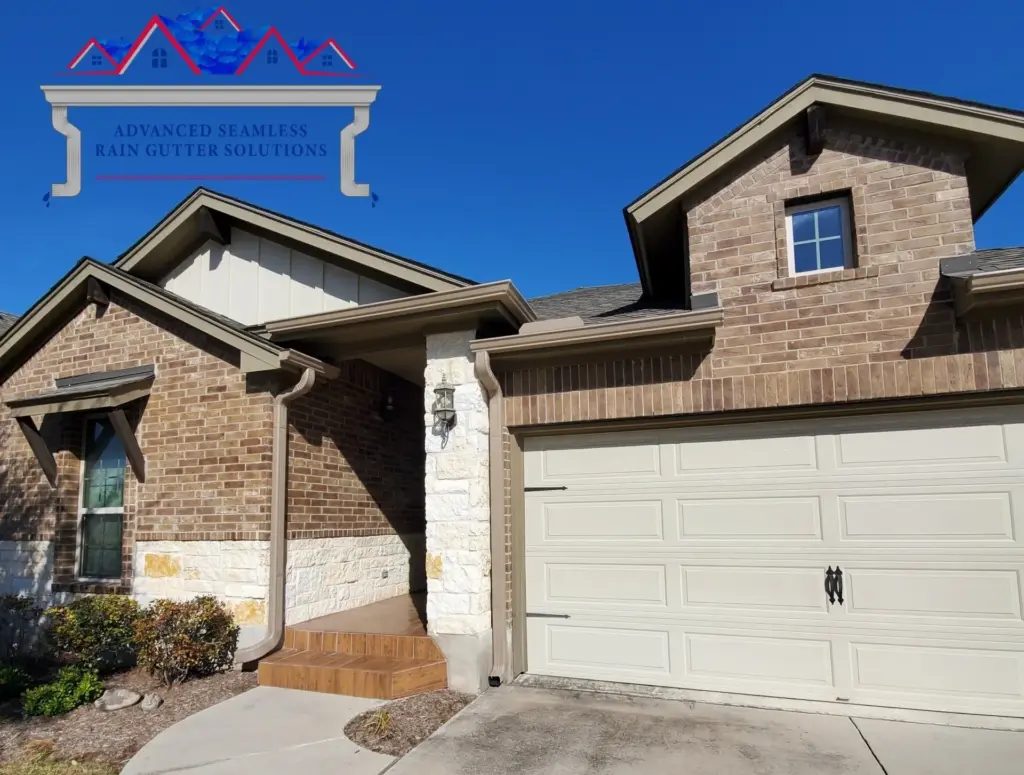
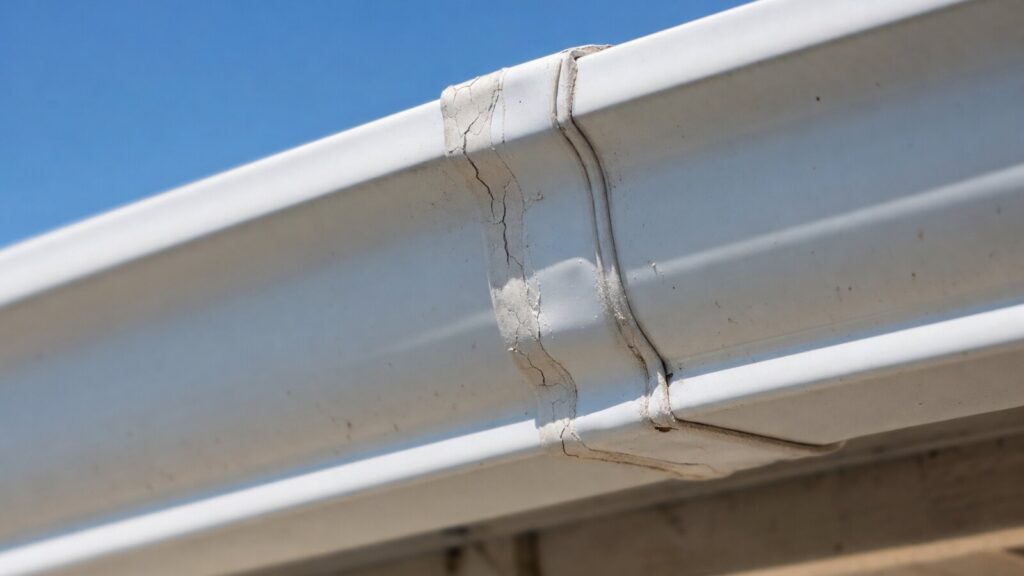
A seamless gutter is formed on-site from a coil of metal, run through a machine on the truck and cut to the exact length of each roof edge. The only joints are at the corners and where the downspouts connect. A sectional gutter is assembled from shorter pieces joined along the run, and every one of those joints is held together by sealant and fasteners.
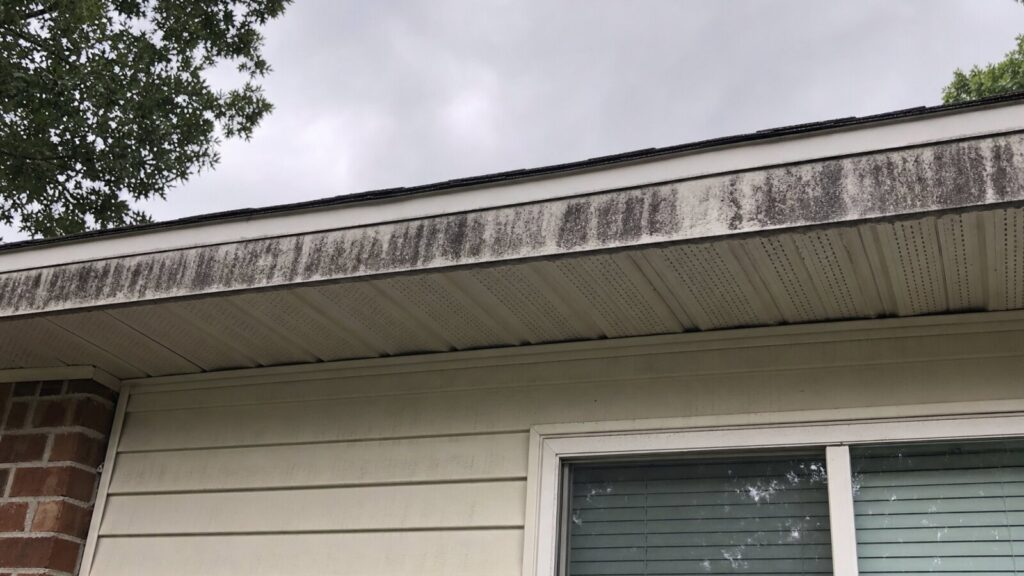
That difference is most of what you’re paying for. Sealant breaks down over time, especially in our summer heat, and a failed joint drips onto the fascia, the board your gutters hang from, until the wood softens. That kind of slow water damage behind the gutter often goes unnoticed until the wood is soft. Fewer joints means fewer places for leaks to start, less maintenance and a cleaner line along the roof that adds a little curb appeal to the home. If you want a side-by-side look at the two systems, our comparison of seamless and sectional gutters in Texas covers it in detail.
How much water your gutters really move
It helps to put the job in numbers. The Texas Water Development Board figures that a roof sheds about 0.62 gallons of water per square foot for every inch of rain. On a 2,000-square-foot roof, that’s roughly 1,250 gallons per inch of rain.
The National Weather Service puts Austin’s average at around 35.5 inches of rain a year, which works out to more than 40,000 gallons coming off that same roof in a typical year. The rain doesn’t arrive evenly, either. The agency’s Austin climate summary notes that local storms have dropped more than 5 inches in several hours, which on that roof is over 6,000 gallons in an afternoon. That’s the load you’re buying a gutter system to carry, and it’s why the size of the gutter and the number of downspouts matter as much as the material.
What drives the price of seamless gutters
Every estimate is built from the same handful of factors. Knowing them makes it much easier to compare quotes and to see where you have room to adjust:
- Total linear footage. Gutters are measured along every roof edge that needs one, so a large or complicated roofline costs more than a simple rectangle.
- Profile and size. A standard 5-inch K-style gutter costs less than a 6-inch K-style, half-round or box profile. Larger profiles carry more water.
- Material. Aluminum is the common choice. Galvalume steel is tougher against dents, and copper is a premium material priced well above both.
- Downspouts. Each downspout adds material and labor, and larger downspouts cost a bit more but clog less.
- Height and roof pitch. Two-story and steep roofs take more ladder work and more time.
- What’s already there. Removing and hauling off old gutters, or repairing soft fascia or storm damage first, adds to the job.
- Add-ons. Gutter guards, underground drainage and rain barrels or tanks are priced on top of the gutters themselves.
The two that surprise people most are downspouts and fascia. Adding a downspout is one of the cheapest ways to fix overflow on a long run, and rotten fascia has to be repaired before any new gutter will hang straight.
Why two quotes for the same house can look so different
When two estimates for the same home are far apart, the scope usually isn’t the same. One company may have priced 6-inch gutters with four downspouts while another priced 5-inch with two. One may include removing the old system and checking the fascia while the other leaves those out. The cheaper quote isn’t always the better deal if it skips downspouts where your yard needs them most.
Ask each company to list the profile, size, material, number of downspouts and what’s included in writing, then compare line by line. Our guide on what to check before hiring a gutter installer walks through the questions worth asking.
The pros and cons of paying more for seamless
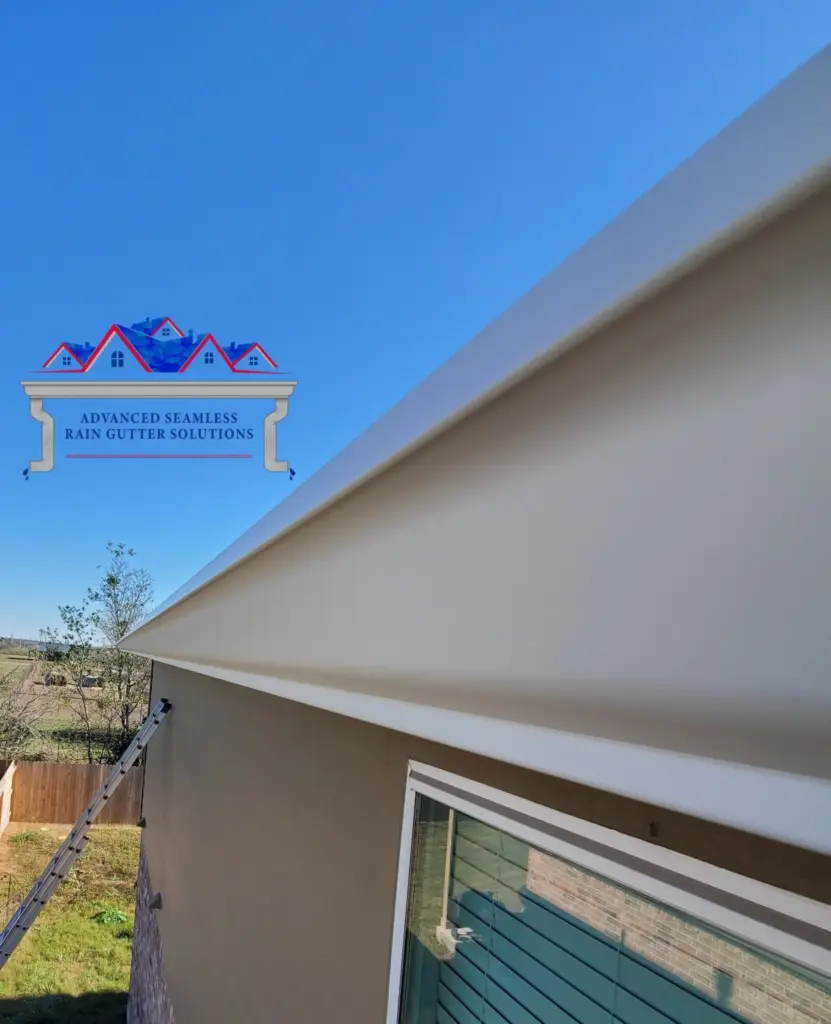
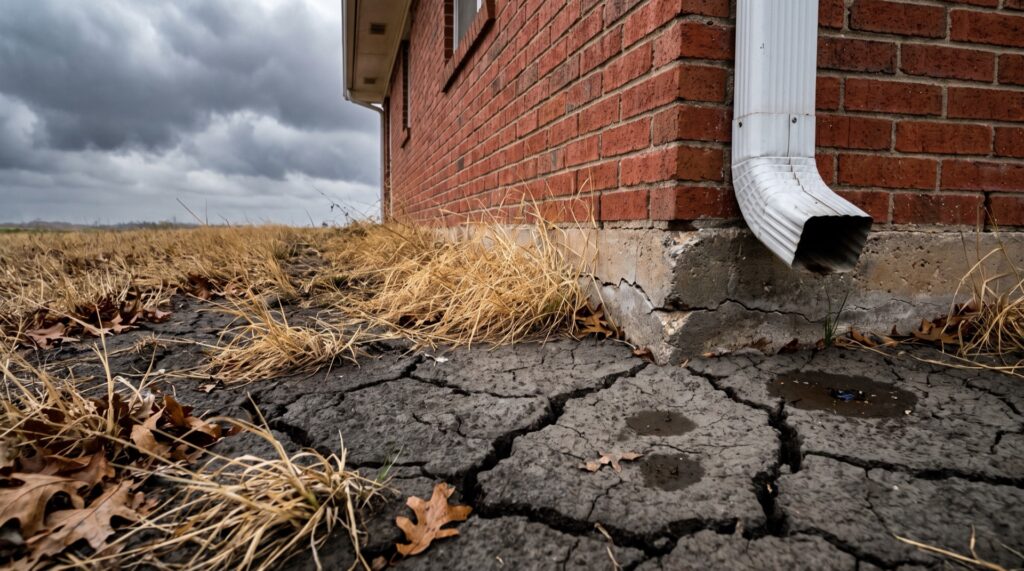
On the pro side, seamless gutters earn their cost when you plan to stay in the home for years, when the roofline has long runs where sectional joints would pile up, and when the house sits on the expansive clay soil common across much of Central Texas. On that soil, keeping roof water away from the slab is one of the simplest ways to protect the foundation. They also make sense under heavy tree cover, where fewer seams means fewer places for leaves to catch. In those cases, custom-fit seamless gutter installation is usually money well spent.
The cons are mostly about timing, and there are cases where they’re not the best use of money. If your current gutters are sound and only need a couple of repairs, fixing them may be enough. A small detached shed or a single short run may not justify a full system. And if you’re selling soon and the existing gutters work, a repair and a cleaning can be the practical call. An honest installer will tell you that rather than sell you a full replacement.
Where to spend and where to save
If the budget is tight, put the money where it changes how the system performs. Capacity comes first. A 6-inch gutter on the long, steep runs that carry the most water, and enough downspouts to drain them, will do more for your house than any upgrade you can see from the street. Sound fascia is the second priority, because a new gutter is only as straight and secure as the board it hangs on.
There are fair places to save. You don’t need a premium profile on every side of the house; many homeowners put a larger gutter on the busy runs and a standard size on the short ones. Gutter guards earn their cost under oaks and pecans but may not be worth it on a house with no trees nearby. And if your existing underground drain lines are clear and working, they can often be reused rather than replaced. A good professional estimator will show you these options instead of quoting one package for everyone.
What the warranty is worth
The warranty is part of the price, so read it. The Texas Attorney General’s office advises that any guarantee should be written into the contract, stating what is covered, who is responsible for it and how long it lasts. With gutters there are usually two layers: a manufacturer warranty on the materials and an installer guarantee on the workmanship.
At Gutters Made Easy, new seamless gutters carry a lifetime manufacturer warranty on materials and our 10-year guarantee on workmanship. Owner Tyler Smith has more than 20 years of hands-on experience with rain gutters and sheet metal, and every run is fabricated on-site to fit your house. Financing is available if you’d rather spread the cost out.
If you’d like to see what a properly sized system would cost on your home, call (512) 881-9204 or start with our seamless gutters page to request a free estimate. We’ll measure, walk the roofline with you and put every line item in writing.
Common questions about seamless gutter cost
What are the downsides of seamless gutters? They cost more upfront than sectional gutters, they can’t be installed as a DIY project because they’re formed on a machine, and a badly damaged section is usually replaced as a full run rather than patched.
Are 6-inch gutters worth the extra cost? On a large or steep roof, often yes. A 6-inch gutter carries noticeably more water and pairs with larger downspouts that clog less, which matters when a Central Texas storm drops several inches in a few hours.
How long do seamless gutters last? It depends on the material, the installation and the upkeep. Aluminum, galvalume and copper all hold up well when the gutters are hung at the right slope, kept clean and drained properly.
Should I replace my gutters when I replace my roof? It’s a good time to ask. Old gutters often have to come down for the roof work anyway, and installing new ones right after the roof lets the gutter and drip edge line up properly.