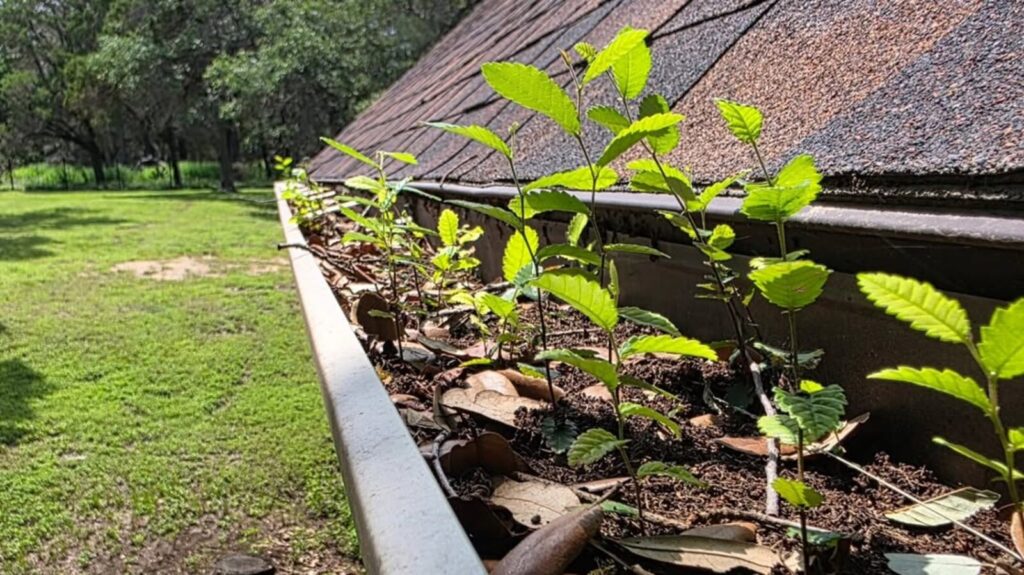
Yes, and it happens faster than most homeowners expect. A rain gutter packed with leaves and grit holds water for days after a storm, and in a Central Texas July that standing water turns into a mosquito nursery. Female mosquitoes lay their eggs in still water, and in our summer heat those eggs can reach biting adults in about a week. The gutter you never think about ends up being the most productive breeding spot on your whole property.
Key takeaways
- Clogged gutters trap standing water long after the rain stops, and that water is exactly what mosquitoes need to breed.
- In Central Texas summer heat, mosquitoes can go from egg to adult in roughly 7 to 10 days, so a gutter left dirty for a month can raise several batches.
- Mosquitoes carry real health risks. Texas lived through the worst West Nile outbreak in the country’s history, so the stakes are not theoretical.
- The fix is not fogging your yard. It is clearing the water source, and the roofline is the one most people miss.
A clogged gutter is a mosquito nursery you never see
When your gutters are clear, water runs off the roof, through the downspouts, and away from the house in seconds. Nothing sits still. When they are clogged, that path is blocked. Leaves, roof grit, and twigs pack into a soggy dam, and every rain leaves a shallow pool sitting on top of it. That pool is stagnant water, shaded and undisturbed, and it can linger for a week or more between Central Texas storms.
That is all a mosquito is looking for. A female does not need a pond. She needs still water and a little time. A single clogged gutter run can hold enough standing water to produce hundreds of mosquitoes, and because it is up at the roofline, you never see the larvae wriggling in it. You just notice that the backyard got worse.
How standing water forms in a Central Texas gutter
Our climate sets this trap almost on schedule. Spring and early summer drop live oak catkins, seed pods, and pollen into the gutters. Then the rain slows down and the heat climbs. By July, the debris has settled into a dense mat, and the short, hard thunderstorms we get leave water trapped behind it instead of draining through.
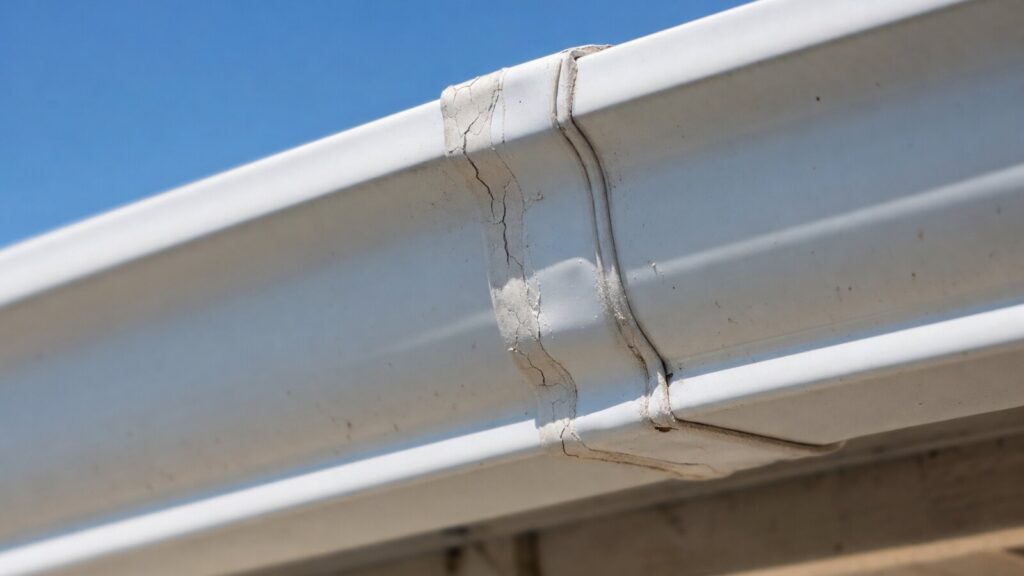
A few things make it worse here. Flat or low-slope gutter runs hold water longer than they should when they are not hung correctly. Undersized downspouts choke on debris. And older sectional gutters catch material at every seam. The result is the same across Hays, Travis, and Comal counties: a roofline full of little reservoirs, each one warm, still, and open for business.
Signs the mosquitoes in your yard are coming from the roofline
Most people treat the yard and never check up high. A few clues point to the gutters instead:
- You have cleared every bucket, saucer, and low spot in the yard and still get swarmed near the house.
- The mosquitoes are worst close to the walls and under the eaves, not out by the fence.
- You can see plant seedlings or a dark waterline in the gutter from the ground, which means water is sitting there.
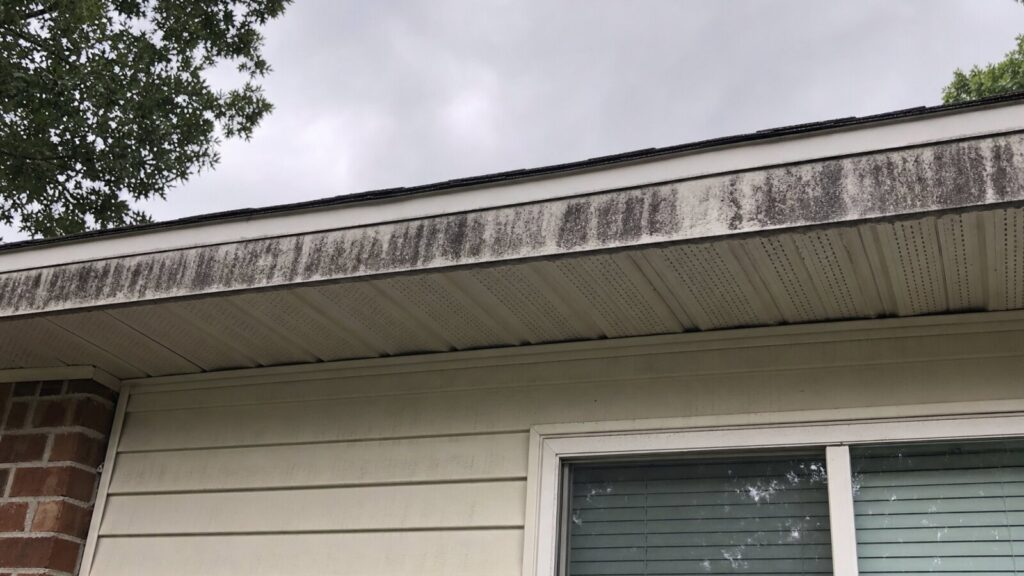
- Water stains or drip marks streak the fascia below a gutter joint.
If you can safely look into the gutter and see wriggling larvae in the trapped water, that is your answer. The breeding site is on the roof, and no amount of yard spraying will keep up with it.
The health risk is real, and Texas knows it firsthand
This is not just an itchy-ankles problem. Mosquitoes can carry West Nile virus, and Central Texas is squarely in its range. In 2012, Texas recorded the worst West Nile outbreak in United States history, with 1,868 human cases and 89 deaths, according to the Texas Department of State Health Services. The virus has circulated here every summer since. The CDC notes that mosquitoes need only a few days of standing water and a container as small as a bottle cap to breed, which is why a water-filled gutter is such a strong source. Cutting the breeding water is the single most effective thing a homeowner can do to lower the risk around the house.
What actually clears it: DIY versus a pro
The real fix is simple in theory. Remove the debris, get the water moving again, and the nursery is gone. Dumping a larvicide dunk into a gutter you never clean just treats the symptom while the clog stays.
If you are comfortable on a ladder and your home is single story, you can scoop the gutters out by hand, bag the debris, and flush each run and downspout with a hose until the water drains fast and clear. Do it when the gutters are dry enough to handle and never lean or overreach on the ladder.
For two-story homes, steep roofs, or gutters that have not been touched in a couple of seasons, this is worth handing off. Regular rain gutter cleaning clears the mat that traps water, checks that every downspout runs free, and catches the loose seams and sags that let water pool in the first place. That last part matters, because a clean gutter that still holds water because it is pitched wrong will fill right back up.
How to keep gutters from breeding mosquitoes all summer
Clearing the water once helps for a few weeks. Keeping it clear is what ends the problem. A few habits do most of the work:
- Clean the gutters at least twice a year, and add a mid-summer check if you have heavy oak or pecan canopy dropping debris.
- Walk the house after a storm and look for any gutter section that is still dripping or holding water an hour later. That is a clog or a low spot.
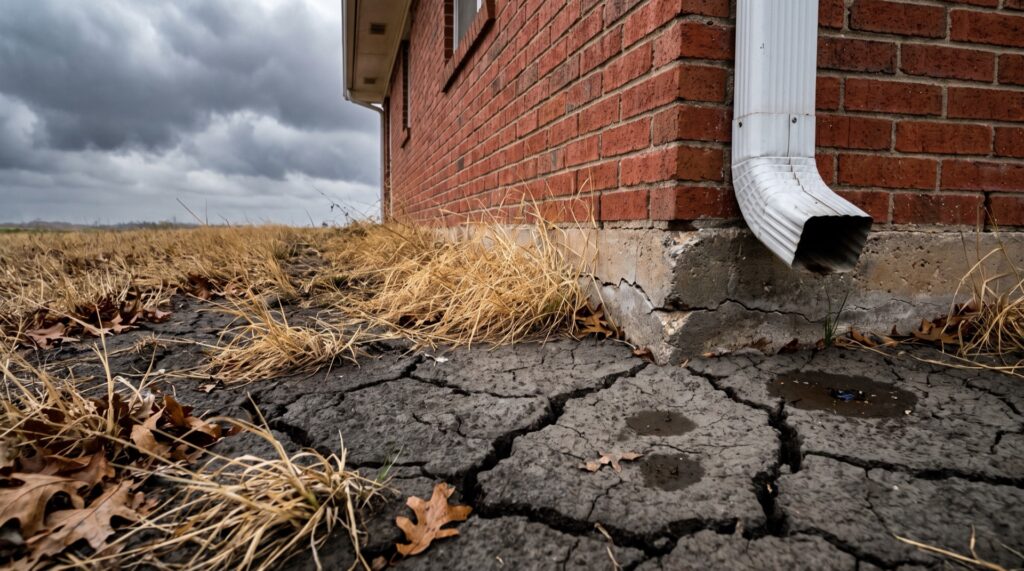
- Make sure downspouts carry water well away from the foundation so it does not just pool at the base of the house instead.
- Consider quality gutter guards if you are tired of the twice-a-year climb. Good leaf protection keeps the debris out that dams up the water in the first place, so far less standing water ever forms.
None of this is complicated. It just has to actually happen, on a schedule, before the July heat turns a month of neglect into a mosquito problem.
How Gutters Made Easy handles it
We have cleared a lot of Central Texas gutters over the years, and owner Tyler Smith has spent more than two decades fabricating, hanging, and maintaining rain gutter systems across the region. When we clean a system, we are not just scooping leaves. We check the pitch, the hangers, the seams, and the downspouts, because a gutter that keeps holding water after a cleaning is not really fixed. If a run is sagging or was never sloped right, we tell you, and we can rework or replace it with a custom-fit seamless system that actually drains.
Our seamless gutters are fabricated on site to match your home, and they are backed by a lifetime manufacturer warranty on materials and a 10-year guarantee on our workmanship. The goal is a roofline that sheds water the way it should, so the mosquitoes have nowhere to set up shop. If your gutters are holding water this summer, schedule a rain gutter cleaning with us and we will get them draining again.
Common questions about clogged gutters and mosquitoes
Can mosquitoes really breed in a gutter? Yes. Any spot that holds still water for several days can breed mosquitoes, and a clogged gutter is one of the best hidden sources on a house because the water sits shaded and undisturbed at the roofline.
How long does water sit in a clogged gutter before mosquitoes use it? Not long. Mosquitoes can lay eggs within a day or two of water collecting, and in Central Texas summer heat the eggs can reach biting adults in about 7 to 10 days.
Will gutter guards stop mosquitoes? Guards do not repel mosquitoes, but by keeping debris out they prevent the clogs that trap standing water, so far less breeding water forms. Pairing guards with the right gutter pitch is the durable fix.
I sprayed my yard and still have mosquitoes. Why? Yard spraying kills adults but does nothing about the water breeding new ones. If the source is a water-filled gutter, the population refills faster than spray can keep up. Clear the water and the spraying finally has a chance to work.
How often should I clean my gutters in Central Texas? At least twice a year, and often three times if you have heavy live oak, pecan, or cedar around the house. A quick mid-summer check keeps standing water from building during peak mosquito season.